
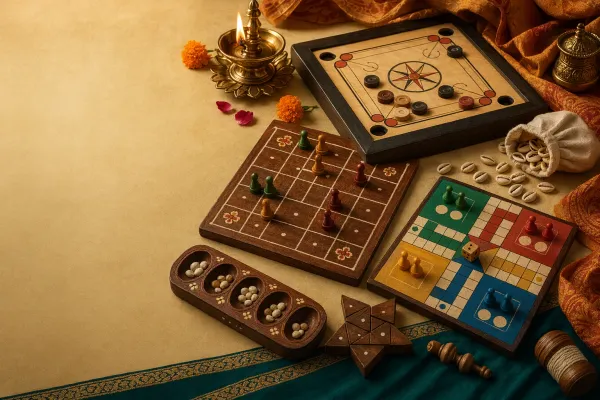
Traditional Indian Board Games: A Beginner List of Classic Names and Meanings
A culture-first beginner list of traditional Indian board games, what their names mean, and what each game teaches through play.
Satarupa Banerjee is a passionate blog writer with a keen interest in creating engaging, informative, and reader-friendly content. She specializes in crafting articles that blend creativity with clarity, helping audiences connect with inspirations.
A culture-first beginner list of traditional Indian board games, what their names mean, and what each game teaches through play.
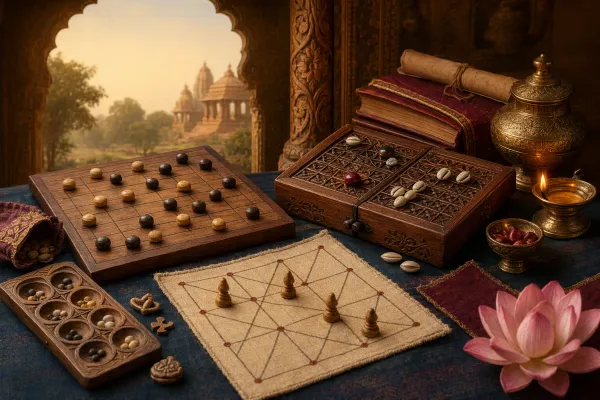
Ancient Indian board games reveal strategy, chance, moral learning, family play, and the careful link between tradition and evidence.
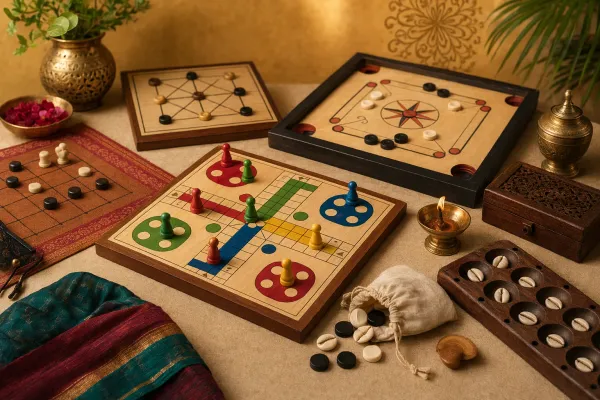
Indian board games are more than pastime. They carry strategy, family bonding, moral learning, regional memory, and playful Indian culture.
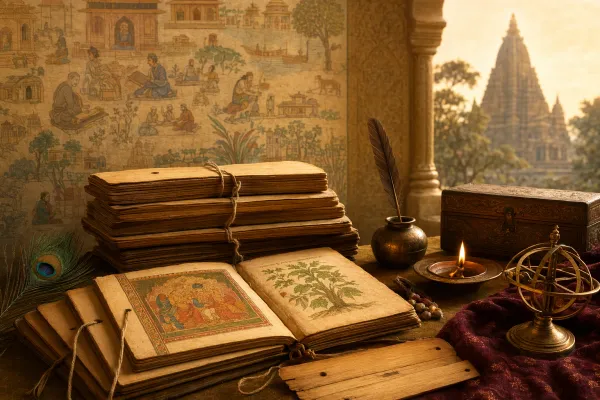
Medieval Indian manuscripts are evidence of learning, devotion, courts, temples, monasteries, medicine, art, and daily life across regions.
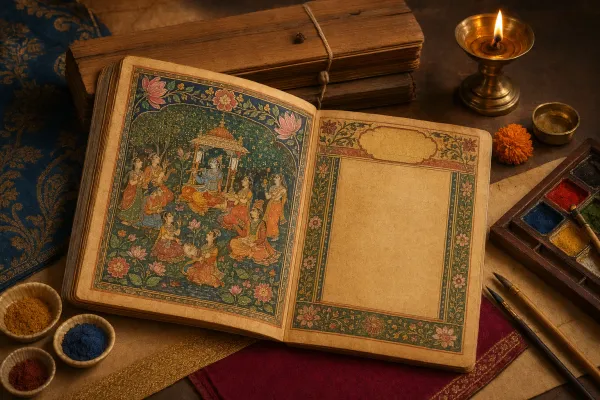
Indian illuminated manuscripts show how image, colour, margin, text, devotion, and storytelling worked together on the handwritten page.
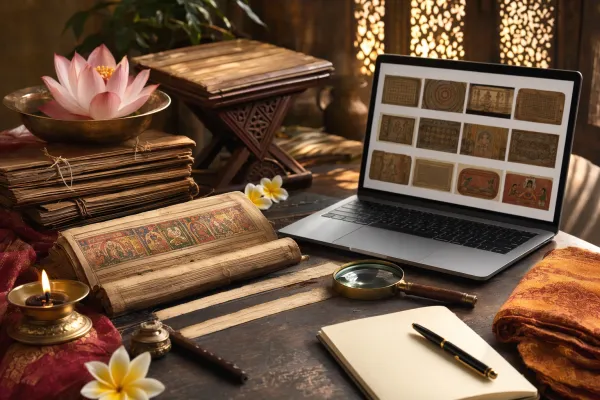
A simple, ethical guide to finding Indian manuscripts online through trusted archives, clear catalogue records, reuse rules, and context-rich source links.

Indian manuscripts survived through careful storage, periodic copying, community libraries, modern conservation, cataloguing, digitisation, and patient handling.
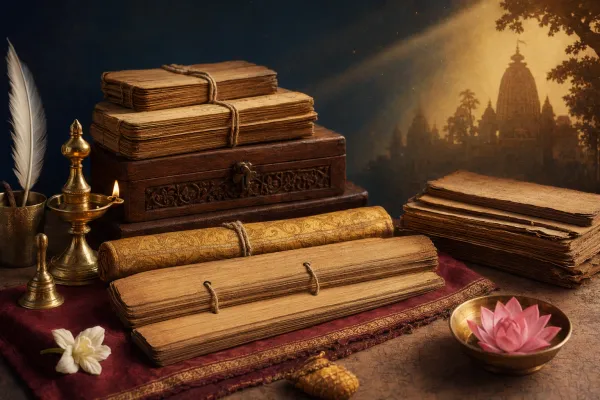
Old Hindu manuscripts preserve sacred, philosophical, ritual, poetic, and devotional traditions, but a text’s age and a surviving copy’s age are not the same.
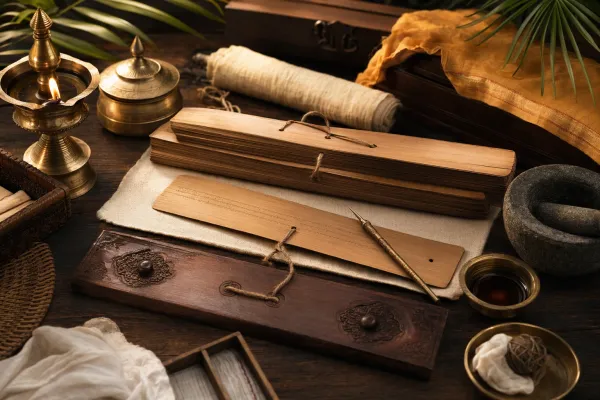
Palm leaf manuscripts show India’s handwritten heritage through prepared leaves, incised letters, thread binding, wooden covers, copying, and careful preservation.