
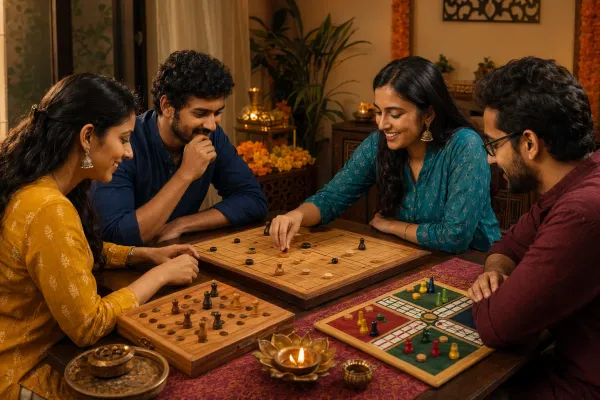
Indian Board Games for Adults: Strategy, Memory, and Social Play
Indian board games are not only for children. They can train focus, patience, probability, memory, ethics, and meaningful social connection.
Indian board games are not only for children. They can train focus, patience, probability, memory, ethics, and meaningful social connection.
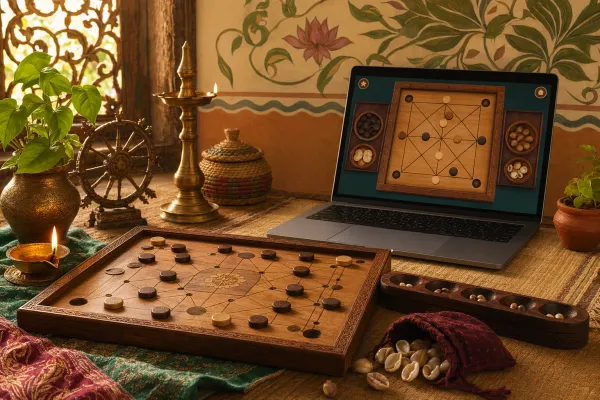
Online resources can help you learn Indian board games, but the best path avoids piracy, unsafe downloads, weak context, and culture-stripped copies.
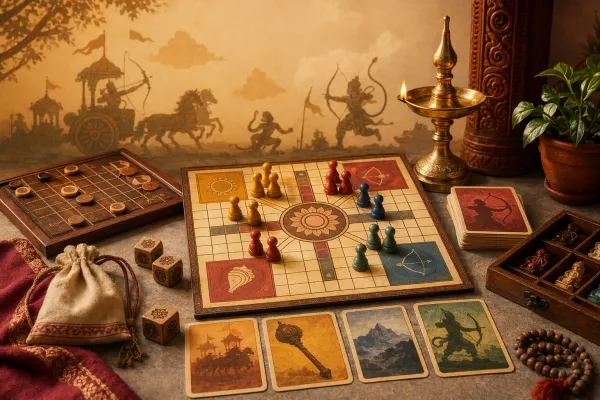
Mythology-themed board games can be meaningful when stories, symbols, deities, and epics are handled with context, care, and respect.
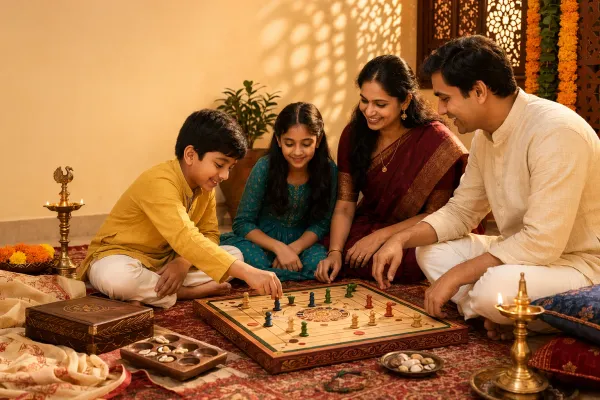
Indian board games can teach children counting, patience, memory, focus, cultural stories, fair play, and family bonding.
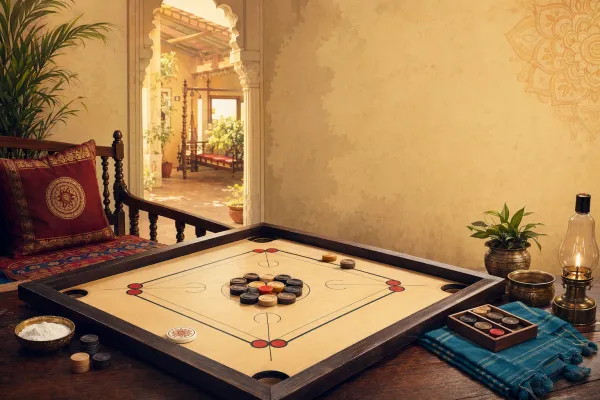
Carrom became loved in Indian homes and clubs because it is simple to begin, hard to master, social, compact, and full of skill.
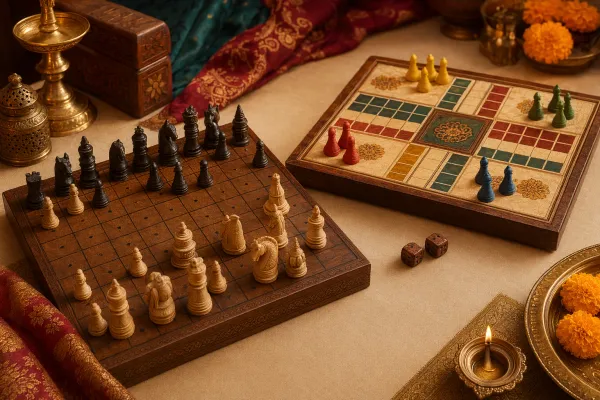
Chaturanga and Pachisi show two sides of Indian play culture: strategy, chance, planning, movement, and social learning.
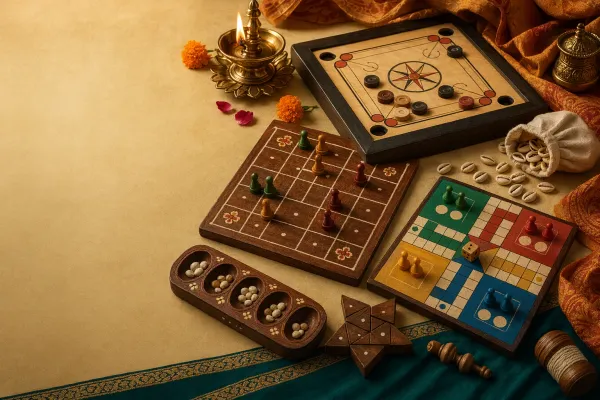
A culture-first beginner list of traditional Indian board games, what their names mean, and what each game teaches through play.
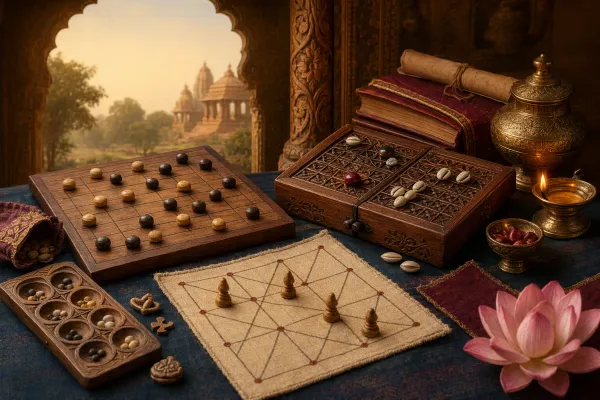
Ancient Indian board games reveal strategy, chance, moral learning, family play, and the careful link between tradition and evidence.
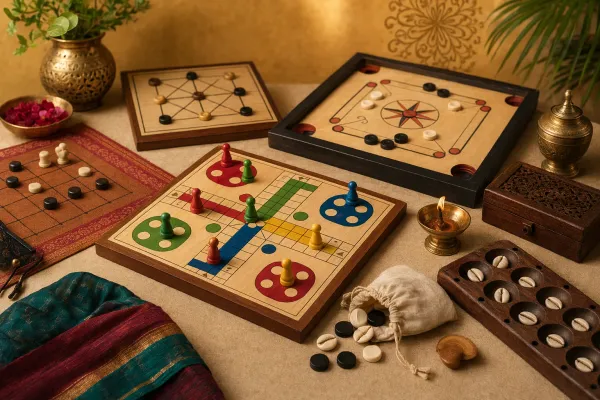
Indian board games are more than pastime. They carry strategy, family bonding, moral learning, regional memory, and playful Indian culture.