
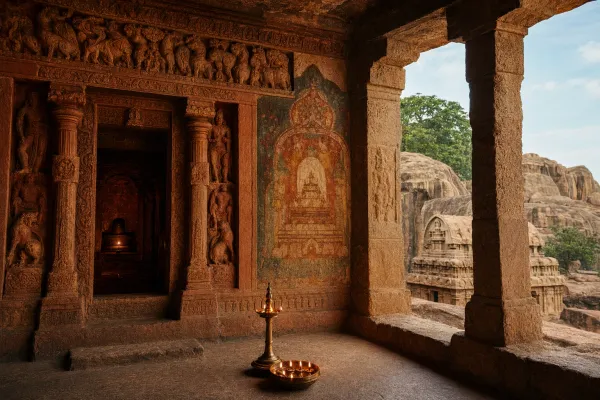
South Indian Cave Temples: Badami, Mahabalipuram and Rock-Cut Heritage
South Indian cave temples show how Pallava and Chalukya artists shaped rock into shrines, mandapas, sculpture, and early temple ideas.
South Indian cave temples show how Pallava and Chalukya artists shaped rock into shrines, mandapas, sculpture, and early temple ideas.
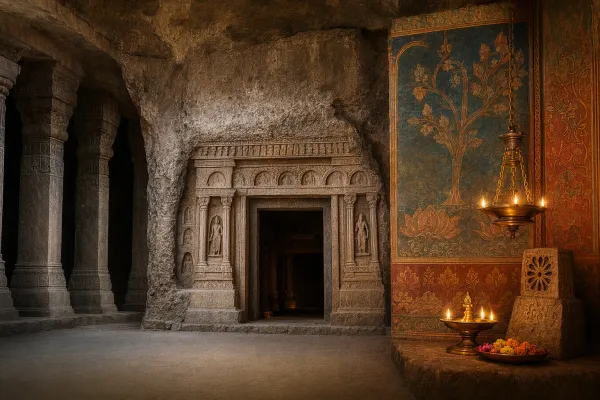
The Elephanta Caves matter for their Shaiva sculptures, especially the great three-faced form, and for the layered story of survival after damage.
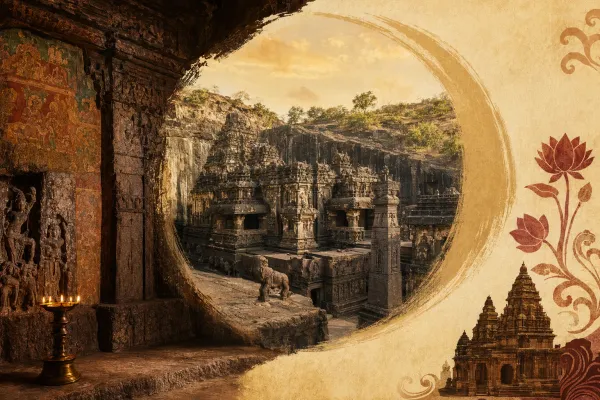
Kailasa Temple at Ellora is famous as India’s great monolithic cave temple, carved from rock with remarkable scale, planning, and Shaiva meaning.
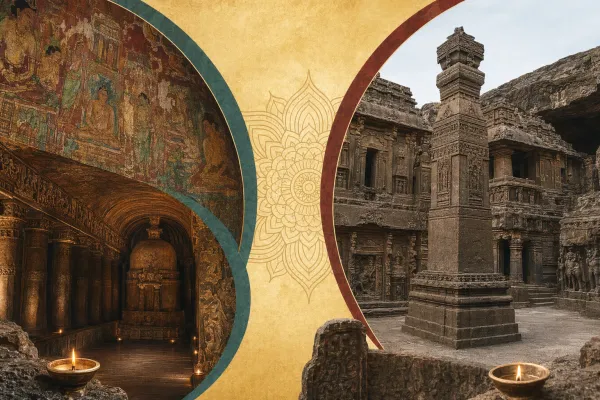
Ajanta is older in origin and famous for Buddhist paintings; Ellora is later, broader, and known for Buddhist, Hindu, Jain caves and Kailasa Temple.
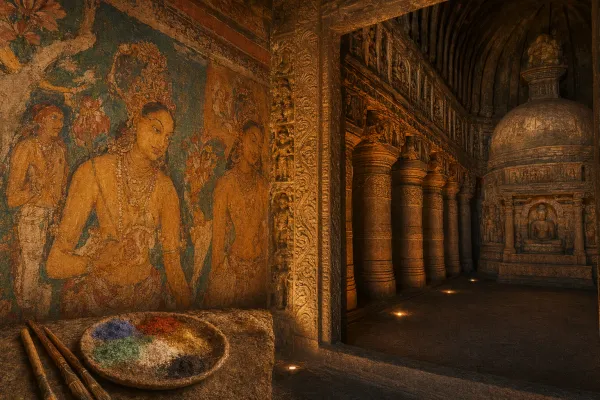
Ajanta is famous for Buddhist cave architecture, rare murals, narrative art, and a long history of devotion, patronage, and rediscovery.
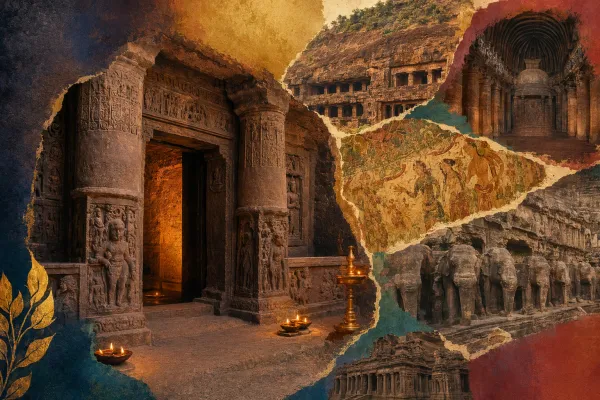
Learn famous cave temples in India through rock-cut architecture, sacred art, history, regional examples and respectful visitor context.
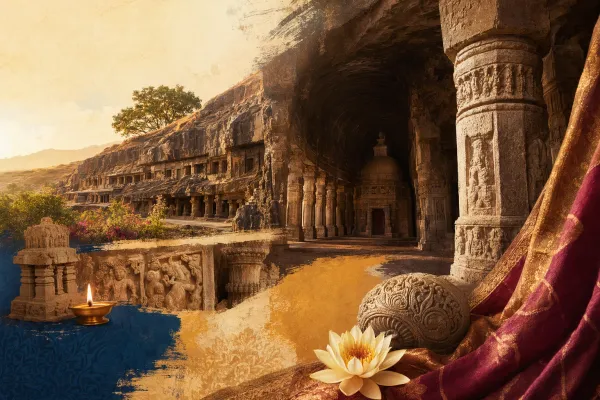
What Are Indian Cave Temples? A Simple Beginner Guide explained simply with history, rock-cut architecture, sacred art, cultural context, and beginner-friendly examples.
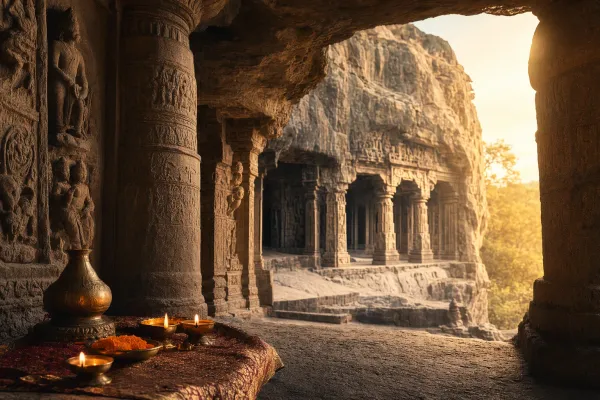
Ancient Indian Cave Temples: History of Rock-Cut Sacred Architecture explained simply with history, rock-cut architecture, sacred art, cultural context, and beginner-friendly examples.