
Simple answer
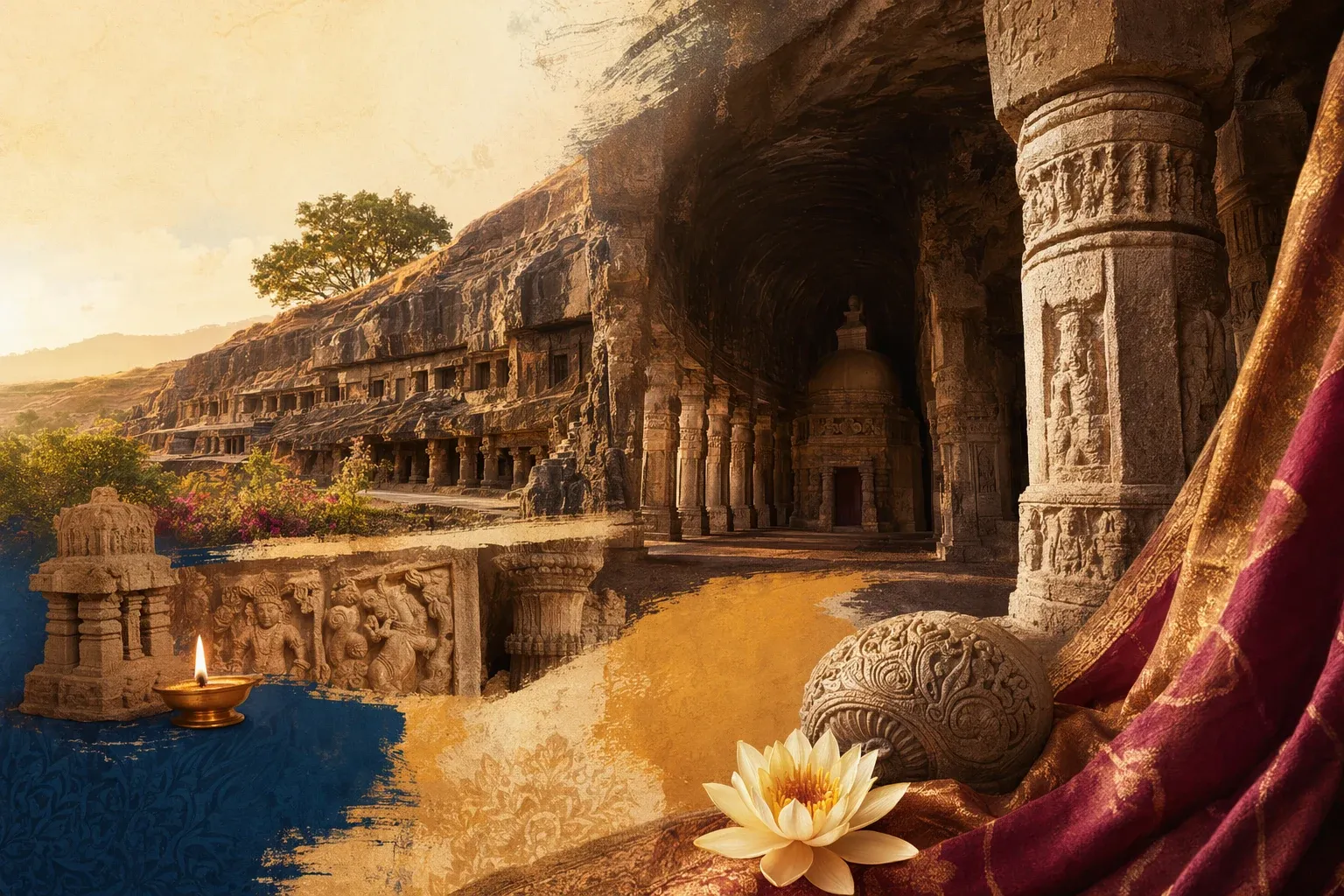
Indian cave temples are sacred or monastic spaces carved into living rock. Some are Buddhist monasteries and prayer halls, some are Hindu shrines, some are Jain temples, and some sites show more than one tradition across time.
The phrase does not mean only a natural cave with a small shrine inside. Many famous examples are rock-cut architecture: halls, pillars, sanctums, sculptures, cells, and facades carved directly from stone.
Rock-cut architecture in plain language
In normal construction, builders bring stone, wood, brick, or concrete to a place and assemble a structure. In rock-cut architecture, the hill or cliff itself becomes the material. Artists and workers remove stone to create halls, pillars, shrines, cells, ceilings, facades, and images.
This required planning. A pillar carved from living rock cannot simply be moved later. A ceiling, wall, shrine, or sculpted panel had to be thought through before and during the carving. That is one reason Indian cave temples feel so powerful: architecture and sculpture are born from the same stone.
A short history of Indian cave temples
The history of Indian cave temples begins with early rock-cut monastic and sacred spaces and grows into highly developed architectural complexes. Early Buddhist caves helped shape forms such as chaitya halls and viharas. Later, Hindu and Jain cave temples added new shrine forms, images, and regional styles.
The timeline is not one straight line from simple to advanced. Different regions, patrons, religions, and artistic workshops shaped different sites. What stays impressive is the long experiment of making stone look like architecture, devotion, memory, and story.
Which is older, Ajanta or Ellora? Ajanta began earlier, while Ellora developed later.
Traditions and cultural context
Buddhist caves often include monastic cells, chaitya prayer halls, stupas, paintings, and narrative scenes. Hindu cave temples often include sculpted deities, sanctums, mandapas, and mythic panels. Jain caves may emphasise Tirthankara images, meditation, and refined carving. Real sites can be complex, so it is better to learn each place on its own terms.
These caves also show patronage and community. Kings, merchants, monks, artisans, devotees, and local networks all mattered. The result is not only art for art’s sake; it is heritage shaped by belief, resources, travel, teaching, memory, and local skill.
How beginners should read a cave site
Start with the function of the space. Was it a prayer hall, a monastery, a shrine, a teaching space, a royal project, or a later pilgrimage landmark? Then look at the art. Are there paintings, sculptural panels, pillars, inscriptions, icons, or narrative scenes? Finally, ask what has been damaged, restored, or misunderstood over time.
This three-step method keeps the experience grounded. It allows wonder without exaggeration. A cave can be astonishing without needing impossible claims. The real story of planning, labour, devotion, artistic training, and survival through centuries is already powerful.
What to notice in the stone
- The entrance often frames how the visitor first understands the sacred space.
- Pillars and ceilings show how stone can imitate built architecture.
- Paintings or panels may teach through gesture, story, and symbol.
- Different traditions can appear at different sites, so avoid assuming all caves are the same.
- Damage and restoration are part of the history, not a reason to ignore the site.
Cultural safety and respectful language
Indian cave temples should be described with respect because many are connected to living religious memory even when they are also archaeological or tourist sites. It is better to avoid sensational language, casual jokes about deities, or claims that turn complex art into mystery bait.
A respectful guide can still be simple. It can explain what a beginner should see, why the site matters, and where uncertainty remains. That balance is especially important for damaged sites, mixed-tradition sites, and places where modern visitors meet ancient sacred art.
For related Bhaktilipi reading, see Agastya Cave heritage and Belum Caves and Gandikota.
Common misunderstandings
- Cave temples are not all natural caves; many are carefully carved rock-cut spaces.
- They are not all from one religion, one dynasty, or one period.
- A famous site should not be explained only through legends; art, history, preservation, and tradition all matter.
- Damage should be discussed carefully, without sensational blame or unsupported certainty.
Questions beginners ask
What are Indian cave temples? They are sacred or monastic spaces carved into rock.
Are they all Hindu? No. Important examples are Buddhist, Hindu, Jain, or connected with more than one tradition across time.
How many are there? India has many rock-cut caves and cave temple sites, so beginners should focus on major examples first.
A practical visitor and student checklist
Also notice the relationship between the cave and the surrounding landscape. Many rock-cut sites were not random holes in a hill. Their placement could connect with trade routes, patronage networks, monastic movement, royal power, local devotion, water, or visibility. Even when we cannot know every intention with certainty, the setting can tell us a lot about why a place mattered.
Preservation is another part of the story. Some paintings are faded, sculptures are broken, surfaces are weathered, and names have changed through time. That does not make the site less valuable. It makes careful interpretation more important. A damaged sculpture can still teach us about style, devotion, historical contact, and the long life of a sacred place.
What to avoid while learning
- Do not describe every cave temple as mysterious just because it is ancient.
- Do not treat Buddhist, Hindu, and Jain sites as interchangeable.
- Do not turn damage into sensational blame when the evidence is complex.
- Do not ignore local devotion or living memory when a site remains culturally meaningful.
A good beginner guide should leave space for wonder and accuracy at the same time. The caves are impressive because real people planned, carved, worshipped, studied, travelled, donated, repaired, remembered, and reinterpreted them across centuries. That human story is stronger than exaggerated claims.