
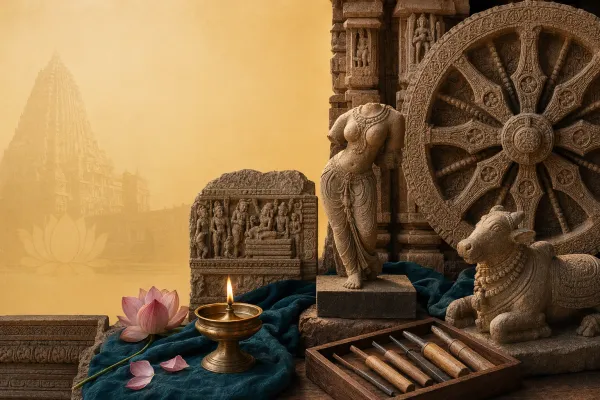
Key Features of Indian Sculpture: Symbols, Postures, and Stories
Indian sculpture is a language of posture, gesture, ornament, story, and sacred presence. This guide explains the visual clues that help beginners read it.
Indian sculpture is a language of posture, gesture, ornament, story, and sacred presence. This guide explains the visual clues that help beginners read it.
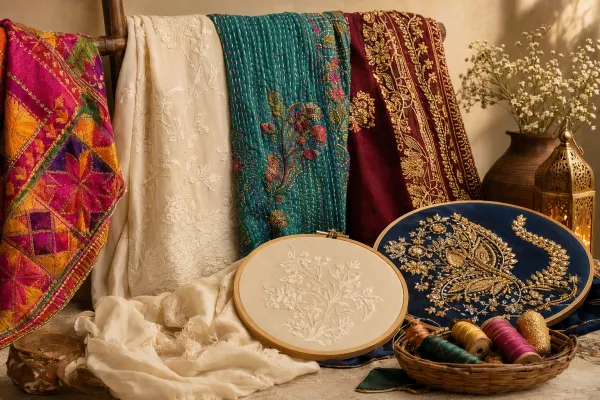
Indian embroidery is not one tradition but a living map of regions, materials, memories, and hands. This guide introduces major styles and what makes each one distinctive.
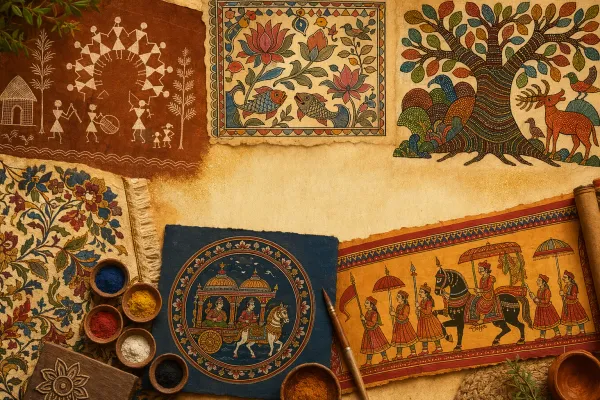
India’s folk art traditions are beautifully diverse. This guide introduces famous forms, their regions, themes, and visual character in beginner-friendly language.
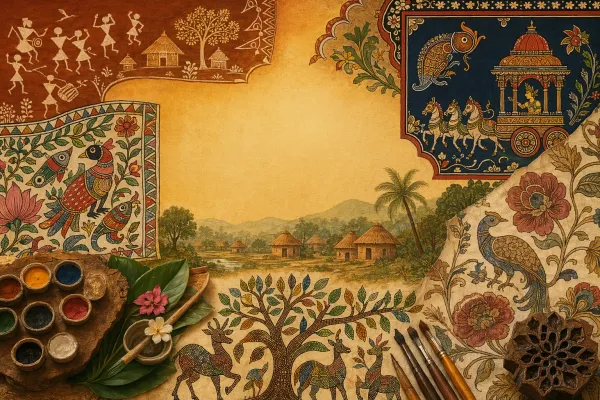
Indian folk art is not just a style; it is a living memory of homes, festivals, stories, and communities. This beginner-friendly guide explains its meaning with warmth and clarity.
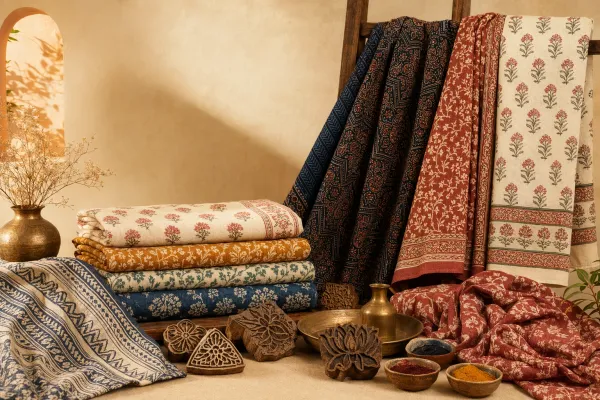
Indian block print textiles use carved wooden blocks, dye, and repeated hand pressure to create patterned cloth with regional character.
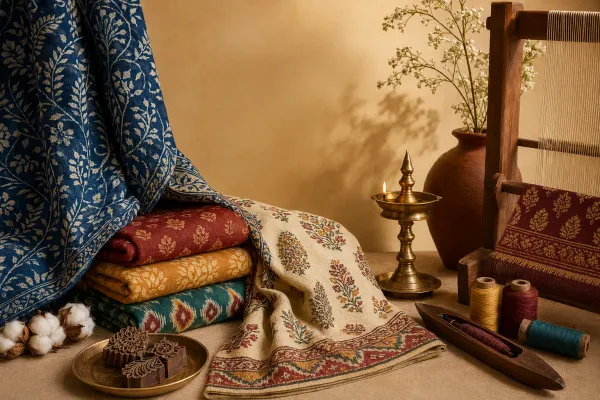
Indian textile patterns use flowers, animals, geometry, borders, and sacred forms to add beauty, memory, and meaning to cloth.
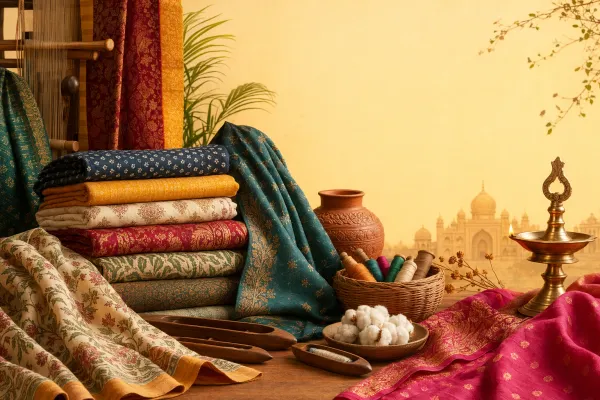
Indian textiles include woven, printed, dyed, and embroidered cloth traditions shaped by region, climate, skill, and everyday life.
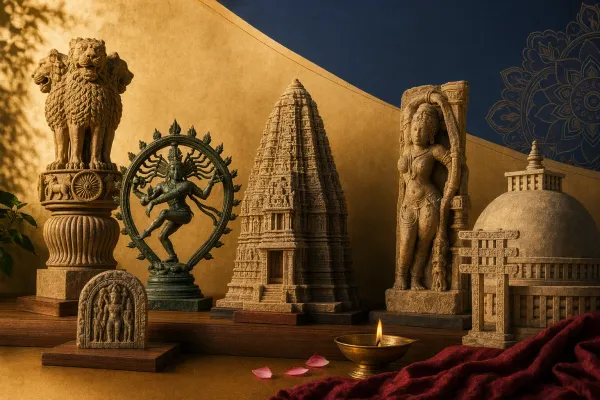
A beginner-friendly guide to famous Indian sculptures, from Ashoka’s lion capital to Chola bronze and Ellora’s Kailasa temple.
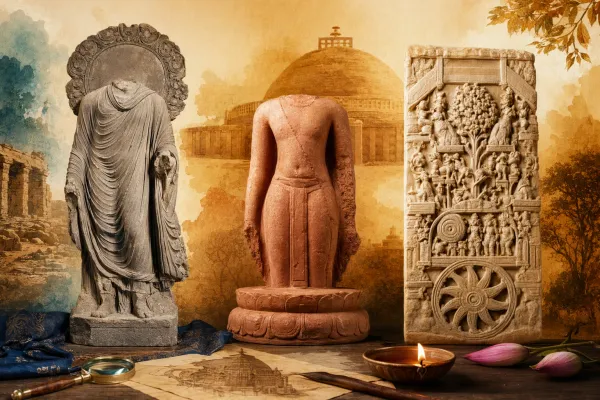
Gandhara, Mathura, and Amaravati are three important early sculpture styles often used to explain Indian art history.