
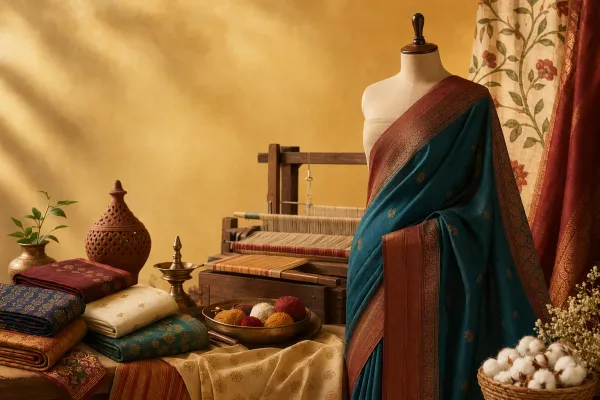
Indian Textiles in Modern Fashion: How Traditional Fabrics Stay Alive Today
Indian textiles are not museum pieces. They continue to move through runways, offices, weddings, streetwear, slow fashion labels, and everyday wardrobes.
Indian textiles are not museum pieces. They continue to move through runways, offices, weddings, streetwear, slow fashion labels, and everyday wardrobes.
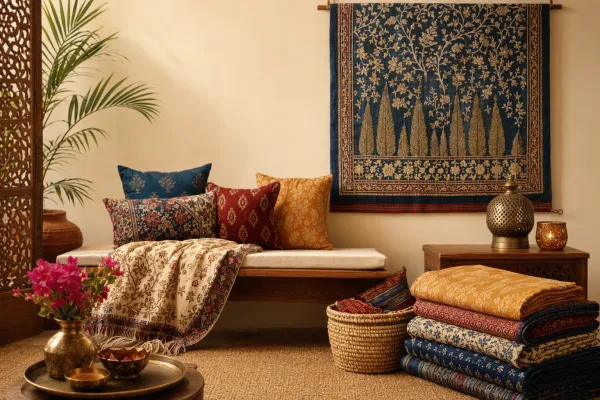
Indian textiles can bring warmth, colour, and history into a home. The most beautiful rooms use them with context, balance, and respect for the craft.
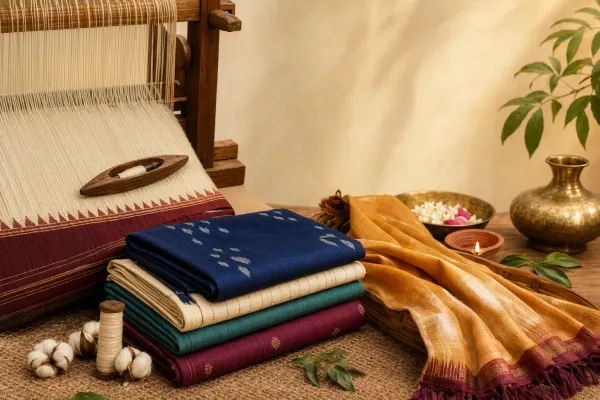
Handwoven fabric carries the rhythm of the loom. This guide explains the signs beginners can look for before buying saris, dupattas, shawls, yardage, and home textiles.
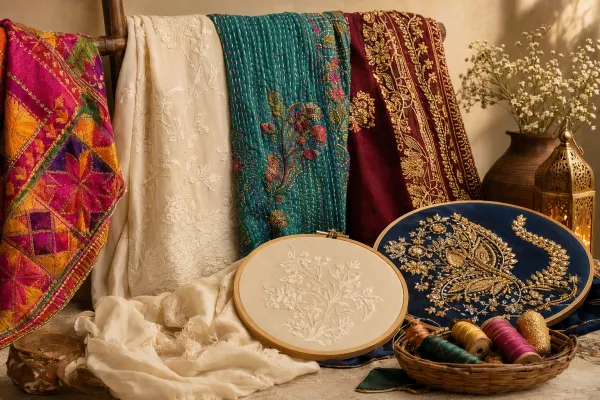
Indian embroidery is not one tradition but a living map of regions, materials, memories, and hands. This guide introduces major styles and what makes each one distinctive.
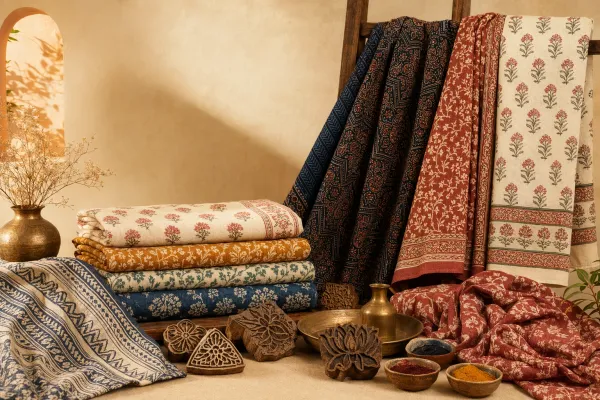
Indian block print textiles use carved wooden blocks, dye, and repeated hand pressure to create patterned cloth with regional character.
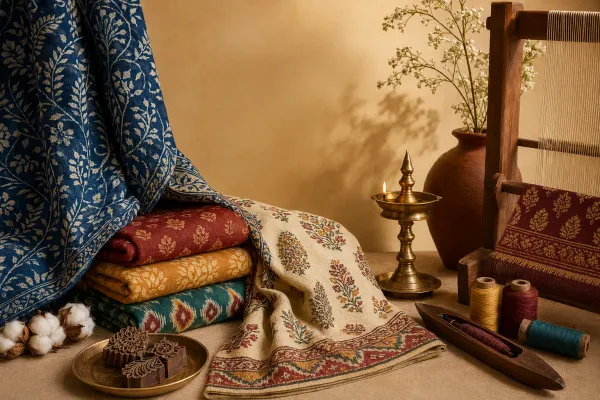
Indian textile patterns use flowers, animals, geometry, borders, and sacred forms to add beauty, memory, and meaning to cloth.
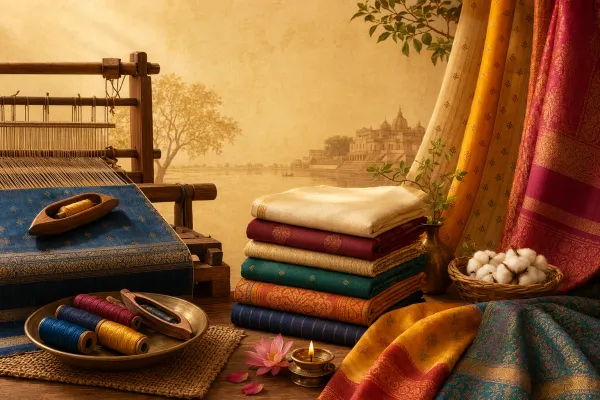
Indian handloom textiles are fabrics woven manually on looms, carrying regional skill, texture, rhythm, and cultural memory.
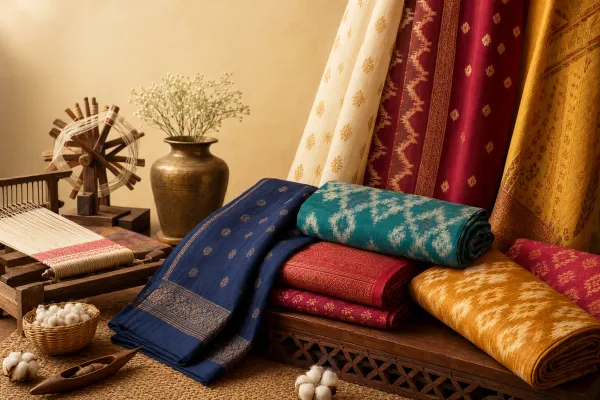
Traditional Indian textiles range from brocades and silks to handloom cottons, dyed fabrics, block prints, shawls, and embroidery traditions.
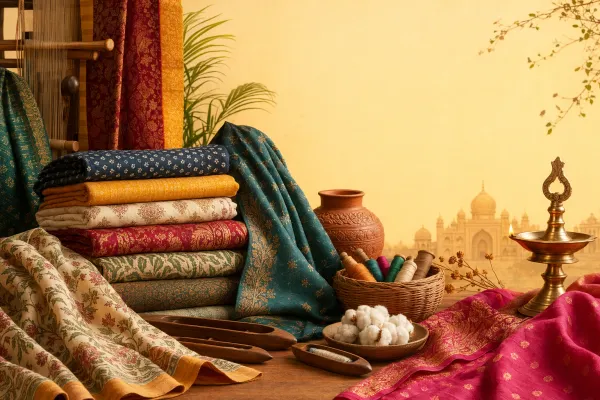
Indian textiles include woven, printed, dyed, and embroidered cloth traditions shaped by region, climate, skill, and everyday life.