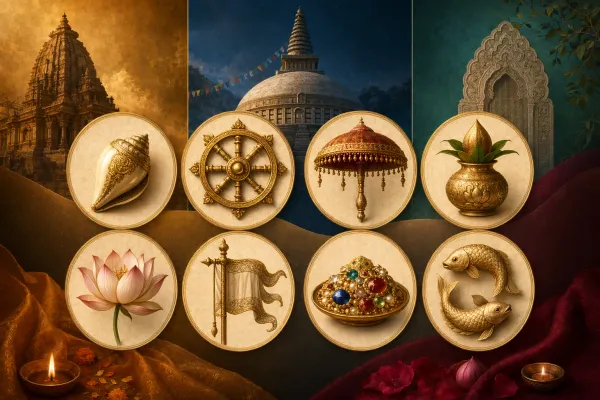
The 8 Auspicious Symbols: Hindu, Jain, and Buddhist Contexts Explained
The phrase eight auspicious symbols needs context because Hindu, Jain, and Buddhist traditions do not always use the same lists in the same way.
The phrase eight auspicious symbols needs context because Hindu, Jain, and Buddhist traditions do not always use the same lists in the same way.
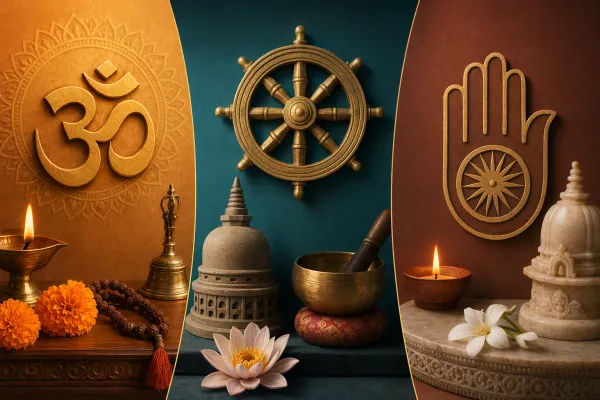
Om is most strongly associated with Hindu sacred sound, but it also appears in some Buddhist and Jain contexts with different meanings and uses.
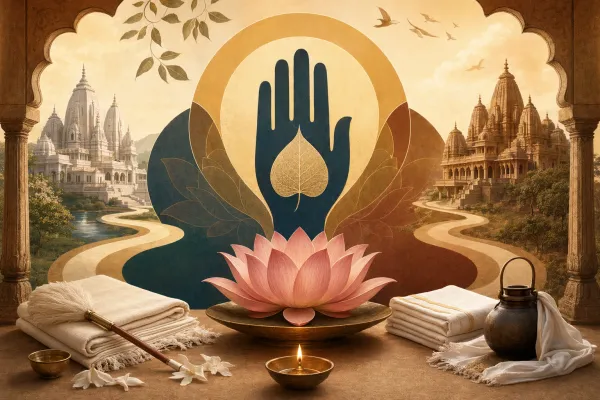
Digambara and Svetambara are major Jain traditions with shared foundations and differences in monastic practice, scripture, and community history.
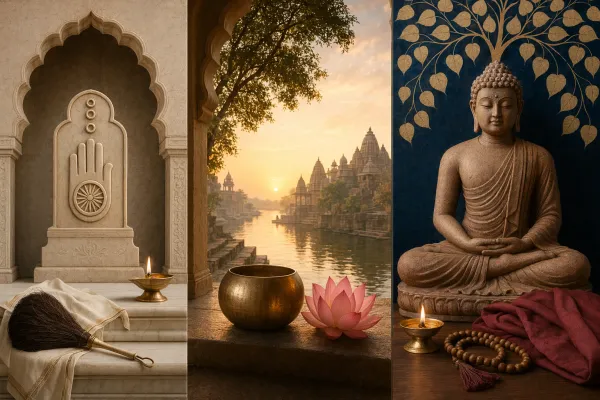
Jainism and Buddhism are often compared because both arose in ancient India, but their views of soul, karma, and liberation differ deeply.
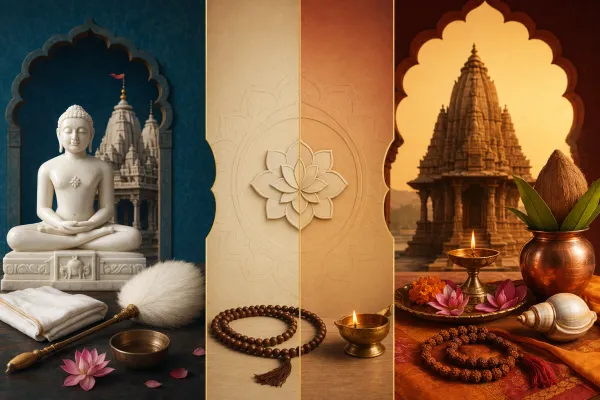
Jainism and Hinduism share Indian cultural vocabulary, but they are distinct traditions with different teachers, scriptures, and liberation paths.
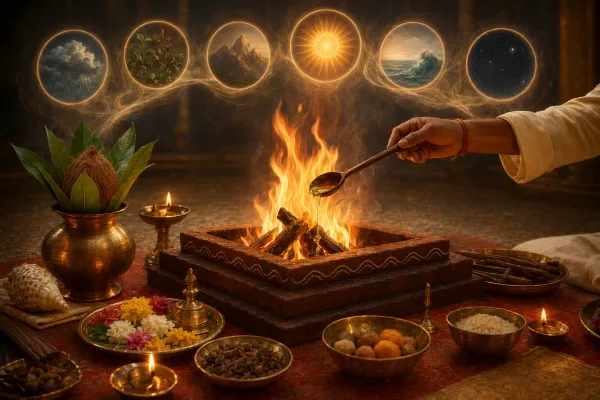
A beginner-friendly guide to Agni’s central role in yajna, the meaning of devata, and why different rituals may invoke different deities.
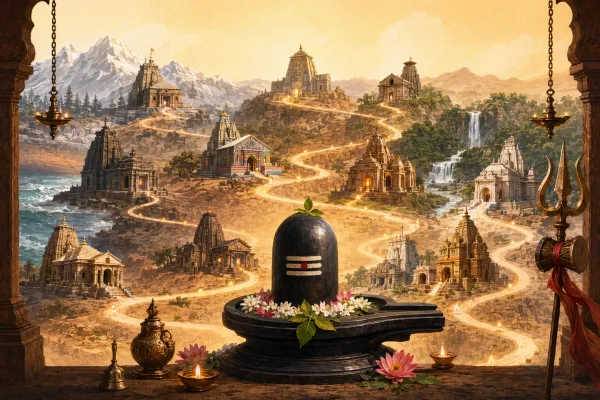
Find the 12 Jyotirlingas in India with locations and simple cultural context, explained respectfully for beginners and young readers.
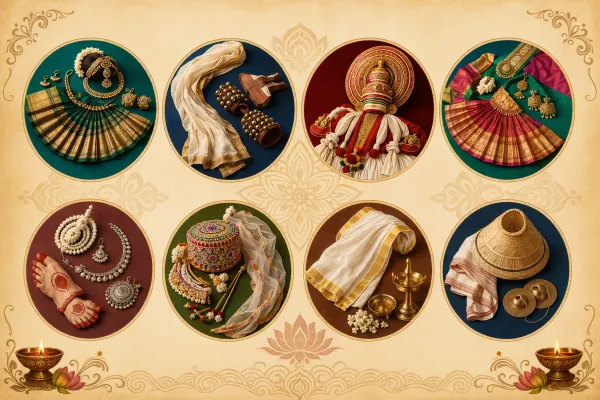
The commonly taught list of Indian classical dance forms includes Bharatanatyam, Kathak, Kathakali, Kuchipudi, Odissi, Manipuri, Mohiniyattam, and Sattriya.
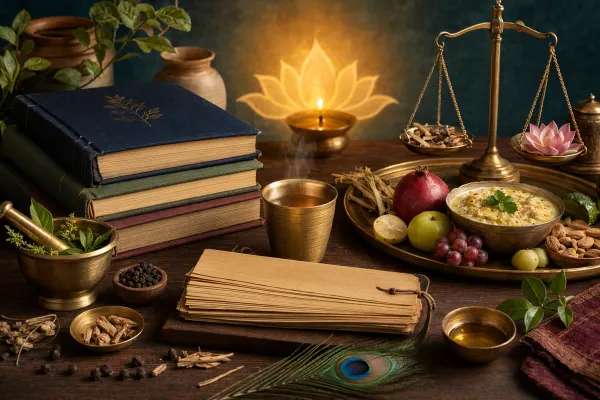
Learn Ayurveda responsibly by starting with foundations, respecting Sanskrit terms, choosing ethical resources, and knowing safety limits.