
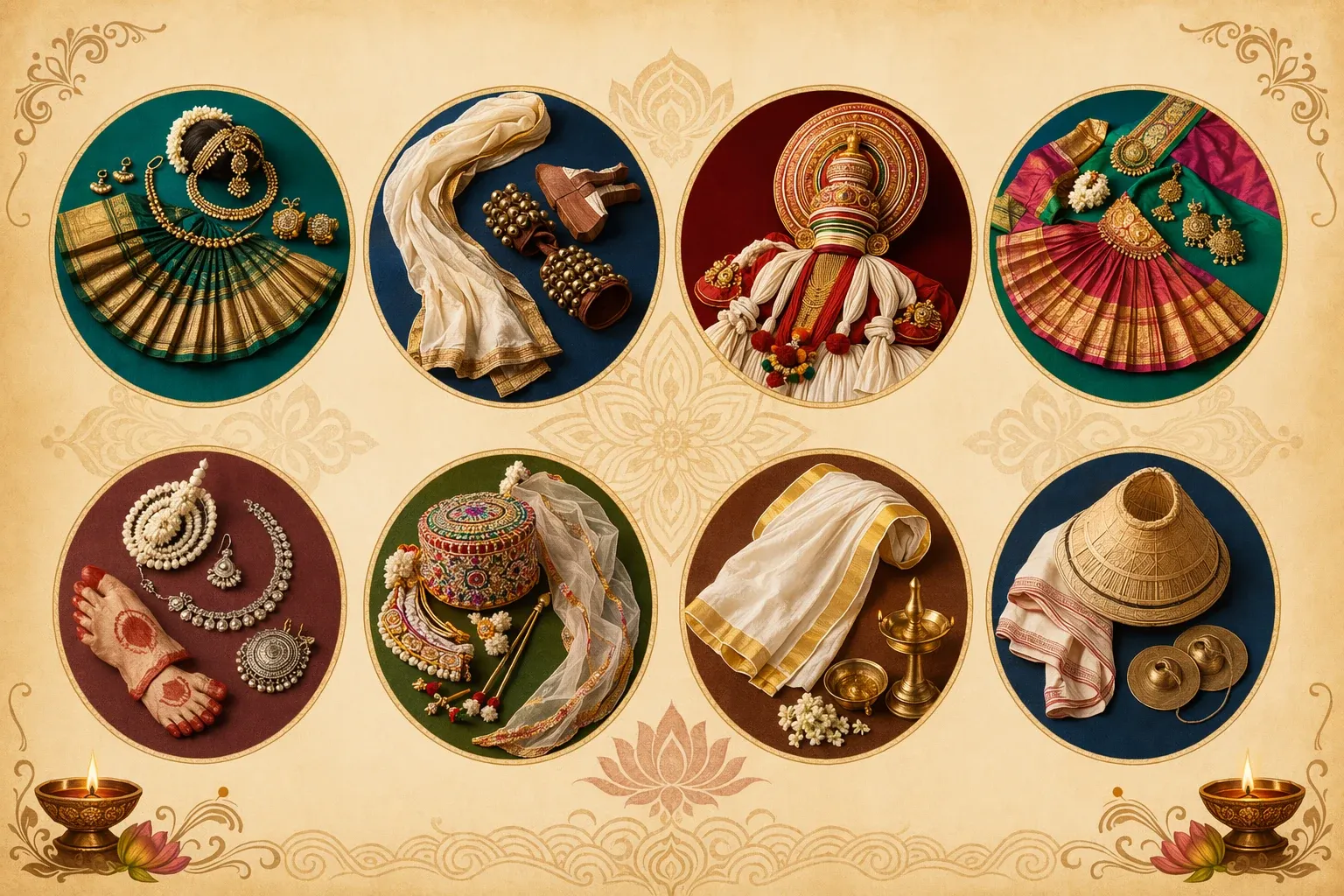
Indian classical dance can feel confusing at first because beginners meet many names, regions, costumes, gods, stories, gestures, and school-list variations at once. A simple starting point is the widely taught list of eight recognised classical dance forms. This guide explains those eight forms in plain language, with their regions and key features.
The goal is not to reduce living traditions to a checklist. Each form has its own training system, music, costume, language, devotional background, and modern stage life. Think of this as a map before you start exploring the real performances.
The eight forms in one list
The commonly taught eight classical dance forms of India are Bharatanatyam from Tamil Nadu, Kathak from North India, Kathakali from Kerala, Kuchipudi from Andhra Pradesh, Odissi from Odisha, Manipuri from Manipur, Mohiniyattam from Kerala, and Sattriya from Assam.
This list is widely used in cultural education and is connected with recognition by national cultural institutions. For a broader foundation on what “classical” means in this context, read our guide to Indian classical dance for beginners.
A simple memory map
South India gives us Bharatanatyam, Kuchipudi, Kathakali, and Mohiniyattam. Eastern India gives us Odissi and Sattriya. North India gives us Kathak. The northeast gives us Manipuri and Sattriya. This map is not perfect because artists travel and traditions spread, but it helps beginners remember regional roots.
Bharatanatyam
Bharatanatyam is associated with Tamil Nadu and is known for strong geometry, expressive storytelling, precise footwork, sculptural poses, and devotional themes. A beginner may notice the half-sitting posture, clear lines, hand gestures, and facial expression used to tell stories from Hindu tradition and classical poetry.
Kathak
Kathak is linked with North India. It is famous for spins, rhythmic footwork, graceful movement, storytelling, and interaction with music. Kathak carries both temple-storytelling roots and courtly influences, which is why it can feel devotional, elegant, and rhythmically dazzling at the same time.
Kathakali
Kathakali comes from Kerala and has a powerful theatre-like presence. Its elaborate makeup, large costumes, dramatic faces, and strong gestures make it visually unforgettable. Beginners should not treat it as only “colourful costume”; Kathakali requires intense training in body control, expression, rhythm, and story.
Kuchipudi
Kuchipudi is associated with Andhra Pradesh and has a lively dance-drama character. It can include graceful movement, expressive storytelling, rhythmic passages, and theatrical energy. Some performances include famous traditional elements such as dancing on a brass plate, but the form is much larger than one stage trick.
Odissi
Odissi comes from Odisha and is often described as graceful, sculptural, and lyrical. Beginners may notice the tribhanga posture, where the body bends in three parts, and the deep connection with temple culture, poetry, devotion, and the Jagannath tradition.
Manipuri
Manipuri is associated with Manipur and is known for softness, devotion, circular movement, and a gentle visual quality. Krishna bhakti themes are important in many performances. Its beauty is quieter than some other forms, so beginners should watch patiently instead of expecting only dramatic speed.
Mohiniyattam
Mohiniyattam comes from Kerala and is known for gentle lasya grace, flowing movement, and a soft visual style. The costume, swaying movement, and expressive storytelling create a calm, elegant mood. It is different from Kathakali even though both are connected with Kerala.
Sattriya
Sattriya comes from Assam and grew from Vaishnavite monastery traditions connected with Srimanta Sankardev. It includes devotional storytelling, music, rhythm, and community memory. Many beginners forget Sattriya because it became widely recognised later in national lists, but it is a rich and living tradition.
Why people ask eight or nine
Some learners hear eight, nine, or more because India has many major performance traditions. Chhau, Yakshagana, Bhagavata Mela, and other forms are culturally important even when they are not always placed inside the standard beginner list of eight. A respectful answer is: the standard classical-dance list is eight, but India’s performance heritage is much larger than one list.
How to explore next
Watch one short performance from each form before deciding which one you like. Notice posture, rhythm, costume, music, facial expression, and storytelling. Also listen to the music carefully; our Indian classical music beginner guide can help you understand why rhythm and melody matter so much in dance.
What beginners should remember
The eight classical dance forms are not just exam names. They are living art traditions shaped by region, devotion, training, language, music, and stage practice. Learn the list, but do not stop at the list. Watch respectfully, credit the artists, and let each form show you a different doorway into Indian culture.
What beginners should watch for
When you watch a performance, look beyond costume. Notice the dancer’s eyes, hands, feet, posture, rhythm, and relationship with music. In many forms, abhinaya, or expression, is as important as movement. A dancer may become a character, show devotion, describe nature, or express emotion through tiny changes in face and gesture.
Also notice training discipline. Classical dance is not only “beautiful steps”. Students spend years learning basic posture, rhythm cycles, hand gestures, repertoire, body conditioning, theory, and stage etiquette. This is why a short performance can carry centuries of practice behind it.
Respecting living artists
Beginners sometimes treat dance forms as museum objects, but these traditions are alive. Artists experiment, teach online, collaborate, revive old compositions, and perform for new audiences while still respecting grammar. The best way to learn is to watch real dancers, read their notes, attend lecture-demonstrations, and avoid using costumes as stereotypes.