Mudras as a dance language
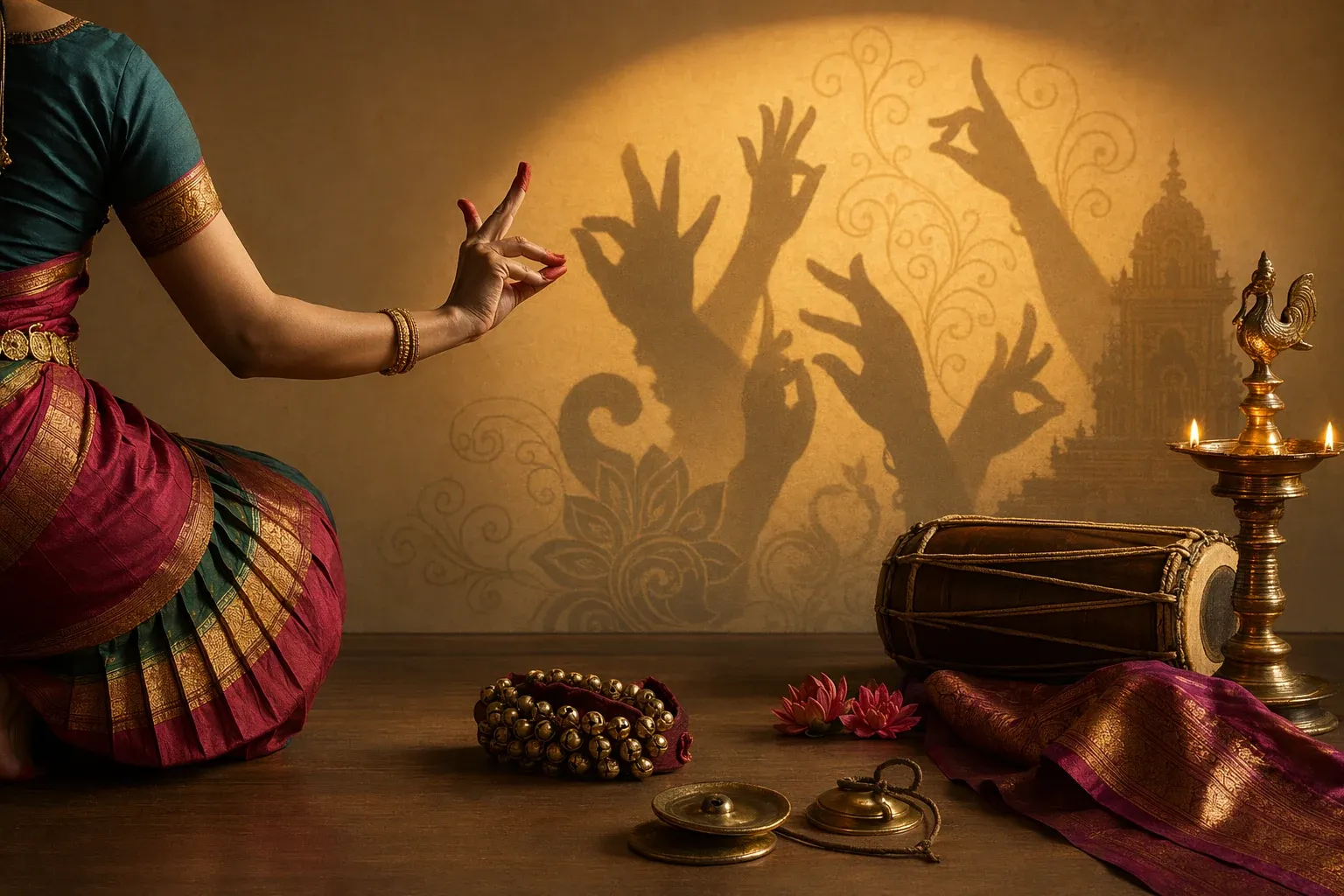
In Bharatanatyam, mudras are not just pretty hand shapes. They are part of a complete storytelling language. A dancer can use the hands to show a lotus, moon, deer, river, flute, crown, rain, friendship, anger, wonder, devotion, and much more. The hands work with eyes, face, footwork, rhythm, music, costume, and poetry.
For beginners watching a performance, Bharatanatyam mudras can feel like secret code. Once you learn a few basics, the dance opens up. You begin to see not only movement but meaning.
Hasta and mudra: a helpful note
In classical dance discussions, you may hear the word hasta, meaning hand. Many people casually say mudra for dance hand gestures, and that is common online. Teachers may use more precise terms such as asamyuta hasta for single-hand gestures and samyuta hasta for double-hand gestures. If you are learning formally, follow your teacher’s vocabulary.
The key idea is simple: the hand is trained to communicate clearly. A small finger change can alter the meaning, so discipline matters.
Single-hand and double-hand gestures
Single-hand gestures use one hand. Double-hand gestures use both hands together. A dancer may use the same hand shape in different ways depending on movement, facial expression, and story. This is why memorising a list is not enough. The same gesture may represent different things when placed in a different scene.
For example, a hand may show a bird in one moment and an arrow in another, depending on how it moves and what the dancer’s eyes express. Bharatanatyam asks the whole body to support the meaning.
Storytelling through abhinaya
Abhinaya is the art of expression and communication in Indian classical dance. Mudras are one tool inside abhinaya. Suppose the song describes Krishna playing the flute. The dancer’s hands may shape the flute, the eyes may look lovingly toward Krishna, and the body may sway with the music. The audience understands the scene because gesture, emotion, and rhythm come together.
In a devotional piece, folded hands can show prayer. A raised palm can show blessing or command, depending on context. Hands can become flowers offered to a deity or clouds gathering before rain. The dancer is not only moving; the dancer is narrating.
Why training matters
A Bharatanatyam mudra must be clean, steady, and intentional. Fingers should not be lazy or random. The wrist, elbow, and shoulder must support the shape. The eyes often follow the hand. The face gives emotional colour. This coordination takes years of practice.
That does not mean beginners cannot enjoy the dance. It means we should respect the work behind it. A mudra that looks easy in performance may require deep training to make it clear and graceful.
Examples a beginner can notice
When palms join near the chest, the dancer may show greeting, prayer, or reverence. When both hands open like a flower, the dancer may suggest a lotus or offering. A hand near the ear may show listening. A gesture near the mouth may suggest speaking, drinking, or playing an instrument depending on the scene.
Instead of trying to decode everything at once, choose one performance and notice repeated gestures. Ask: What is the dancer looking at? What does the music say? What emotion is on the face? The mudra will make more sense.
Bharatanatyam and devotion
Many Bharatanatyam compositions are connected with Hindu devotional poetry, temple traditions, and stories from epics and puranas. Mudras help bring these stories alive. A dancer may show a devotee calling to the divine, a mother speaking to a child, or a heroine longing for Krishna.
At the same time, Bharatanatyam is also a rigorous performing art with technique, grammar, and creative interpretation. Reducing it to a few hand signs misses its depth.
A small viewing exercise
During one Bharatanatyam video, choose only the hands to observe for the first minute. Then watch again and include the eyes. On a third viewing, include the music and lyrics if subtitles are available. You will notice how meaning grows layer by layer.
Respectful watching and learning
If you watch a performance, read the programme note if available. It often explains the song, deity, language, and story. Do not mock facial expressions; they are part of abhinaya. Do not copy sacred or classical gestures for jokes. If you want to learn, join a class or follow a trained teacher rather than random clips.
For Gen Z viewers, short videos can be a great entry point, but let them lead you toward deeper learning, not replace it.
FAQ
Are Bharatanatyam mudras the same as yoga mudras?
No. Some hand shapes may look similar, but dance has its own grammar, training, and storytelling purpose. Yoga mudras are used differently.
Can one mudra have many meanings?
Yes. Meaning depends on movement, expression, song, and context. That is part of the beauty of Bharatanatyam.
Do I need to know Sanskrit or Tamil to understand the dance?
It helps, but it is not required to begin. Programme notes, teacher explanations, and careful watching can guide you.
Where to go next
For common hand-sign types, read `mudra-hands-hand-signs-types-explained`. For temple gestures, read `anjali-dhyana-abhaya-mudra-meanings`. For the broad meaning of mudra, read `what-is-mudra-meaning-purpose-beginners`.