
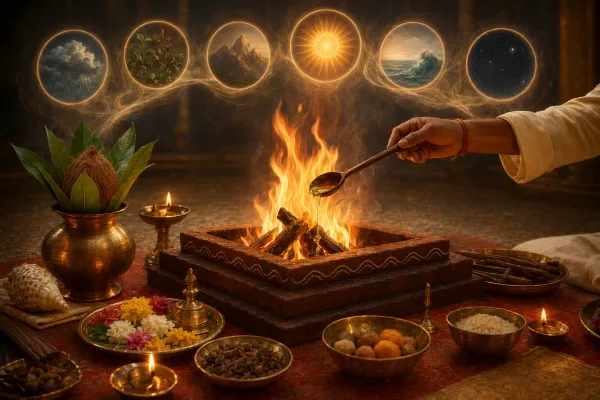
Who Is the Main Deity in Yajna? Agni, Offerings, and Devata Explained
A beginner-friendly guide to Agni’s central role in yajna, the meaning of devata, and why different rituals may invoke different deities.
A beginner-friendly guide to Agni’s central role in yajna, the meaning of devata, and why different rituals may invoke different deities.
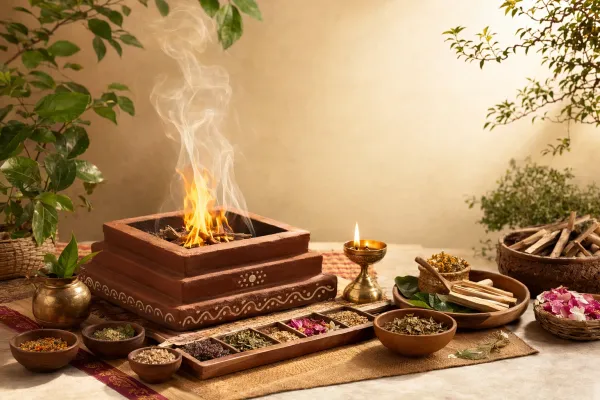
Eco-friendly yajna means choosing clean materials, good ventilation, careful fire safety, and respectful disposal without turning devotion into harm.

Yajnas are still part of living practice. Here is how priests, online bookings, livestreams, fees, and respectful checks work today.

Women’s participation in yajna depends on tradition, role, family practice, and context. Here is a respectful way to understand the question.
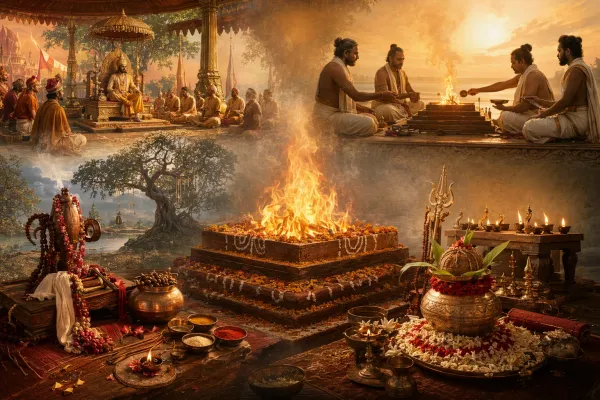
Rajasuya, Putrakameshti, Daksha Yajna, and Navchandi are remembered for different reasons. This guide explains them simply and respectfully.
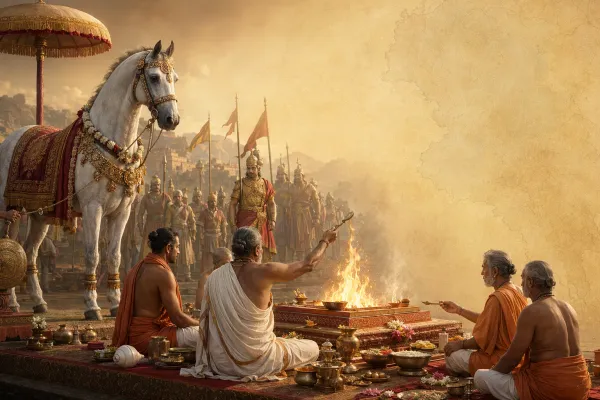
Ashwamedha Yagna was an ancient royal ritual described in Hindu texts. Here is its meaning, story context, symbolism, and modern caution.
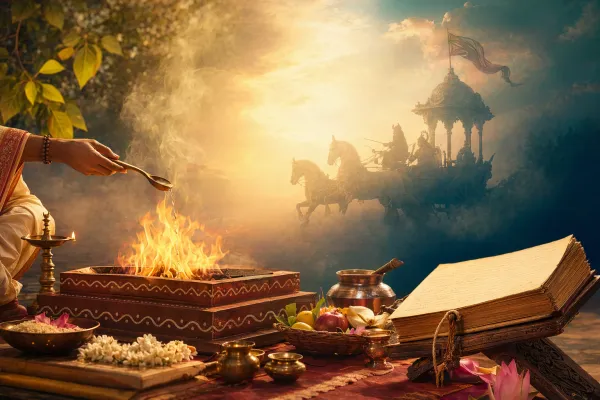
In the Bhagavad Gita, yajna becomes more than ritual fire: it points to selfless action, offering, discipline, and living without selfish attachment.

A simple home yajna should be learned respectfully, kept safe, and done with guidance instead of treating sacred fire as a casual experiment.
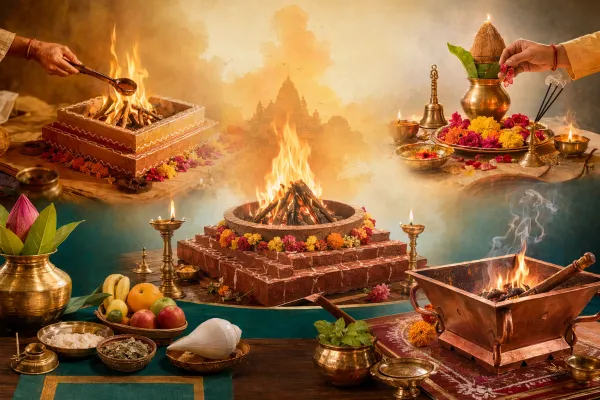
Yajna, havan, puja, and homam are related words, but they are not always used in exactly the same way across regions and traditions.