
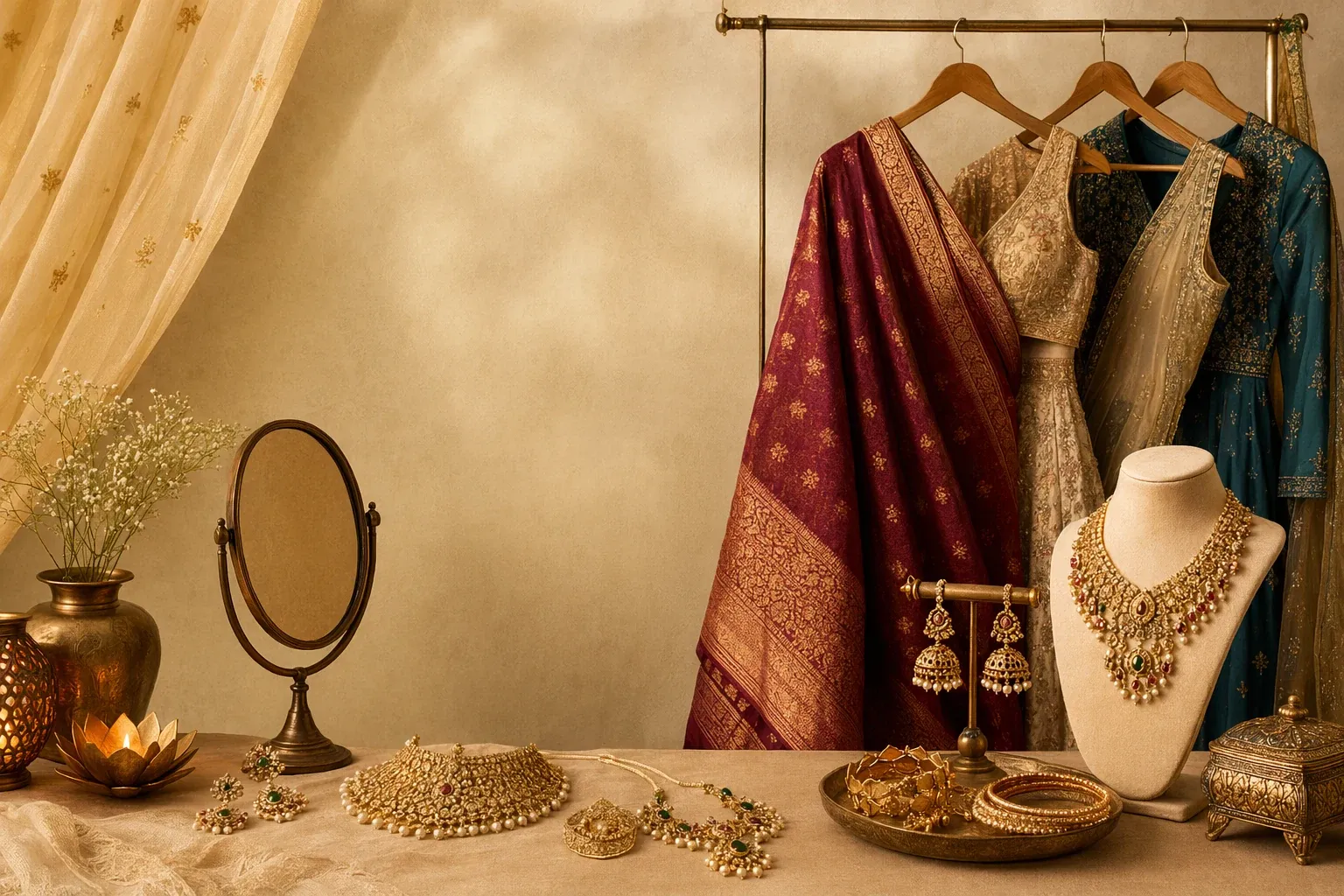
Indian jewellery can transform an outfit, but styling it well is not about wearing the heaviest piece in your box. It is about balance. A pair of jhumkas can make a plain kurta festive. A temple necklace can give a silk saree a graceful South Indian mood. A silver choker can make a black dress look rooted and modern. A maang tikka can complete a lehenga, but it may feel too much with a busy neckline and huge earrings.
The best styling question is not, “What is the trend?” It is, “What is the focus of this look?” Once you choose the focus, the rest of the jewellery can support it instead of fighting with it.
For names and styling context, pair this guide with types of Indian jewellery, traditional Indian necklace types, maang tikka and forehead jewellery, Indian bridal jewellery traditions, and Indian temple jewellery because outfit styling becomes easier once you can identify the ornament and the mood it carries.
Let one piece lead the look
Indian ornaments are often expressive: kundan chokers, polki-style sets, meenakari earrings, temple necklaces, glass bangles, oxidised silver cuffs, pearl rani haars, and heavy bridal matha pattis. If every piece is loud, the eye has nowhere to rest. Choose one hero piece first. It may be the necklace, earrings, bangles, nose ring, waist belt, or hair ornament.
If your hero piece is a broad choker, keep earrings medium or skip a second necklace. If your earrings are large chandbalis, choose a lighter chain or bare neck. If your bangles are colourful lac or glass stacks, keep rings simpler. This is not a strict rule; brides and classical dancers may wear layered jewellery beautifully. But for everyday and party styling, one main piece usually looks more confident.
Match the neckline before matching the colour
Neckline decides necklace more than colour does. A deep V-neck blouse works well with a pendant or layered necklace that follows the V shape. A boat neck or high-neck kurta often looks better with statement earrings and no necklace. A sweetheart or square neckline can carry a choker or collar necklace. A plain round neck may suit a short pendant, hasli, or small beads.
With sarees, also notice the blouse and pallu. A heavy pallu near the neck can make a large necklace feel crowded. A plain blouse can handle a stronger neckpiece. With lehengas, the blouse embroidery matters. If the blouse already has mirror work, zari, pearls, or stones, jewellery should not scratch or visually overload it.
Metal tone can create warmth and contrast
Many people worry about mixing gold and silver. Traditional Indian styling often keeps a clear metal mood: gold with silk sarees and temple jewellery, silver with cottons and tribal-inspired looks, pearls with soft festive outfits, kundan or polki-style pieces with lehengas. This works because it creates harmony. But modern outfits can mix metals if the look is intentional.
A white shirt with jeans can take oxidised silver jhumkas. A black dress can look elegant with a gold cuff and small kundan studs. A pastel kurta can carry pearls and meenakari. A rust handloom saree may glow with antique gold. A blue cotton kurta may look relaxed with silver bangles. Do not ask only whether metals match; ask whether the whole mood feels calm, festive, royal, earthy, playful, or minimal.
Respect the fabric and region of the outfit
Indian textiles and jewellery speak to each other. A Kanjeevaram saree often pairs naturally with gold or temple-style jewellery because both share a rich ceremonial language in many South Indian settings. A Banarasi saree may carry kundan, pearls, gold, or polki-style pieces. A Bandhani dupatta can look beautiful with oxidised silver or traditional gold depending on the occasion. A chikankari kurta often looks graceful with pearls, small jhumkas, or delicate silver.
This does not mean you must dress like a museum label. Fusion is welcome. But knowing the cultural mood helps you style with respect. If you wear temple motifs, deity pendants, bridal chooda, mangalsutra, toe rings, or nose ornaments, understand that some pieces may carry ritual or community meaning for many people. You can still style thoughtfully, especially when dressing for weddings, festivals, college events, or photoshoots.
Balance earrings with hair and face shape
Hair changes jewellery. Open hair can hide small earrings, so studs, drops, or bright stones may work better than delicate details. A bun or braid makes jhumkas, chandbalis, ear chains, and hair ornaments more visible. Short hair can make bold earrings look stylish because the face is open. If the earrings are very heavy, use support chains or lighter versions so the earlobe is not pulled for hours.
Face shape is flexible, not a prison. Long earrings can lengthen a round face, round chandbalis can soften a narrow face, and small studs can keep a busy outfit neat. But comfort matters more than formula. If you feel confident in big jhumkas, wear them; just make sure they are safe for the occasion.
Create fusion looks without making them messy
Fusion styling works when one side anchors the look. With a blazer, try a single striking brooch, small kundan studs, or a silver ring stack. With a plain dress, try a temple pendant, oxidised choker, or pearl earrings. With jeans and a kurta, try bangles and jhumkas but keep the necklace simple. With a crop top and skirt, a waist chain or layered beads can add Indian character without turning the outfit into costume.
The easiest fusion formula is simple clothes plus expressive jewellery. A white shirt with a silver hasli, a black kurta with red glass bangles, a linen saree with handmade earrings, or a plain lehenga skirt with a colourful dupatta and one necklace can look fresh without feeling forced.
Dress for the event, not only the mirror
A wedding sangeet, office festive day, temple visit, college farewell, family puja, date night, and travel day need different jewellery. For dancing, avoid pieces that catch on hair or fabric. For long rituals, choose secure clasps and manageable weight. For office, smaller earrings, a pendant, or one bracelet may be enough. For travel, avoid expensive sentimental pieces unless you can keep them safe.
Also think about sound. Bangles and anklets can be joyful at a wedding, but distracting in a classroom or meeting. A good stylist is practical. The outfit must survive sitting, eating, hugging relatives, taking photos, walking stairs, and returning home without stress.
Build a small useful jewellery wardrobe
You do not need hundreds of pieces. A beginner box can include one pair of small gold-tone earrings, one pair of statement jhumkas, one silver or oxidised pair, one simple pendant, one festive necklace, a bangle set, one ring you love, and maybe pearls or meenakari for colour. Add special pieces slowly: a maang tikka for weddings, a waist belt for sarees, a nath if you wear nose jewellery, or a temple-style set for silk outfits.
Indian jewellery is personal. It can be inherited from a grandmother, bought from a local artisan, saved for a festival, or chosen from a modern brand. Style it with joy, but also with rhythm. Let the jewellery and outfit have a conversation. When they listen to each other, the look feels effortless.
FAQs
How do I style Indian jewellery with western outfits?
Keep the clothes simple and let one Indian piece lead. Try silver jhumkas with a white shirt, a kundan choker with a plain dress, a temple pendant with a black top, or bangles with a minimal jumpsuit. Avoid too many statement pieces at once.
Should earrings and necklace always match?
No. Matching sets work for weddings and formal looks, but mixing can look more natural. Keep one shared element such as metal tone, colour, motif, pearl, enamel, or overall mood so the pieces feel connected.