
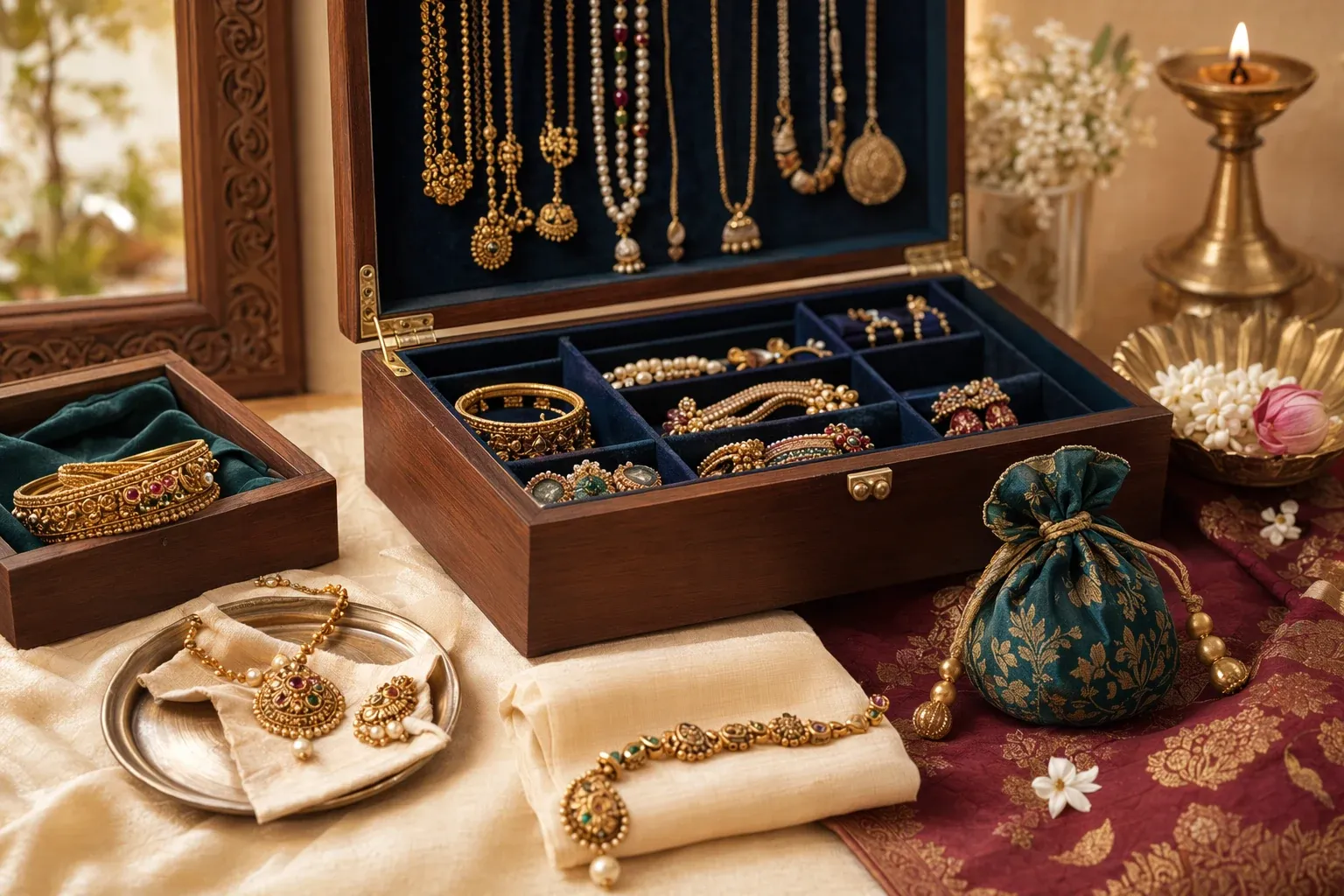
Indian jewellery often carries more than style. A pair of silver anklets may come from a local market visit. A gold chain may be a family gift. A kundan-style set may be saved for weddings. Glass bangles may remember a festival. A temple necklace may come out only with silk sarees. Because these pieces hold money, craft, memory, and emotion, storage and care should be calm and careful.
The first rule is simple: do not treat every ornament the same. Gold, silver, pearls, plated pieces, enamel, kundan, glass, lac, beads, and imitation stones react differently to moisture, pressure, perfume, heat, and cleaning chemicals. A method that is safe for a plain gold chain may damage pearls or loosen stones in a bridal set.
Care becomes simpler when you know what type of piece you own, so read this with traditional Indian jewellery basics, types of Indian jewellery, what a kundan necklace is, Indian temple jewellery, and traditional Indian necklace types before choosing storage boxes, cloth pouches or cleaning methods for specific ornaments.
Separate pieces before they mark each other
Indian jewellery is full of edges, hooks, chains, beads, ghungroos, meenakari backs, stone settings, and textured surfaces. When everything sits together in one box, pieces rub, tangle, and get marked. Store necklaces flat or hung separately. Keep earrings in pairs. Place rings in slots or small pouches. Put bangles in rolls or compartments so glass and lac pieces are not pressed under weight.
Soft cloth pouches are useful, especially for silver, plated jewellery, and pieces with stones. For heavy necklaces, avoid hanging them on weak hooks for long periods because the weight can strain links. For maang tikkas, passa, waist belts, anklets, and haath phool, close hooks before storing so chains do not catch.
Keep jewellery dry and away from daily chemicals
Moisture is one of the biggest enemies of many ornaments. Sweat, perfume, hair spray, lotion, sanitizer, and water can dull plating, darken silver, loosen glue, harm pearls, or leave residue around stones. A good habit is to wear jewellery last after makeup, perfume, and hair products, and remove it first when you return home.
Never throw worn jewellery directly into a closed box after a hot day or wedding function. Let it air for a short time, wipe gently with a soft dry cloth, and then store it. This matters for earrings, bangles, and necklaces that sit close to skin. For humid cities such as Mumbai, Chennai, Kolkata, Kochi, or Guwahati, silica gel packets in storage boxes can help reduce moisture, but keep them away from children.
Care for gold without over-cleaning it
Plain gold jewellery is more durable than many materials, but it still needs care. A soft cloth after wearing is often enough for daily maintenance. For plain gold chains, rings, or bangles without delicate stones, mild soap in lukewarm water can sometimes be used, followed by careful drying. But avoid harsh scrubbing, toothpaste, bleach, or strong household cleaners.
Gold ornaments with kundan-style settings, enamel, pearls, lac filling, or stones should not be soaked casually. Water can enter settings and weaken parts that are not meant for soaking. If a piece is expensive or sentimental, professional cleaning is safer than internet experiments.
Silver needs air control and gentle polishing
Silver naturally tarnishes when it reacts with air and sulphur compounds. This is normal, not a sign that the ornament is fake. Store silver anklets, toe rings, rings, and oxidised earrings in anti-tarnish cloth or separate pouches. Keep them dry. If you like the dark oxidised look, do not polish aggressively, because you may remove the finish that gives the piece its character.
For plain silver, a proper silver polishing cloth can help. Avoid rough powders and random chemical dips, especially on pieces with stones, enamel, or blackened details. Many Indian silver ornaments have carved surfaces; careless polishing can leave white residue in grooves.
Protect kundan, polki-style, enamel, and pearls
Kundan, polki-style, meenakari, and pearl pieces deserve extra patience. Kundan-style jewellery may include delicate setting work and foil-backed stones. Meenakari enamel can chip if banged against hard surfaces. Pearls are organic gems and can be harmed by acids, perfume, and rough cleaning. Store these pieces separately in soft cloth, not in plastic that traps moisture for long periods.
Do not soak pearl strings, kundan chokers, or enamelled bridal pieces. Wipe gently after wearing and let them dry before storage. Put pearls on after perfume and makeup, not before. If a string feels loose, get it restrung instead of waiting for it to break during a function.
Handle glass bangles, lac, and imitation jewellery honestly
Fashion jewellery is not made to survive harsh treatment. Glass bangles can break under pressure. Lac bangles can soften or warp in heat. Plated jewellery can lose colour if exposed to sweat, perfume, water, or friction. Imitation stones may be glued, so soaking can loosen them. Treat these pieces kindly and accept that some are seasonal, not lifelong heirlooms.
Store glass bangles by size in a bangle box or roll. Keep lac away from direct heat and heavy weight. For plated earrings and necklaces, wipe after wearing and store individually so the surface does not rub. If a piece is very cheap but meaningful, it still deserves care; value is not only market price.
A small repair routine protects the piece
Every few months, inspect clasps, jump rings, earring backs, necklace strings, stone settings, screw posts, and bangles. Many losses happen because a tiny ring opens or a clasp weakens. Keep spare earring backs, small zip pouches, and a labelled repair envelope. Do not keep broken pieces loose with good pieces; they can mark or tangle with other ornaments.
For valuable gold or family jewellery, maintain invoices, hallmark details, photographs, and repair records. If a piece has a HUID or certificate, keep that information safely. For inherited jewellery, take clear photos before repair so changes are documented.
Pack jewellery safely for travel
Travel is where many ornaments get damaged. Use a jewellery roll or small boxes with compartments. Thread delicate chains through a straw or wrap them in tissue to reduce tangles. Put earrings through a small card so pairs stay together. Carry expensive pieces in hand luggage when possible, not in checked bags. Avoid taking sentimental heirlooms unless the event truly needs them.
After travel, unpack immediately. Do not leave jewellery in a suitcase with damp clothes, cosmetics, and pressure from other items. A five-minute unpacking habit can save hours of untangling and repair.
A respectful care habit
Good jewellery care is not about fear. It is about gratitude. Indian ornaments are made by miners, metalworkers, stone cutters, enamel artists, stringers, polishers, designers, sellers, and family hands that pass pieces forward. When you store a necklace flat, wipe a pair of jhumkas, or keep bangles from breaking, you are protecting that chain of work.
Build a simple routine: wear jewellery after cosmetics, remove it before bathing or sleeping, wipe it gently, air it for a short time, store it separately, and repair small problems early. These small actions keep beauty alive for many more festivals, weddings, photos, and ordinary days.
FAQs
How should I store Indian jewellery at home?
Store pieces separately in soft pouches, boxes, rolls, or compartments. Keep them dry, avoid tangles, separate silver from other metals, and protect delicate kundan, pearls, enamel, lac, and glass bangles from pressure and moisture.
Can I clean all Indian jewellery with soap and water?
No. Plain gold may tolerate gentle cleaning, but pearls, kundan-style pieces, enamel, plated jewellery, lac, glued stones, and oxidised silver can be damaged by soaking or harsh chemicals. When unsure, wipe gently with a soft dry cloth or ask a jeweller.