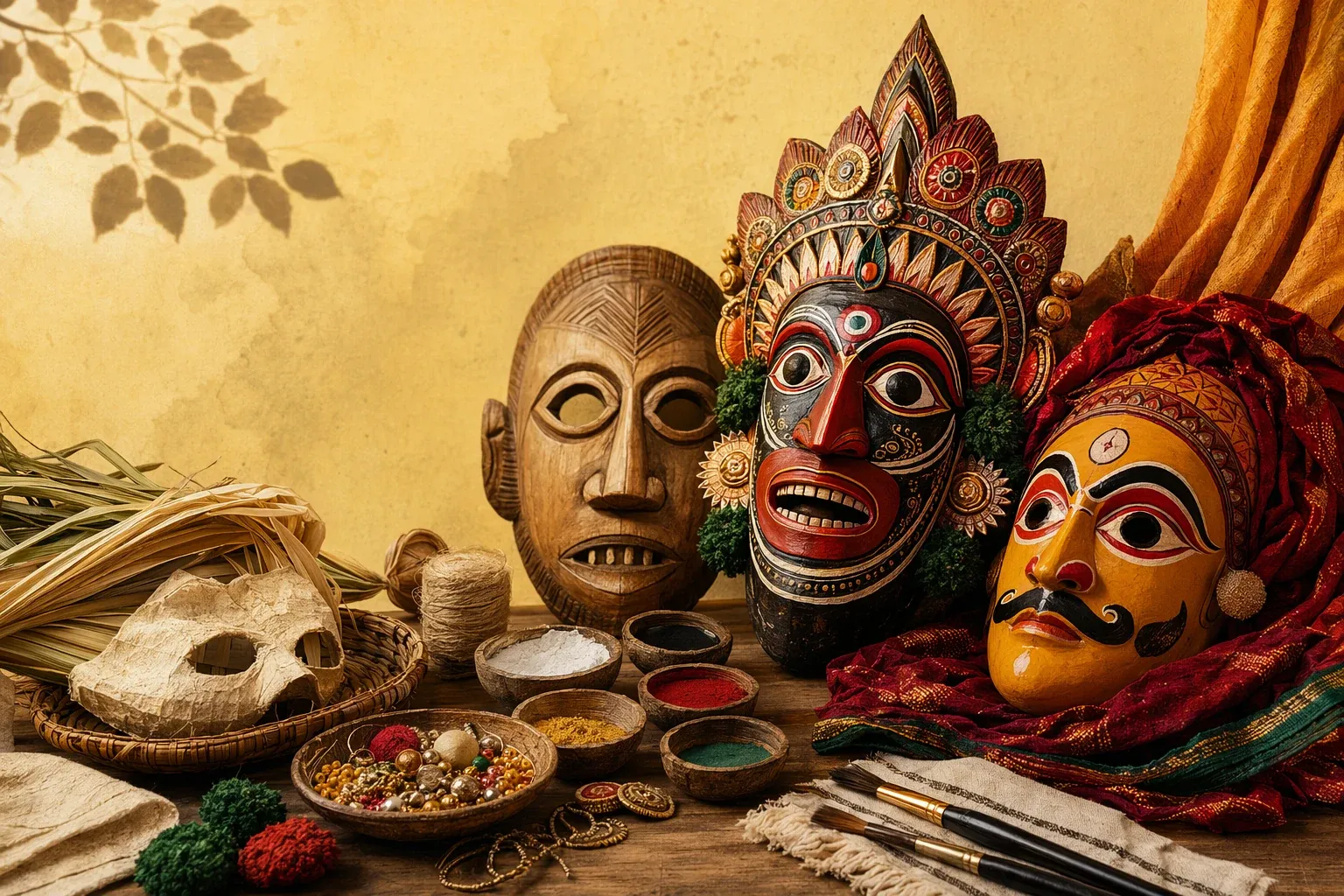
Indian masks are made from many materials because India’s mask traditions are not one single craft. A mask may be carved from wood, built from paper and cloth layers, painted on palm or plant material, shaped with clay or natural fibre, decorated with fabric and ornaments, or combined with a larger costume and headgear. The material depends on region, climate, performance style, ritual rules, availability, weight, and how the mask will move on the performer’s body.
A mask for a fast dance has different needs from a mask kept in a shrine or a decorative piece sold to visitors. It must be light enough to wear, strong enough to survive movement, visible enough for an audience, and meaningful enough to match the character. That is why material is never just a technical detail. It shapes how the mask looks, how the performer moves, and how the community cares for it.
Wooden masks and carved faces
Wood is one of the best-known materials for Indian masks. It can be carved into clear facial forms, painted brightly, and reused across performances. Kerala’s Kummattikali is a helpful example. Public descriptions of the tradition mention colourful wooden masks worn during Onam-related performances, depicting figures such as Krishna, Narada, Kiratha, Darika, or hunters. The dancers may also wear grass costumes, so the wooden face becomes part of a full seasonal performance look.
Different woods may be chosen because they are available locally, light enough to wear, or suitable for carving. A performer does not want a mask that is painfully heavy or impossible to balance. The craftsperson has to think like both an artist and a practical engineer: where will the eyes be, how will air pass, how will the mask sit, and how much movement can it handle?
Paper, cloth, clay, and layered construction
Not every mask is carved from a solid block. Some traditions use layered construction, where paper, cloth, clay, paste, and other materials help build a strong but relatively light surface. This kind of method is especially useful when a mask needs a large crown, exaggerated cheeks, wide eyes, or dramatic shape without becoming too heavy.
Chhau masks, especially in the Purulia style, are widely associated with bold painted faces, crowns, and decorative extensions. UNESCO’s Chhau listing confirms that Purulia and Seraikella styles use masks, while Mayurbhanj is generally performed without masks. The exact workshop methods can vary, but the craft logic is easy to understand: a performance mask must look powerful from a distance and still allow the dancer to move with martial energy, jumps, turns, and rhythm.
Palm leaves, plant fibre, and festival surfaces
Plant materials also appear in Indian mask and performance traditions. Padayani in central Kerala is often described as a ritual art involving masks or kolam forms, painting, percussion, theatre, satire, and Bhadrakali-related temple worship. Its visual forms are closely associated with plant-based surfaces such as areca palm material in many descriptions of the tradition.
Kummattikali again shows how plant material can surround the mask. Performers wear grass costumes along with painted wooden faces. This reminds us that a mask is not always only the face. In performance, the audience sees a whole body image: face, hair, crown, costume, skirt, ornaments, sticks, and movement. Natural materials help create that full character.
Paint, colour, and character identity
Paint is one of the most important “materials” in a mask because colour carries identity. Red, black, white, green, yellow, and gold may be used to separate divine, heroic, fierce, comic, animal, or demonic characters. Large eyes, teeth, moustaches, eyebrows, crowns, and forehead marks help the audience read the role quickly.
These colours should not be treated as a universal code for all Indian traditions. A colour that means one thing in one region may not mean the same thing elsewhere. But the general purpose is clear: paint makes the character visible. In open-air performance, subtle naturalism is less useful than a strong face that can be recognised from far away.
Cloth, ornaments, and headgear
Many masks are not complete without cloth and decoration. Fabric may tie the mask to the head, cover edges, create hair, form a beard, or connect the mask to the costume. Crowns, beads, foil, mirrors, feathers, paper flowers, and painted extensions can make the face larger and more impressive. In some traditions, the headgear may be as important as the face.
Kathakali helps us understand this point even though it is not usually a literal mask tradition. Its famous visual power comes from makeup, costume, headgear, and controlled expression. The performer’s face is painted rather than covered, but the larger lesson applies to masks too: the face, head, costume, and body must work together. A mask without its performance setting is only part of the design.
Ritual use changes how objects are handled
Materials also matter because some masks are not treated as ordinary objects. In Ramman, the Garhwal ritual theatre described by UNESCO, the Narasimha mask is especially sacred and can be worn only by people with the traditional right to do so. That fact is about community rules, but it also affects handling, storage, repair, and display. A sacred mask may not be touched, photographed, worn, or moved casually.
Decorative masks made for sale are different. They may use similar colours or shapes, but they are created for display rather than ritual performance. Buying a craft mask can support artisans, but the buyer should not automatically claim it is an “ancient sacred object.” Honest context is better than romantic exaggeration.
Why lightweight does not mean simple
Beginners often assume that a heavier mask is more “authentic.” That is not a good rule. Performance objects often need to be light. A dancer may have to leap, turn, bend, act, listen to drums, keep balance, and breathe. A light material can show great skill if it is shaped, painted, and balanced well. Durability, comfort, repairability, and visibility all matter.
Craft knowledge is practical knowledge. The artisan has to know how paint behaves, how paste dries, how wood cracks, how sweat affects straps, how a crown changes balance, and how far the audience will stand. The best masks are not only beautiful in photographs. They work in performance.
A careful way to describe materials
So, what are Indian masks made of? The safest answer is: different traditions use wood, paper or papier-mache-like layering, cloth, clay or paste, palm and plant materials, paint, natural fibre, ornaments, and sometimes metal or other decorative pieces. But the better answer includes place and purpose. A Kummattikali wooden mask, a Chhau performance mask, a Padayani kolam, a sacred Ramman mask, and a tourist wall mask are not the same kind of object.
When describing a mask, try to mention the region, tradition, character, material, and use. That small habit protects the craft from becoming a vague “Indian” decoration. It also honours the artisans and performers who know exactly why a mask is made that way.
For more context around craft and tradition, see our introductions to Indian folk art and Indian mask history and culture.