
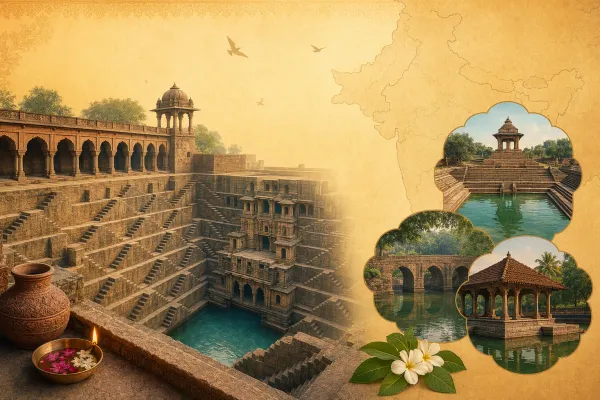
Are Stepwells Only in India? Indian Stepwells and Similar Water Structures
Stepwells are most strongly associated with India, especially western India, but similar stepped water ideas should be compared carefully.
Stepwells are most strongly associated with India, especially western India, but similar stepped water ideas should be compared carefully.
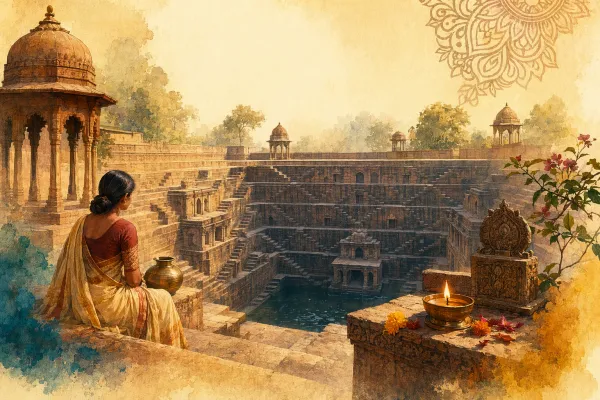
Most famous stepwells are now heritage sites, not everyday water sources, but they still shape tourism, memory, conservation, and water awareness.
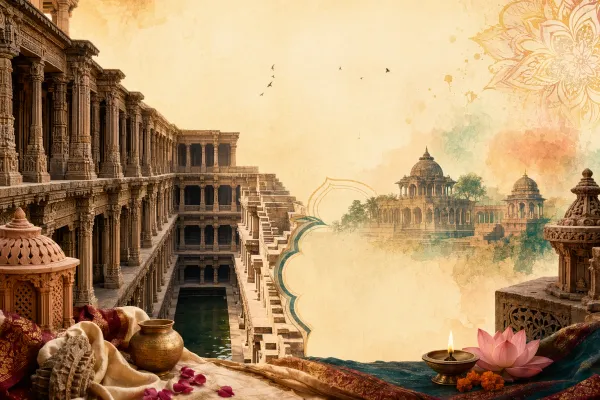
Gujarat’s vavs show how water, architecture, public service, and beauty came together in stone across Patan, Ahmedabad, and beyond.
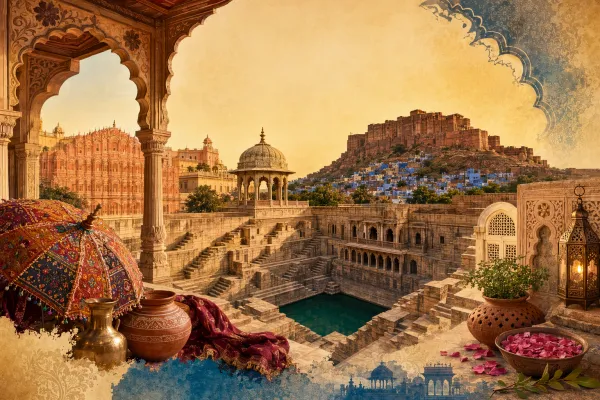
Rajasthan’s baoris show how desert-region communities handled water, heat, travel, shade, and public life with practical stone design.
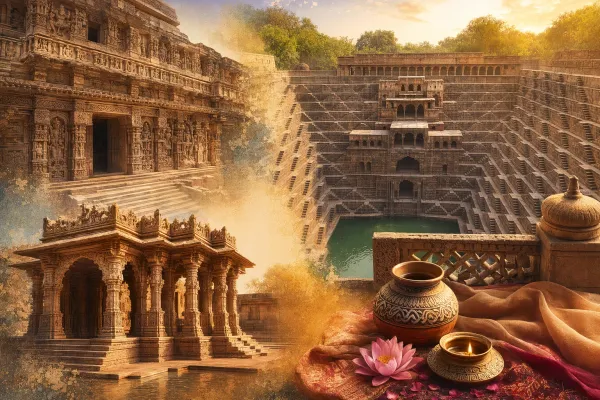
India’s famous stepwells are more than photo spots. Rani ki Vav, Chand Baori, Agrasen ki Baoli, and Adalaj ni Vav reveal water wisdom.
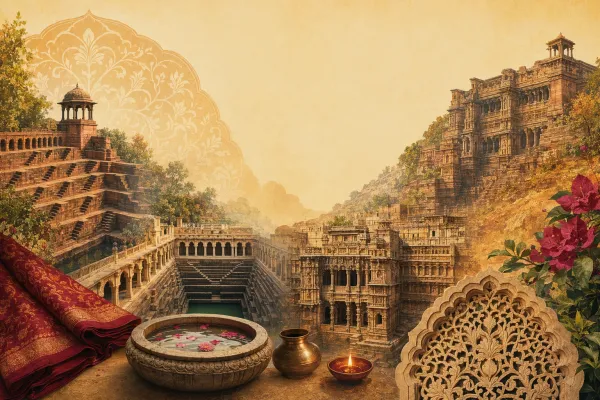
Stepwells have many Indian names, from baoli and baori to vav and vaav. Each name carries a region, language, and water tradition.
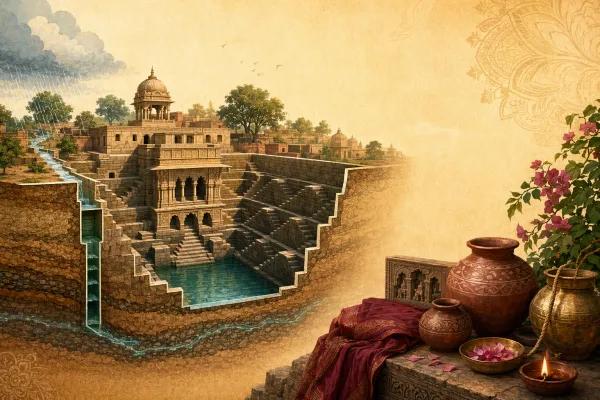
Stepwells worked by joining stairs, shafts, stone walls, groundwater access, rain storage, shade, and community maintenance into one water system.
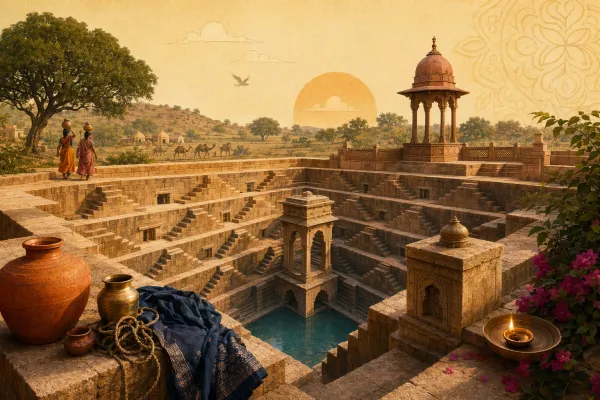
Stepwells were built because water, climate, travel, community, public service, and sacred meaning all mattered in India’s dry and seasonal regions.
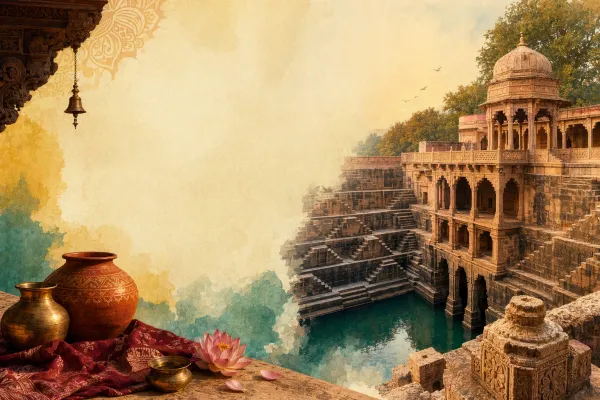
Stepwells are Indian water structures reached by steps. Learn their simple meaning, purpose, regional names, design, and why they matter as heritage.