
Shakti Peeth Outside India: Hinglaj, Nepal, Bangladesh, and Sri Lanka Explained
Learn why some Shakti Peeth lists include sacred places beyond modern India and how to understand them respectfully.
Learn why some Shakti Peeth lists include sacred places beyond modern India and how to understand them respectfully.
Understand how Shakti Peeth traditions are remembered across South and East India, and how to read site lists with care.
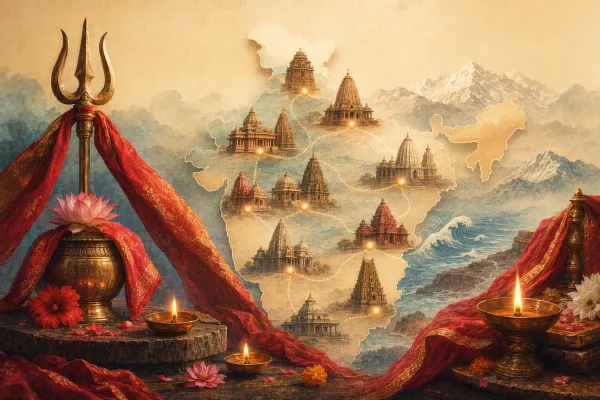
Shakti Peeths in India form a sacred geography of Devi worship, pilgrimage, regional memory, and varied traditional lists.
Shakti Peeth, Siddh Peeth, and Jyotirlinga are all sacred-place ideas, but they point to different devotional meanings.
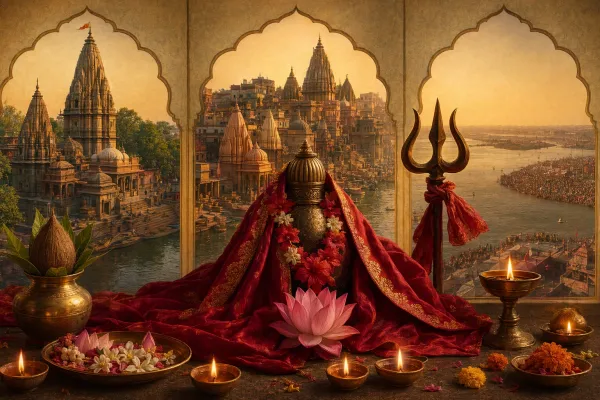
Ujjain, Kashi, and Prayagraj show how Shakti Peeth traditions can live inside larger sacred-city landscapes.
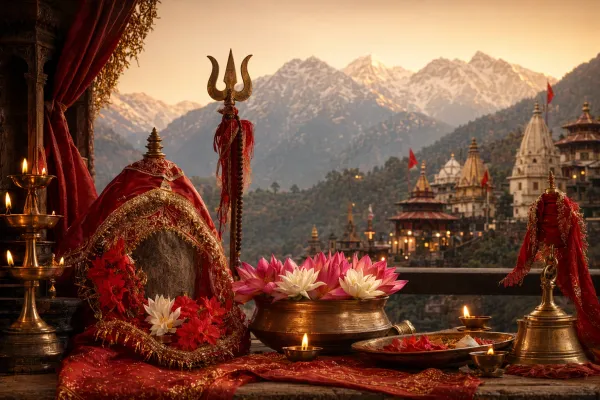
Understand the Shakti Peeth tradition in Himachal and North India through Jwala Devi, Naina Devi, Chintpurni, Chamunda and related Devi sites.
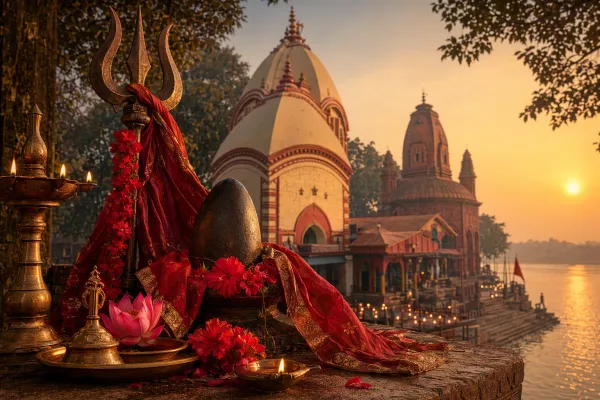
Understand West Bengal’s Shakti Peeth traditions through Kalighat, Tarapith, Kali-Tara worship, and Bengal’s living Devi bhakti.
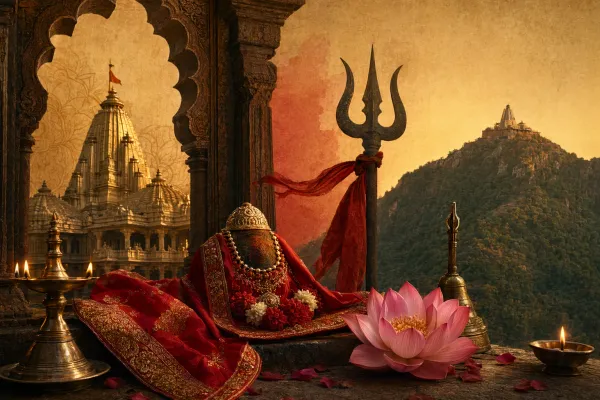
Understand Gujarat’s Shakti Peeth traditions through Ambaji, Pavagadh, sacred geography, local devotion, and practical cultural context.
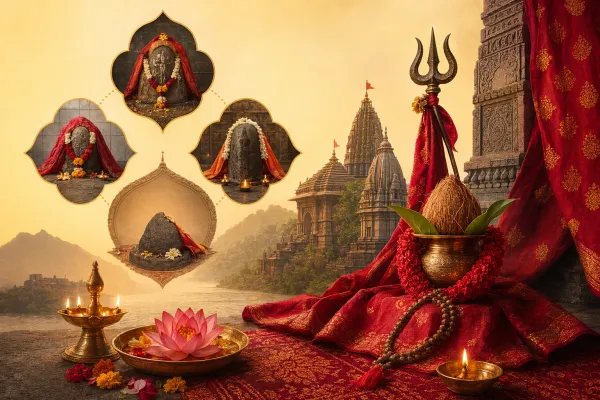
Maharashtra’s Sade Teen Shakti Peeth tradition honours three and a half Devi seats with strong regional devotion and pilgrimage memory.