
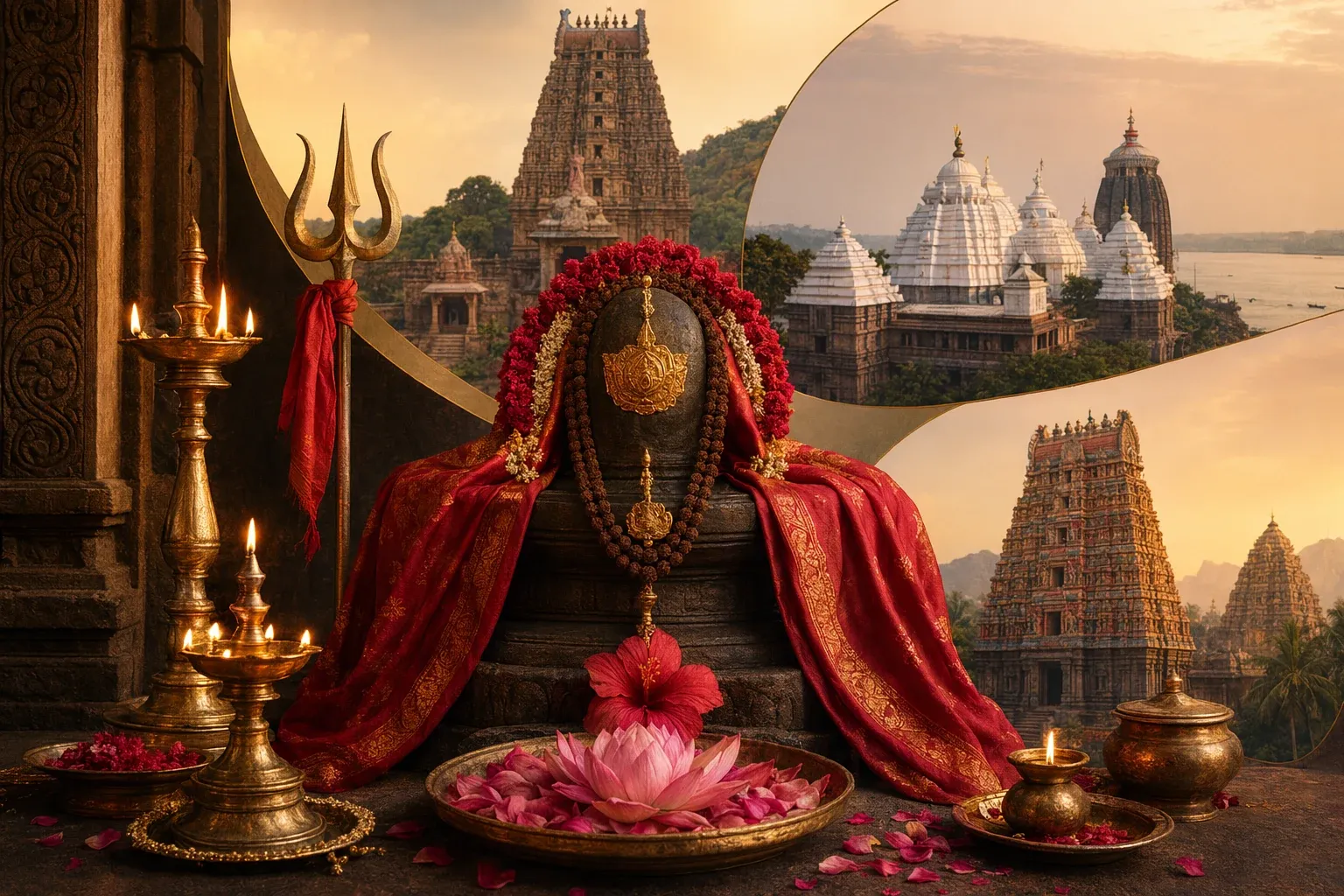
South and East India hold some of the most layered memories in the Shakti Peeth tradition. A beginner often comes to this subject with a simple question: which sacred places belong to the Shakti Peeth list, and how should they be understood? The answer is not only a checklist of temples. It is a map of Devi devotion, local memory, sacred geography, and the way communities connect a pan-Indian story with their own landscapes.
The Shakti Peeth tradition is usually linked to the story of Sati, Shiva, and the scattering of sacred body parts or ornaments. Different texts and regional traditions preserve different lists, so one should expect some variation. That variation is not a failure of the tradition. It shows how living pilgrimage cultures remember sacred places through language, local temple practice, family devotion, and older textual references.
Why South and East India matter in this tradition
South and East India are especially important because Devi worship is deeply rooted in both temple culture and village memory. In Andhra Pradesh and Telangana, the Srisailam region is associated with powerful Shaiva and Shakta devotion. In Odisha, goddess traditions are woven into temple towns, river landscapes, and regional forms of Shakti. Karnataka and Tamil Nadu also carry strong goddess worship through temples, local festivals, protective mother-goddess traditions, and philosophical lineages that see Shakti as divine energy.
A Shakti Peeth guide for this region should therefore avoid treating every place as identical. Some sites are major pilgrimage centres with long textual associations. Others are better understood through regional devotion, local names, or later temple traditions. The respectful approach is to ask three questions: what does the wider Shakti Peeth list say, what does the local temple tradition say, and how do devotees remember the place today?
Srisailam and the southern sacred landscape
Srisailam is one of the best-known sacred regions in South India because it brings together Shiva, Devi, forested hills, and pilgrimage memory. Many devotees know it through Mallikarjuna and Bhramaramba. In Shakti Peeth discussions, Bhramaramba Devi is often mentioned with special reverence. The important point for beginners is that Srisailam is not merely a dot on a list. It is a living sacred landscape where Shaiva and Shakta devotion meet.
This makes Srisailam a useful example of how Indian pilgrimage works. A devotee may visit for Shiva, for Devi, for family vows, for a festival, or for the feeling of sacred geography itself. The same place can hold many meanings without becoming confused. For a simple companion article on the wider idea, see what a Shakti Peeth means.
Odisha and eastern Devi traditions
Odisha has a rich goddess landscape. Some readers immediately think of Puri, Bhubaneswar, Jajpur, or other temple regions, while others remember local forms of the Mother Goddess through festivals and family practice. In Shakti Peeth conversations, the names and identifications can vary depending on the list being used. That is why it is better to read Odisha as a region where textual memory and local devotion meet rather than forcing every reference into one rigid table.
The eastern side of India also reminds us that Shakti devotion is not only about grand architecture. It may appear through rivers, old temple towns, folk memory, protective village deities, and seasonal worship. The emotional centre is the same: Devi is approached as power, protection, compassion, and sacred presence.
Karnataka and Tamil Nadu context
Karnataka and Tamil Nadu have powerful goddess traditions that may not always be introduced to beginners through the Shakti Peeth label first. People may know them through Amman temples, local guardian goddesses, Navaratri worship, classical temple towns, or family vows. When a Shakti Peeth list includes southern references, the reader should not isolate the name from this wider devotional world.
Tamil Nadu especially shows how Shakti worship can be philosophical, ritual, artistic, and deeply local at the same time. Karnataka likewise carries temple-centred and community-centred forms of Devi devotion. A beginner who notices only the list may miss the cultural life around the shrine: songs, offerings, festival processions, food traditions, language, and the way elders explain the place to children.
How to read different Shakti Peeth lists
You may see lists of 4, 18, 51, 52, or more sacred places depending on the source. The safest habit is to compare respectfully. Do not assume that one online list cancels every other list. Instead, notice whether a source is giving a scriptural list, a regional pilgrimage list, a temple trust explanation, or a modern travel summary. Each one may serve a different purpose.
For names, places, and associated details, a separate list-based guide such as the 51 Shakti Peeth list can help. For this South and East India guide, the main lesson is interpretive: understand the region, then read the names.
Pilgrimage etiquette and learning tips
If you plan to visit any of these places, begin with humility. Check current temple timings, local rules, dress expectations, photography restrictions, and festival crowd conditions. Avoid turning sacred sites into a race. Many Shakti temples are emotionally intense spaces for devotees, and a visitor should move with patience.
It also helps to learn the local name of the goddess, not only the pan-Indian label. Listen to how priests, guides, elders, and local devotees pronounce the name. Notice the offerings and the stories told around the place. Sacred geography becomes clearer when the region is allowed to speak in its own voice.
Simple takeaway
Shakti Peeth traditions in South and East India are best understood as a meeting point of Devi devotion, regional memory, and pilgrimage practice. Srisailam, Odisha, Karnataka, and Tamil Nadu are not just entries in a table. They are cultural landscapes where the Mother Goddess is remembered through temple worship, story, festival, and family devotion. Read the lists carefully, respect local traditions, and let the sacred geography become a guide to deeper cultural literacy.