
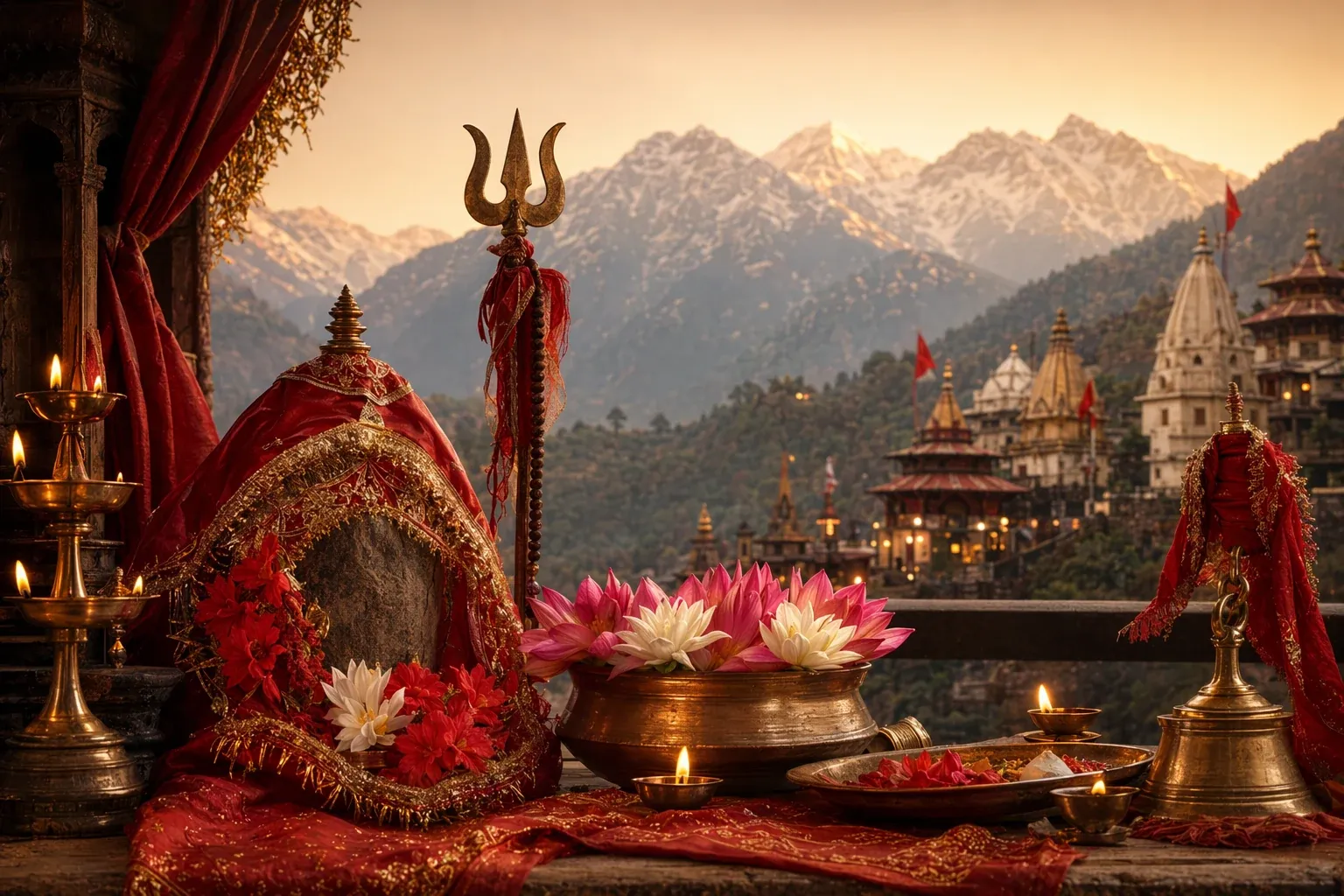
Why North India has so many Devi pilgrimage sites
North India has a very dense map of Devi worship. In the hills, plains, old trade routes, river towns and royal capitals, people have remembered the Divine Mother through local names, temple stories and seasonal fairs. The phrase Shakti Peeth is often used for especially sacred places connected with the story of Sati and Shiva, but local usage can be wider. Some temples are widely counted in Shakti Peeth lists, while others are beloved Devi shrines that may be called Siddh Peeth, Mata temple or simply an ancient local tirtha.
This difference matters because young readers often meet many names at once: Jwala Devi, Naina Devi, Chintpurni, Chamunda, Kangra Devi, Vaishno Devi, Mansa Devi and others. A respectful guide should not flatten them into one identical category. It is better to understand the pattern: each place carries a local form of Shakti, a regional memory and a devotional way of meeting the Mother.
Jwala Devi: the flame as a sign of Shakti
Jwala Devi in Himachal Pradesh is among the most famous Devi sites in North India. The name points to flame, and the temple tradition centres on sacred natural flames rather than a large image in the usual sense. For many devotees, this makes Jwala Devi especially striking: the presence of the goddess is experienced through light, heat and an ever-living sign.
In the Shakti Peeth tradition, Jwala Ji is connected with the story of Sati. Different lists and local tellings may vary in the exact detail, but the deeper idea remains steady: the landscape itself becomes sacred because it remembers the goddess. A visitor does not need to treat the temple only as a travel spot. It can be understood as a place where nature, story and devotion meet.
Jwala Devi also teaches a useful cultural lesson. Hindu sacred geography is not only about grand architecture. Sometimes a flame, spring, hilltop, footprint, cave or stone becomes the heart of worship because people have recognized the sacred there for generations.
Naina Devi: the goddess on the hill
Naina Devi, also in Himachal Pradesh, is another important Devi shrine associated with the Shakti Peeth tradition. The word naina means eyes, so the temple name itself points to sight, blessing and the watchful presence of the Mother. The hilltop setting adds to the feeling of protection: devotees climb or travel upward, and the shrine looks over the surrounding land.
Like many hill shrines, Naina Devi has layers of meaning. It is a temple, a pilgrimage halt, a festival centre and a place of family vows. People may come during Navratri, after a personal prayer is fulfilled, or as part of a wider journey through Himachal. For a beginner, the main point is simple: the Shakti Peeth idea connects the cosmic story of Sati with a very local and lived form of devotion.
Naina Devi is also a good example of how pilgrimage links families across generations. A grandparent may remember a difficult climb; a child may remember the crowd, bells and view; a local shopkeeper may remember the annual rush of devotees. All of these memories become part of the temple’s cultural life.
Chintpurni and Chamunda: different names, different moods
Chintpurni Mata is often explained through the idea of the goddess who removes worry or fulfils heartfelt concerns. The name itself is close to chinta, meaning worry or anxiety. This makes the shrine emotionally direct: people come with burdens, questions and hopes. Whether one approaches the story literally, symbolically or culturally, Chintpurni shows how Devi worship can speak to ordinary human fear and trust.
Chamunda Devi has a different mood. The name Chamunda is linked with the fierce protective form of the goddess known from Puranic and Shakta traditions. In North Indian devotion, fierce does not mean cruel. It often means protective, courageous and able to face forces that human beings cannot face alone. Chamunda reminds readers that the Mother in Hindu tradition is not only gentle and nurturing; she can also be powerful, alert and fearless.
Together, Chintpurni and Chamunda show the range of Devi worship. One name may comfort the worried heart; another may strengthen the frightened heart. Both belong to the wider language of Shakti.
Kangra, Jammu and the wider northern sacred map
The Himachal Devi circuit is often understood along with nearby North Indian shrines. Kangra Devi, Vaishno Devi in Jammu, Mansa Devi near Haridwar, and other regional temples are part of the broader devotional map, even when their exact classification differs from one list to another. This is why a simple question such as “Which Shakti Peeth is in Himachal?” can have a longer answer. Some people are asking about formal Shakti Peeth lists; others are asking about famous Devi temples in the region.
For comparison, Bhaktilipi also has guides to other sacred temple traditions, such as the cultural world around Kamakhya temple and broader Hindu temple landscapes. Reading across regions helps us see that Devi worship changes its local language while keeping a recognizable sense of sacred power.
This is also why maps alone cannot explain pilgrimage. A map shows distance, but devotion also follows story, family memory, festival calendars and the emotional pull of a deity’s name.
Shakti Peeth, Siddh Peeth and Devi temple: how to read the labels
Many beginners get confused because the same temple may be described with different labels online or in family conversation. A Shakti Peeth is usually linked to the Sati-Shiva sacred geography. A Siddh Peeth suggests a place known for spiritual accomplishment, fulfilled prayer or special power. A Devi temple is the broadest phrase and may include many local goddess shrines that are not always part of a formal Peeth list.
These labels should be handled with care. Traditions are preserved through texts, local priests, community memory, regional songs and pilgrimage practice. Not every list is identical. Instead of arguing over one rigid answer, it is more helpful to ask: What form of the goddess is worshipped here? What story is remembered? How do devotees relate to the place?
For students, this approach prevents two common mistakes. The first mistake is treating every famous Mata temple as exactly the same kind of Shakti Peeth. The second is dismissing a temple’s importance just because lists differ. Sacred geography in India is often layered, not mechanical.
What a young visitor can notice
If you visit a North Indian Devi shrine, notice more than the main sanctum. Look at the songs being sung, the colour of offerings, the route to the temple, the local food, the family groups, the bells, the stories printed on boards and the way people speak the goddess’s name. These small details show how religion becomes culture.
Also notice how mountain temples and river-region temples feel different. A hill shrine may emphasize ascent, view and protection. A city shrine may feel woven into markets and daily life. A cave or flame shrine may place nature at the centre. These differences make the Shakti tradition rich rather than confusing.
A simple way to remember the northern Devi circuit
You can remember the northern Devi circuit through four ideas. Jwala Devi brings the image of sacred flame. Naina Devi brings the image of the goddess’s watchful eyes. Chintpurni brings the hope of releasing worry. Chamunda brings the courage of fierce protection. Around them are many other Devi places, each with its own local story.
The heart of the tradition is Shakti: divine energy, motherly presence and protective power. Whether a temple is named in a formal Shakti Peeth list or remembered as a beloved local Mata shrine, it can still teach young readers how Indian sacred geography joins story, place and devotion. That is why the Devi temples of Himachal and North India continue to matter—not only as destinations, but as living cultural memory.