
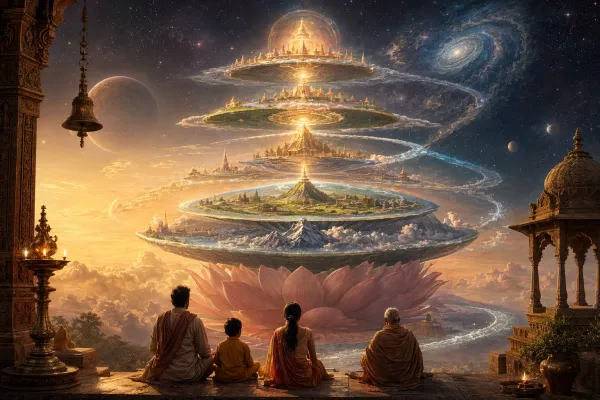
Hindu Cosmology and the Multiverse: Lokas, Many Worlds and Meaning
Hindu cosmology imagines vast realms, deep time, and many levels of existence. Here is a careful way to understand lokas and the multiverse comparison.
Hindu cosmology imagines vast realms, deep time, and many levels of existence. Here is a careful way to understand lokas and the multiverse comparison.
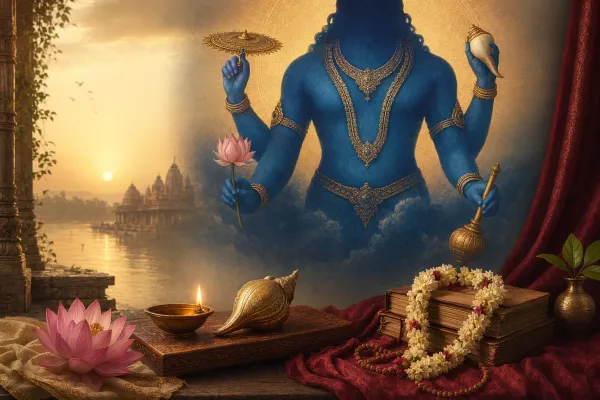
Why is Vishnu shown blue, and what do his four hands hold? Learn the meaning of Vishnu’s symbols in clear, respectful language.
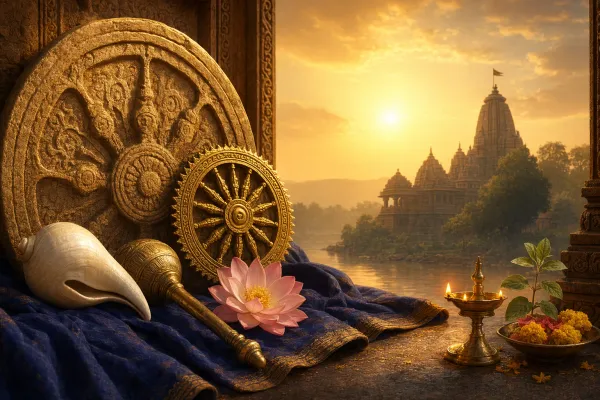
A clear beginner guide to Vishnu: his role as preserver, why he is called Narayana, how avatars work, and how devotees understand him today.
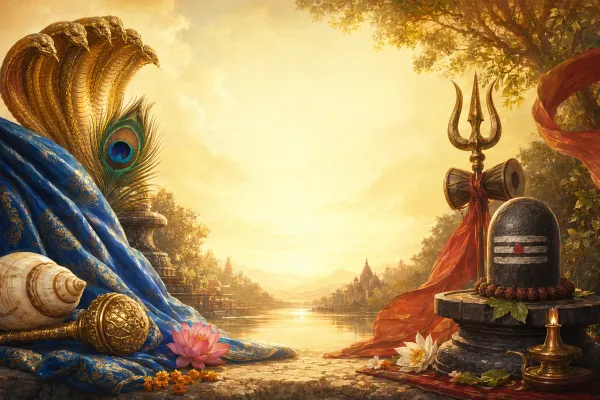
Vishnu and Shiva are not best understood as rivals; Hindu traditions honour them through several respectful viewpoints.
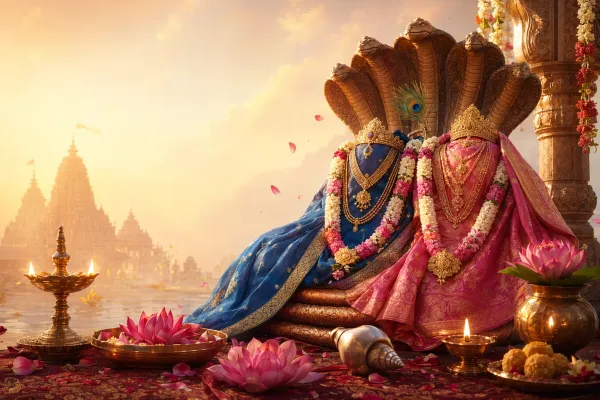
Vishnu and Lakshmi are worshipped together because preservation and prosperity are meant to support dharma, generosity, and wellbeing.
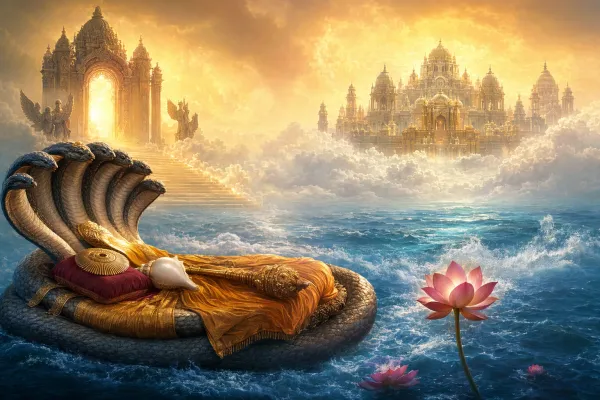
Vishnu is described as dwelling in Vaikuntha, resting on the cosmic ocean, present in temples, and remembered in the heart.
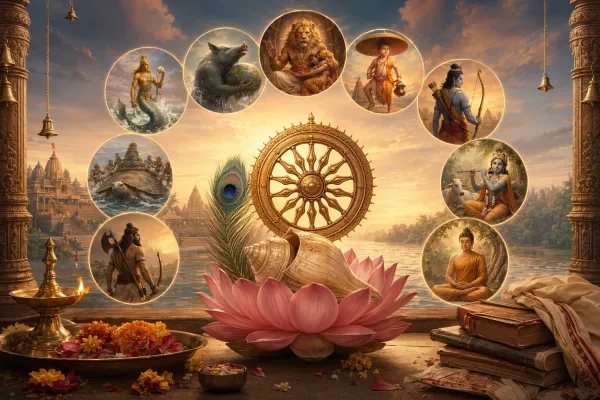
The Dashavatara is more than a list of ten forms; it is a way to understand how Vishnu protects dharma in different ages.
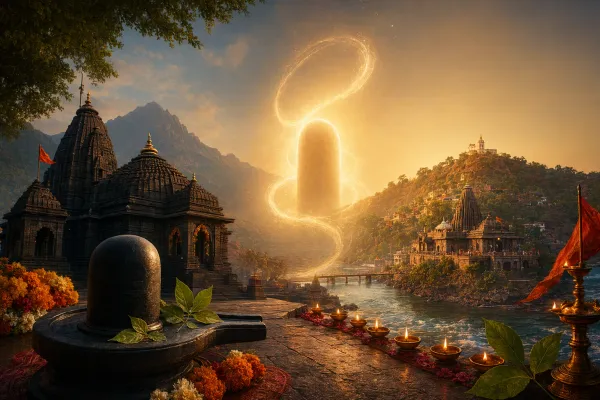
Trimbakeshwar, Mahakaleshwar, and Omkareshwar each stand out through location, symbolism, story, ritual life, and regional devotion.
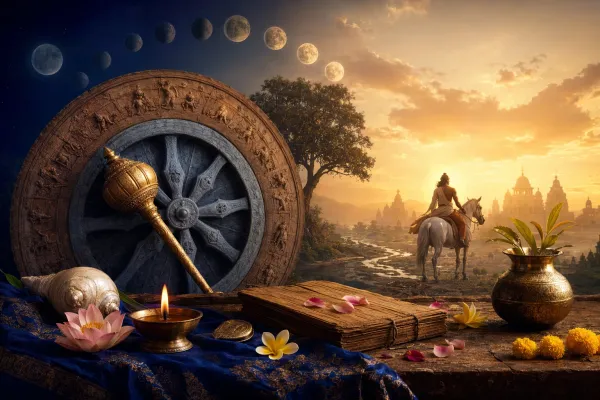
Kalki is remembered as Vishnu’s future avatar in many Hindu traditions. This guide explains the idea carefully for beginners.