

Can Women Perform Yajna? A Respectful Look at Tradition, Family Practice, and Context
Women’s participation in yajna depends on tradition, role, family practice, and context. Here is a respectful way to understand the question.
Women’s participation in yajna depends on tradition, role, family practice, and context. Here is a respectful way to understand the question.
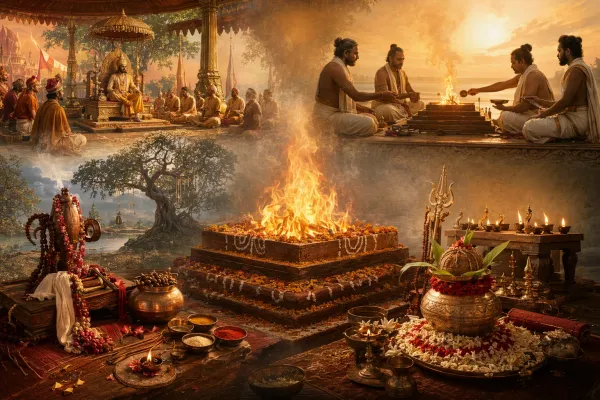
Rajasuya, Putrakameshti, Daksha Yajna, and Navchandi are remembered for different reasons. This guide explains them simply and respectfully.
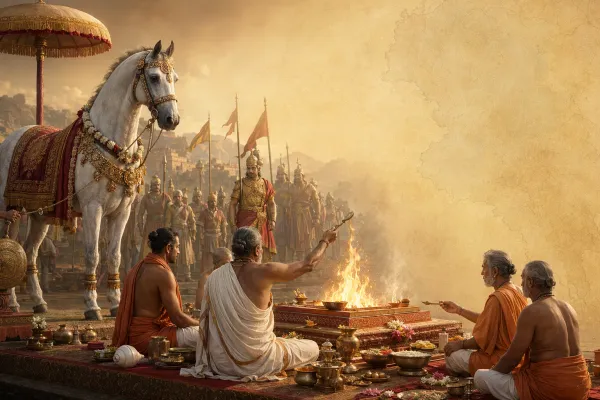
Ashwamedha Yagna was an ancient royal ritual described in Hindu texts. Here is its meaning, story context, symbolism, and modern caution.

The Jyotirlinga Stotram helps devotees remember the 12 shrines as a sacred map of Shiva bhakti.

In the Bhagavad Gita, yajna becomes more than ritual fire: it points to selfless action, offering, discipline, and living without selfish attachment.

A simple home yajna should be learned respectfully, kept safe, and done with guidance instead of treating sacred fire as a casual experiment.
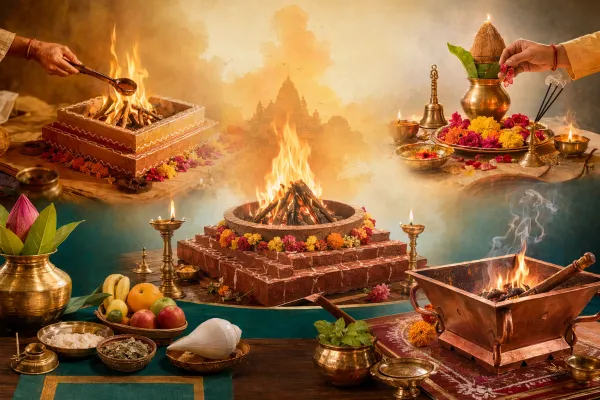
Yajna, havan, puja, and homam are related words, but they are not always used in exactly the same way across regions and traditions.
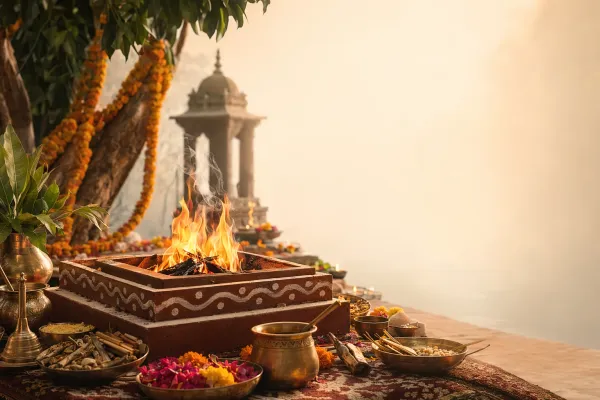
Yajna means a sacred offering and disciplined action. It is not only a fire ritual, but a way of giving with gratitude and care.
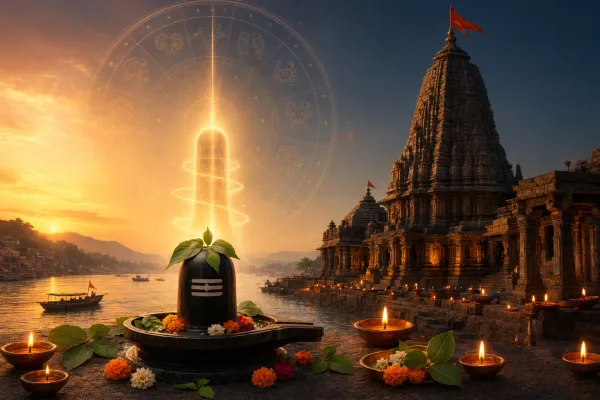
Jyotirlinga-by-Rashi lists are popular devotional beliefs, not a single universal rule everyone must follow.