
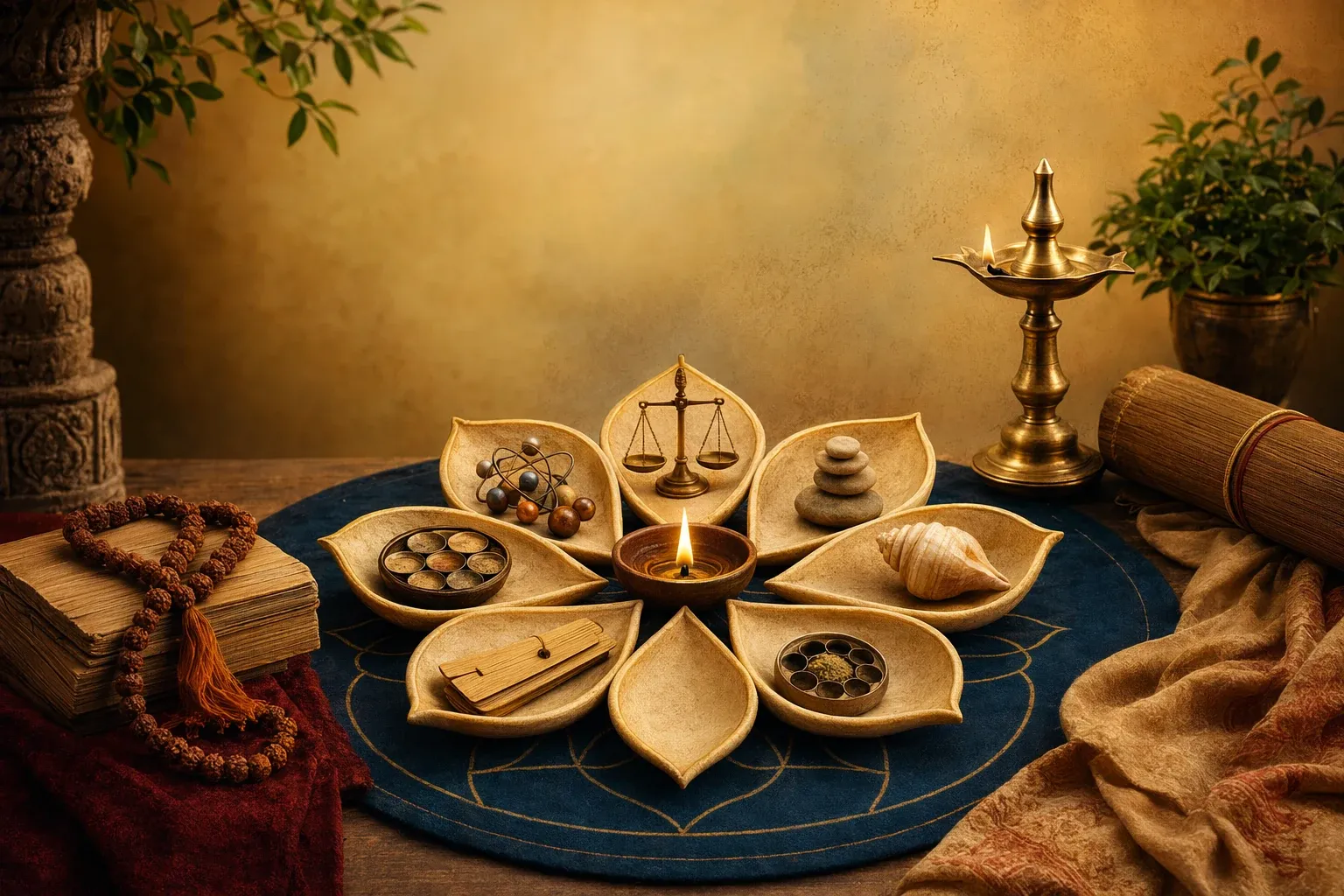
The six darshanas are six classical ways of seeing and thinking within Hindu intellectual tradition: Nyaya, Vaisheshika, Samkhya, Yoga, Mimamsa, and Vedanta. This guide keeps the language simple while still treating the subject with respect.
Many young readers meet Hindu philosophy through one search, one quote, one temple visit, one family conversation, or one school assignment. But the subject is wider than a short answer. It asks how we see reality, how we act, how we know, what we value, and what kind of person we are becoming.
The simple meaning
In simple words, The Six Darshanas of Hindu Philosophy Explained Simply is about Nyaya, Vaisheshika, Samkhya, Yoga, Mimamsa, Vedanta, darshan. These are not only abstract ideas. They touch ordinary choices: how we study, how we speak, how we handle success, how we respond to pain, and how we remember that life has a deeper purpose than noise.
The target idea here is: A clean, non-academic map of the six astika darshanas with one-line meanings, what each asks, and why beginners should not treat them as rival “sects” only. A good beginner article should answer the direct question, but it should also show the larger map around it.
Tradition, interpretation, and history
Tradition remembers them as serious paths of inquiry, not as random opinions. They debate logic, matter, consciousness, liberation, duty, scripture, and the nature of reality.
Historically, these schools grew through sutras, commentaries, teachers, arguments, and centuries of conversation. They often disagreed, but disagreement was part of the learning culture.
It helps to separate three layers. Tradition tells us how communities preserved and lived an idea. Interpretation explains how teachers, schools, and later readers understood that idea. Historical context asks what we can responsibly say about texts, dates, debates, regions, and social needs. Keeping these layers separate does not weaken faith; it makes learning cleaner and more trustworthy.
A concrete example
Nyaya asks how we know something is true, Yoga asks how the mind can become steady, and Vedanta asks about ultimate reality and the self.
Examples matter because philosophy can feel distant when it stays only in technical words. The same idea becomes easier when we see it in study, relationships, grief, devotion, ethical pressure, or the discipline of daily practice.
Explain what “six systems” means
This first point gives the reader a doorway. Instead of starting with heavy terminology, begin with a clear sentence, then slowly add context. The beginner should feel, “I can understand this,” not “This is only for scholars.”
The useful habit is to ask: What is the tradition saying? How have people interpreted it? What historical context helps us understand it better? This habit keeps the article balanced.
Define astika darshanas carefully
This point is where The Six Darshanas of Hindu Philosophy Explained Simply becomes more than a definition. Hindu thought often uses a word, story, practice, or debate to train the way we see. That is why darshan literally points toward seeing, not merely collecting information.
The useful habit is to ask: What is the tradition saying? How have people interpreted it? What historical context helps us understand it better? This habit keeps the article balanced.
Give a simple section for each darshan
This section should connect the topic with life. Ideas such as Nyaya, Vaisheshika, Samkhya, Yoga, Mimamsa, Vedanta, darshan become meaningful when they help us think about action, identity, duty, attention, and freedom. A young reader needs that bridge.
The useful habit is to ask: What is the tradition saying? How have people interpreted it? What historical context helps us understand it better? This habit keeps the article balanced.
Compare their focus: logic, reality, matter/consciousness, yoga, ritual interpretation, Vedanta
Here we should avoid two extremes: making everything sound like superstition, or making unsupported claims just to feel proud. Respectful writing can be warm and still careful.
The useful habit is to ask: What is the tradition saying? How have people interpreted it? What historical context helps us understand it better? This habit keeps the article balanced.
Add a quick memory table for students
The closing map should tell the reader what to explore next without overwhelming them. A person can move from one clear idea to a related text, teacher, practice, or comparison article.
The useful habit is to ask: What is the tradition saying? How have people interpreted it? What historical context helps us understand it better? This habit keeps the article balanced.
For helpful background, you can also read our related Bhaktilipi guides: What Are the Upanishads? and Main Teachings of the Upanishads.
Common misunderstandings
- Hindu philosophy is not only ritual, though it often connects with worship and practice.
- It is not one single opinion. It includes many schools, teachers, debates, and interpretations.
- Respect does not require exaggeration. Careful context makes the subject stronger.
- The goal is not to win arguments online; the goal is clearer seeing and better living.
Questions beginners ask
What are the six systems of Hindu philosophy?
Tradition remembers them as serious paths of inquiry, not as random opinions. They debate logic, matter, consciousness, liberation, duty, scripture, and the nature of reality.
What are the 6 Darshans of Hindu philosophy?
Tradition remembers them as serious paths of inquiry, not as random opinions. They debate logic, matter, consciousness, liberation, duty, scripture, and the nature of reality.
What are the main Hindu philosophy schools?
Tradition remembers them as serious paths of inquiry, not as random opinions. They debate logic, matter, consciousness, liberation, duty, scripture, and the nature of reality.
How are Nyaya, Vaisheshika, Samkhya, Yoga, Mimamsa, and Vedanta different?
It works through patient inquiry: define the question, listen to tradition, compare interpretations, look at historical context, and then apply the lesson honestly in life.
How to remember it
Think of the six darshanas as six windows in one large house of thought. Each window shows a different view, and together they make the house brighter. If you are new to this topic, keep one notebook line for the definition, one example from daily life, and one question you still want to explore.
That is a very Indian way to learn: shravana, listening carefully; manana, thinking deeply; and nididhyasana, letting the lesson settle into life. Knowledge becomes meaningful when it changes how we see and how we act.