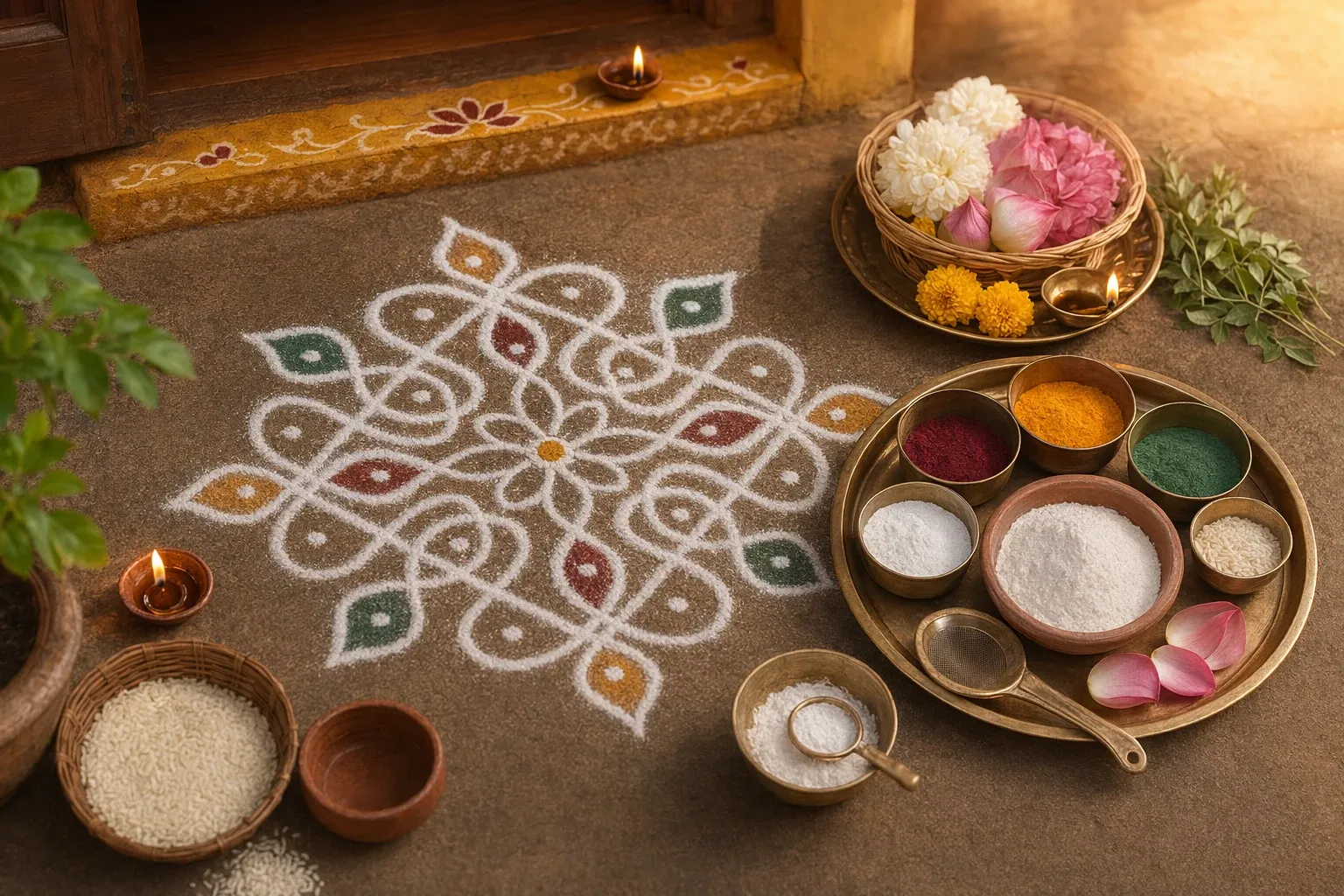
Kolam is known for its beautiful lines, but the material matters too. The same design can feel different when it is made with rice flour, white kolam powder, coloured powder, flowers, chalk, or petals. For beginners, understanding the material helps you draw better and also understand the meaning behind the practice.
Traditionally, kolam is often associated with rice flour or fine white powder drawn at the threshold of the home. Today, people also use limestone powder, chalk powder, colour powders, flower petals, ready-made stencils, and sometimes sticker designs. Each choice has a different purpose, cost, texture, and cultural feeling.
Traditional rice flour
Rice flour is one of the most meaningful materials for kolam. It flows through the fingers, creates soft white lines, and connects the design with food, generosity, and daily life. A traditional explanation says that rice flour can feed small creatures such as ants and birds. This gives the kolam an ecological and compassionate layer.
Not every modern home uses rice flour, and that is understandable. Weather, ants entering the house, apartment rules, cost, and surface type can affect the choice. Still, knowing the rice-flour meaning helps us see kolam as more than decoration. It is a practice that can connect beauty with care for living beings.
White kolam powder
Many people use white kolam powder because it is easy to handle, bright on the ground, and affordable. It may be made from stone powder, chalk-like material, or other fine white powders depending on local availability. It usually gives sharper lines than rice flour and may stay visible longer.
For beginners, the powder should be fine enough to fall smoothly but not so dusty that it becomes unpleasant to breathe. If it clumps, sieve it lightly or crush lumps before use. Store it dry. Moist powder can make uneven lines and frustrate practice.
Colour powder and festival designs
Colour powder is common during festivals, competitions, school events, and special celebrations. A simple white outline can be filled with yellow, red, green, blue, orange, or pink. Colours make the design festive, but they can also make it messy if used without planning.
A good beginner rule is to limit the palette. Use two or three colours first. Fill large areas gently and avoid mixing too many shades in one small design. For Deepavali, warm colours suit lamps. For Pongal, green, yellow, and red can match harvest symbols. For flower designs, natural colour families often look graceful.
Flower kolam and petals
Flower kolam uses petals, leaves, or whole flowers to create patterns. It is especially beautiful for festivals, puja spaces, weddings, and welcoming guests. Marigold, rose petals, jasmine, leaves, and seasonal flowers can create a soft and fragrant design.
Flower kolam is different from powder kolam because it has volume and texture. It may not allow the same fine lines, but it creates a rich festive feeling. Place petals in clear sections rather than scattering them randomly. A neat outline makes the design stronger.
Stencils and tools
Stencils can help people who are new, busy, elderly, or physically unable to draw by hand. They can create quick, neat shapes. Some traditional learners may prefer hand-drawn kolam, and that view is understandable because hand movement is part of the art. But tools are not automatically wrong if used respectfully.
The important question is purpose. If a stencil helps you keep the doorway beautiful and slowly learn patterns, it can be useful. If it replaces all attention and meaning, then something is lost. Try using stencils as support, not as the whole practice.
Tradition, interpretation, and historical context
In tradition, kolam materials are connected with home, season, availability, and family habit. Rice flour, white powder, flowers, and colours each carry different feelings. The material is chosen not only for looks but also for the occasion and meaning.
In interpretation, the material teaches us how culture adapts. A grandmother may use rice flour, a city apartment may use chalk, a festival event may use colour powder, and a temple space may use flowers. These changes show that living traditions adjust while keeping their heart.
Historically, kolam has been shaped by everyday domestic practice more than by formal art markets. Materials came from what families had, what the climate allowed, and what the community considered appropriate.
Safety and cleanup
Avoid powders that irritate the skin, stain permanently, or create breathing discomfort. Do not use chemical-heavy colours near children, pets, or food areas. On shared floors, choose materials that can be cleaned easily and will not make the surface slippery.
The best material is the one that suits the place, respects the tradition, and keeps people safe. Whether you choose rice flour, white powder, colours, or flowers, draw with care. Kolam begins with the hand, but it is completed by attention.
How to choose as a beginner
If you are just starting, choose a material that helps you practise without fear. Chalk is easy on rough floors and good for learning shapes. White kolam powder gives a more traditional look and teaches finger control. Rice flour is meaningful and gentle, but it may attract insects indoors, so use it thoughtfully depending on the space.
For festivals, try a white outline first and colour only the main sections. For shared apartment corridors, ask what is allowed and avoid slippery or staining materials. For children, use safe, non-irritating colours and supervise cleanup. A good material should support beauty, safety, and respect at the same time.