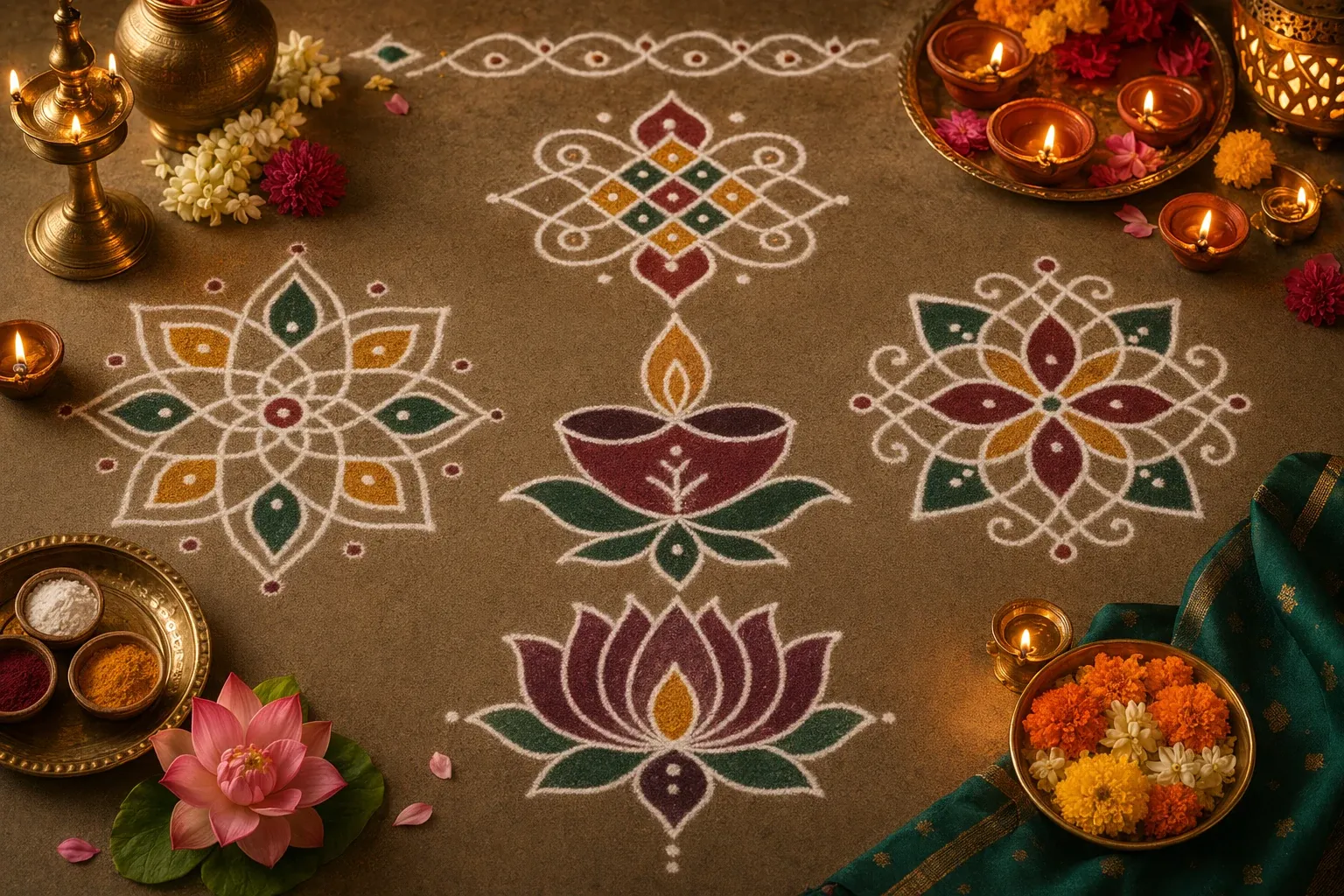
Festival kolam has a different mood from daily kolam. A daily design may be small, quick, and quiet. A festival kolam often becomes brighter, larger, more symbolic, and more playful. It can include lamps, flowers, colours, sugarcane, lotuses, borders, and greetings. The doorway becomes part of the celebration before anyone even enters the home.
Deepavali, Karthigai Deepam, Fridays, New Year, and Tamil New Year each carry different feelings, so their kolam designs can also differ. The goal is not to copy one fixed pattern for every occasion. The goal is to understand the meaning of the day and choose shapes that fit it respectfully.
How festival kolam differs from daily kolam
Daily kolam usually focuses on rhythm, cleanliness, and a fresh beginning. It may be drawn in white powder and kept simple because it is part of regular household life. Festival kolam allows more time and decoration. People may use colour powders, flowers, lamps, rice flour, borders, and larger spaces.
A festival kolam also works like a visual greeting. It tells guests, neighbours, and family members that something special is being honoured. Even in apartments, a small festival kolam near the door can create a feeling of occasion.
Deepavali and Diwali kolam themes
For Deepavali, lamp designs are the most natural choice. Diyas, rows of light, lotus shapes, radiating circles, and bright colours all match the festival’s mood. Some families prefer symmetrical rangoli-like colour designs, while others keep a South Indian kolam style with lamps and dot patterns.
The meaning of light is central. A Deepavali kolam can be read as an invitation to brightness, clarity, auspiciousness, and celebration. If you place real lamps near the design, keep safety in mind. Leave enough space so powder, cloth, children, pets, and flame do not become a risk.
Karthigai Deepam and vilakku kolam
Karthigai Deepam is strongly connected with lamps. A vilakku kolam, or lamp-based design, suits the occasion beautifully. You can draw a central lamp, rows of small lamps, or a circular arrangement that suggests light spreading outward. White lines with touches of yellow, orange, and red can look elegant.
Because the festival is associated with light and devotion, the design should feel calm and bright rather than crowded. A few well-drawn lamps can carry more meaning than a large pattern that loses focus.
Friday kolam and Lakshmi-associated customs
In many South Indian homes, Friday has special associations with auspiciousness, worship, and goddess traditions, especially Lakshmi in some family customs. Friday kolam may include lotus shapes, gentle curves, lamps, small footprints, or neat symmetrical designs near the prayer space or doorway.
Family practice matters here. Not every household follows the same customs, and not every symbol should be used casually. If your family has a specific way of drawing Friday kolam, learn that first. Tradition often lives in these small inherited details.
New Year and Tamil New Year kolam
New Year kolams often express freshness, blessing, and hope. Some people include the year number, flowers, lamps, or colourful borders. For Tamil New Year, mango leaves, lamps, flowers, and auspicious doorway designs can fit the mood. A clean, balanced design is usually better than too many words or decorative clutter.
If you include text, keep it simple and respectful. Remember that kolam is not only a poster; it is also a floor-art tradition. The shapes, symmetry, and care of the design matter as much as any written greeting.
Tradition, interpretation, and historical context
In tradition, festival kolam belongs to the wider practice of preparing the home for sacred and joyful days. Cleaning, decorating, cooking, lighting lamps, visiting temples, and welcoming guests are all connected. Kolam is one part of this complete atmosphere.
In interpretation, festival kolam turns values into visual form. Deepavali highlights light. Karthigai Deepam highlights lamps and devotion. Friday designs may highlight auspiciousness and grace. New Year designs highlight renewal. The kolam helps the home speak the language of the day.
Historically, these designs have changed with materials, space, and lifestyle. Colour powders, stencils, apartment corridors, and digital inspiration have all influenced modern practice. Change is natural, but respect should remain. Learn the meaning before using a symbol.
Simple design advice
Choose one main theme. For Deepavali, choose lamps. For Karthigai, choose rows of light. For Friday, choose lotus or gentle symmetry. For New Year, choose freshness and balance. Then add a border, a few dots, and colour only where it helps the design.
Festival kolam is at its best when it feels joyful without becoming careless. A small thoughtful design can hold more beauty than a large rushed one. Let the entrance of the home become a place where art, memory, and celebration meet.
How to plan without stress
Festival designs can become stressful when we compare them with perfect social media pictures. A better method is to plan by space and time. If you have ten minutes and a small doorway, choose a compact lamp, lotus, or border. If you have a courtyard and help from family, choose a larger circular design with colour.
Prepare materials before starting: powder, colours, flowers, lamps, chalk, and a cloth for cleaning edges. Decide the centre first, then the border, then the colours. This keeps the design calm. Festival kolam should add joy to the day, not create panic. The most memorable designs are often the ones made together, with laughter, correction, and shared excitement.
If the design gets smudged during the celebration, do not treat it as failure. Kolam is temporary by nature. Its beauty lies in preparation, welcome, and the care offered to the day.