Kolam, muggu, muggulu, rangoli, rangavalli, alpana, and pookalam all belong to India’s rich family of floor-art traditions. They may look similar at first because they use patterns on the ground, often near homes or festive spaces. But the names are not random. They come from different languages, regions, materials, and family customs.
A simple way to begin is this: kolam is especially linked with Tamil traditions, muggu or muggulu with Telugu-speaking regions, and rangoli is a widely used word in many parts of India for decorative floor designs. These traditions overlap, but they should not be flattened into one generic label. Their differences are part of their beauty.
Kolam in Tamil homes
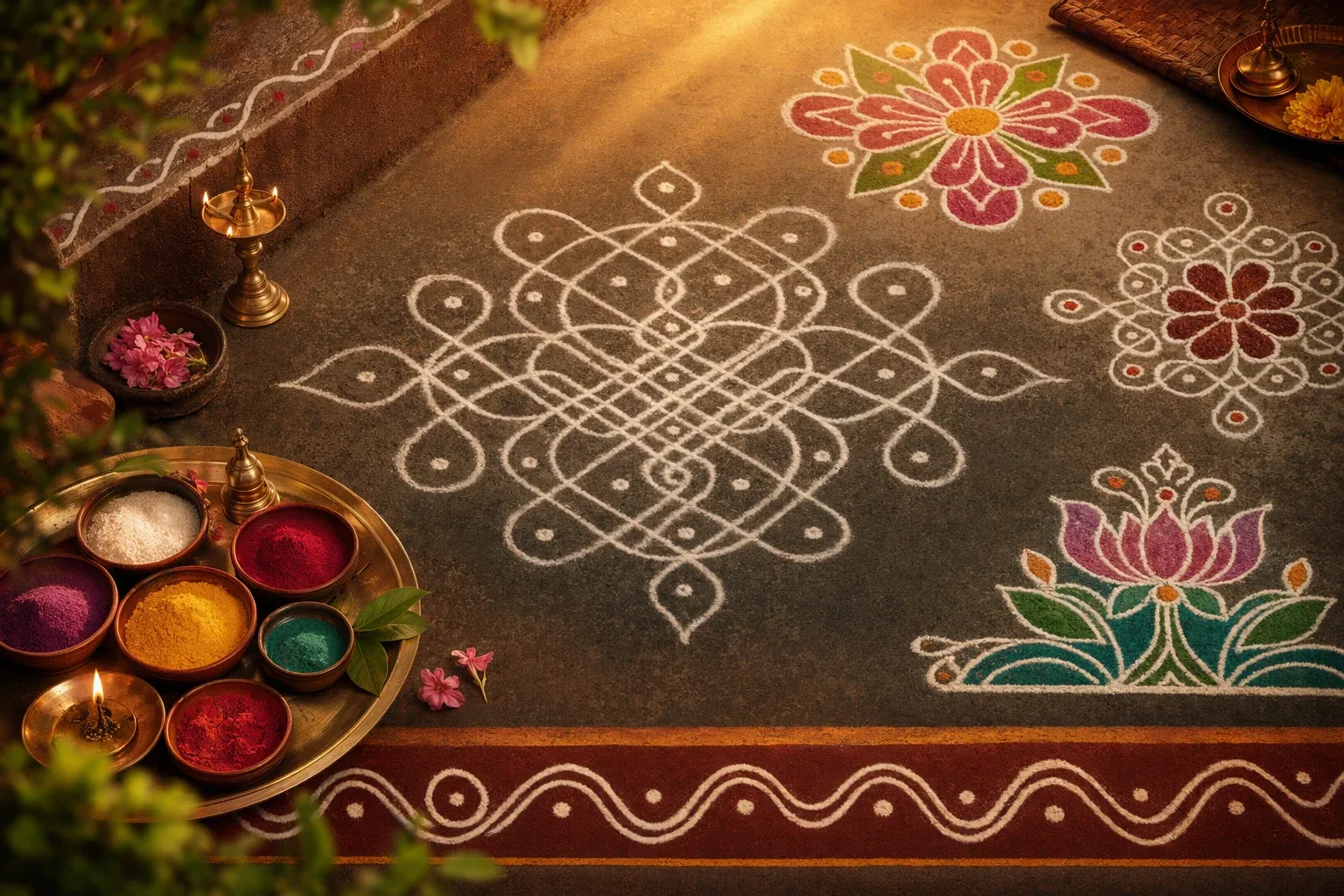
Kolam is strongly associated with Tamil Nadu and Tamil households. It is often drawn at the entrance of the home, sometimes daily, using rice flour or white powder. Many kolams use dots, called pulli, with lines drawn around or through them. Others are freehand designs with flowers, lamps, curves, and borders.
The Tamil kolam tradition is deeply connected with the doorway. It can express welcome, auspiciousness, cleanliness, discipline, and beauty. A small morning kolam may be as culturally meaningful as a large festival design because it shows regular care.
Muggu and muggulu
In Telugu-speaking regions such as Andhra Pradesh and Telangana, similar floor-art traditions are often called muggu or muggulu. These designs may use dots, lines, colours, and festival themes. During Sankranti, many homes and streets display beautiful muggulu, sometimes large and colourful.
The word muggulu is often seen online in searches for dot patterns, borders, and festival designs. Some styles may look close to Tamil pulli kolam, while others have their own regional forms and preferences. The shared South Indian doorway-art feeling is strong, but language and local practice matter.
Rangoli and related names
Rangoli is a broader word familiar across many parts of India, especially for colourful decorative floor designs used during festivals like Deepavali, Navratri, weddings, and housewarmings. In Karnataka and Sanskrit-influenced contexts, rangavalli may be used. In Bengal, alpana uses a different style and material tradition. In Kerala, pookalam, especially during Onam, uses flowers.
These names remind us that India does not have one single floor-art practice. It has many related practices. Some use powder, some use rice paste, some use flowers, some use dots, some use freehand lines, and some focus on festival colour.
Flower kolam and Kerala-adjacent confusion
People sometimes use “flower kolam” loosely for petal-based designs, especially online. In Kerala, the famous flower floor decoration for Onam is usually called pookalam. It is better to use that name when speaking about the Kerala Onam tradition. Calling every flower design “kolam” can erase local detail.
At the same time, Tamil and other South Indian homes may also use flowers in kolam-like decorations for festivals and puja spaces. The respectful approach is to ask: which region, which festival, which family tradition, and which name do people themselves use?
Tradition, interpretation, and historical context
In tradition, these floor arts are connected with auspiciousness, hospitality, devotion, seasonal celebration, and the daily care of the home. They are often learned by watching elders, especially women in the household and neighbourhood.
In interpretation, the changing names show how language carries culture. If we call everything “rangoli,” we may make it easier for outsiders to understand, but we may lose the precision of kolam, muggu, alpana, or pookalam. Specific names protect memory.
Historically, these practices have grown through domestic life, festivals, agriculture, temple culture, and community identity. They were not preserved only in museums or books. They lived on thresholds, courtyards, streets, and hands.
How regional styles overlap
A dot-based Tamil kolam and a Telugu muggulu pattern may share visual logic. A colourful rangoli and a festival kolam may share bright powders and flower motifs. Modern social media mixes designs even more. A person in Chennai may try a North Indian rangoli style, while someone in Hyderabad may try a Tamil pulli kolam pattern.
This exchange can be joyful if it is done with credit and curiosity. The problem begins only when all details are ignored. Culture becomes richer when we learn names properly.
A simple way to remember
Use “kolam” when speaking about Tamil and many South Indian doorway designs, especially white powder and dot-based forms. Use “muggu” or “muggulu” for Telugu regional traditions. Use “rangoli” for a broader Indian decorative floor-art context, especially colourful festival designs. Use “pookalam” for the Kerala flower tradition of Onam.
The point is not to argue over words. The point is to honour the communities that kept these arts alive. When we say the right name, we see the art more clearly—and we respect the hands that made it part of daily life.
Why learning names matters
Learning the right names is a simple form of respect. When a Tamil family says kolam, a Telugu family says muggu, or a Kerala family says pookalam, they are not just translating one generic art form. They are naming a practice shaped by language, place, festival, and memory. The name carries belonging.
This is especially important for young people discovering culture online. Search results often mix terms because platforms care more about traffic than accuracy. We can do better. Use broad words when speaking broadly, and specific words when you know the tradition. That one habit makes cultural learning clearer, kinder, and more precise.
When sharing designs online, mention the regional name if you know it. A small caption such as “Tamil kolam” or “Telugu muggulu” helps others learn accurately and keeps cultural detail alive.