
The short answer
Prana Pratishtha can be associated with home worship in some traditions, but it is not something beginners should treat as a casual home project. Formal consecration carries responsibility. It is usually guided by a trained priest, family guru, or acharya who understands the deity, mantra tradition, and expected daily care.
At the same time, this should not make sincere household devotion feel impossible. Many Hindu homes keep pictures, small murtis, shivlings, or symbols on a clean altar and worship with flowers, lamps, food offerings, and prayer. Such devotion can be meaningful even when it is not formal Prana Pratishtha in a temple sense.
Home altar and formal consecration are not the same
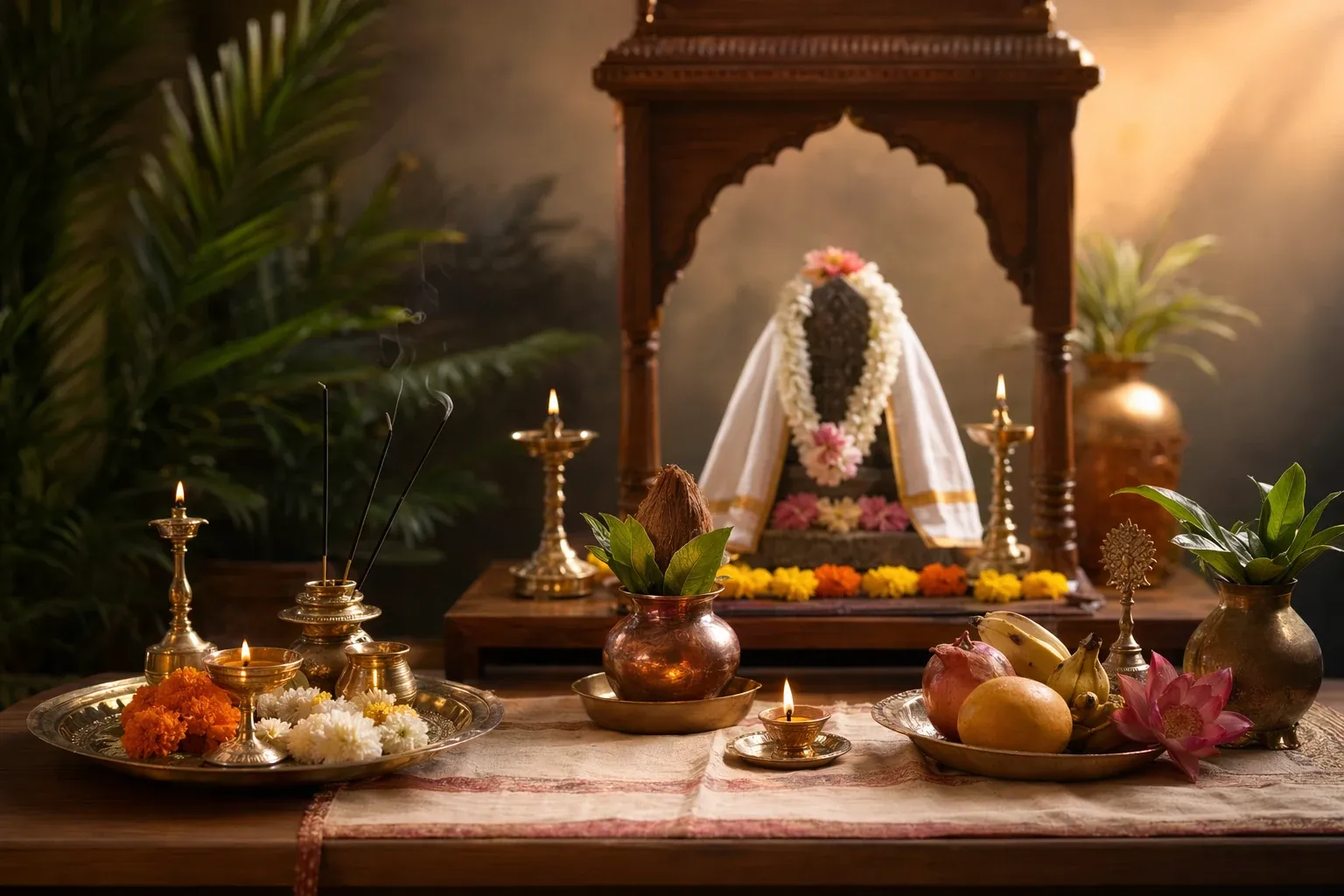
A home altar may include framed images of Rama, Krishna, Shiva, Devi, Ganesha, Hanuman, family deities, saints, or gurus. Families may light a lamp, chant familiar prayers, offer fruit, and bow before beginning the day. This is ordinary and cherished in many homes.
Formal Prana Pratishtha is different. It ritually establishes a sacred form for ongoing worship. After that, the form is treated with heightened care. Depending on tradition, daily worship may be expected, and neglect may be considered disrespectful. This is why many elders advise households to understand the commitment before requesting formal consecration.
For the difference between placing a murti and consecrating one, see Prana Pratishtha vs Sthapana.
Why responsibility matters
A consecrated murti is often treated like an honored living presence. In temples, priests may wake the deity, bathe and dress the form, offer meals, perform arati, and close the shrine at night. Homes usually cannot maintain temple-level worship, and most traditions do not expect every family to do so.
Still, a household that invites formal consecration should ask: Can we keep the altar clean? Can we offer regular worship according to our capacity? Do we understand travel, illness, impurity observances, festivals, and repairs? Who will guide us if questions arise?
These questions are not meant to create fear. They help families choose a form of worship that brings steadiness rather than anxiety.
When a priest may be invited
Families often invite priests for griha pravesh, puja after moving into a home, blessing a new altar, installing a deity image, or beginning worship of a family deity. In some cases, the priest may perform a simple sthapana or blessing rather than full Prana Pratishtha. In other cases, a more formal rite may be prescribed.
The right approach depends on the deity, object, family tradition, and local custom. A small Ganesha murti for household prayer may be handled differently from a shivling intended for regular abhishekam, and differently again from a temple deity.
A respectful beginner approach
If you are new to this topic, start with humility and clarity. Ask your family elders what has been practiced in your home. If there is a kuladevata or family deity tradition, ask how that worship is usually maintained. If you belong to a sampradaya, speak to a trusted teacher or priest.
If no such guidance is available, it is usually safer to keep a clean altar with pictures or small murtis for devotional remembrance, without claiming formal Prana Pratishtha. Offer simple prayers, light a lamp if appropriate, and learn gradually. Sincerity does not require exaggerating the ritual status of an image.
What about online instructions?
The internet can be helpful for learning meanings, but it is not a substitute for living guidance. Prana Pratishtha involves mantras, ritual sequence, purity rules, offerings, and responsibility. A copied text without context can easily lead to confusion.
A respectful article can explain principles, but it should not hand beginners a procedure for consecration. That boundary protects both the tradition and the devotee. For more on why context matters, read Prana Pratishtha mantras.
Examples from home life
A family may place a framed image of Lakshmi and Narayana on a shelf, clean the area, light a lamp every evening, and offer gratitude before meals. This is devotional practice.
Another family may invite a priest to install a small Ganesha murti before a child begins school or before a new business opens. The priest may perform puja, recitation, and blessings suited to the occasion.
A third family may receive a deity from a lineage where daily worship is expected. In that case, the family should learn the required care from that lineage instead of improvising.
If worship becomes difficult
Life changes. People travel, fall ill, move homes, or become overwhelmed. If a family has a formally consecrated image and cannot maintain worship, it should not panic or act casually. The respectful step is to consult a priest or knowledgeable elder. Traditions often have ways to adjust worship, transfer care, or respectfully handle damaged or unused sacred objects.
Frequently asked questions
Is it wrong to keep a murti at home without Prana Pratishtha?
No. Many households keep murtis and pictures for devotion without formal consecration. The key is respect, cleanliness, and sincerity.
Can I do Prana Pratishtha myself by reading a text?
For formal consecration, beginners should not rely on self-directed instructions. Consult a trained priest or your tradition.
Is a home altar less valuable than a temple?
Not less valuable, but different. A temple has public, formal, ongoing worship. A home altar supports family devotion and remembrance.
What should I do before deciding?
Learn the meaning of Prana Pratishtha, understand the responsibilities after consecration, and seek guidance from trusted tradition bearers. A useful starting point is what Prana Pratishtha means.