
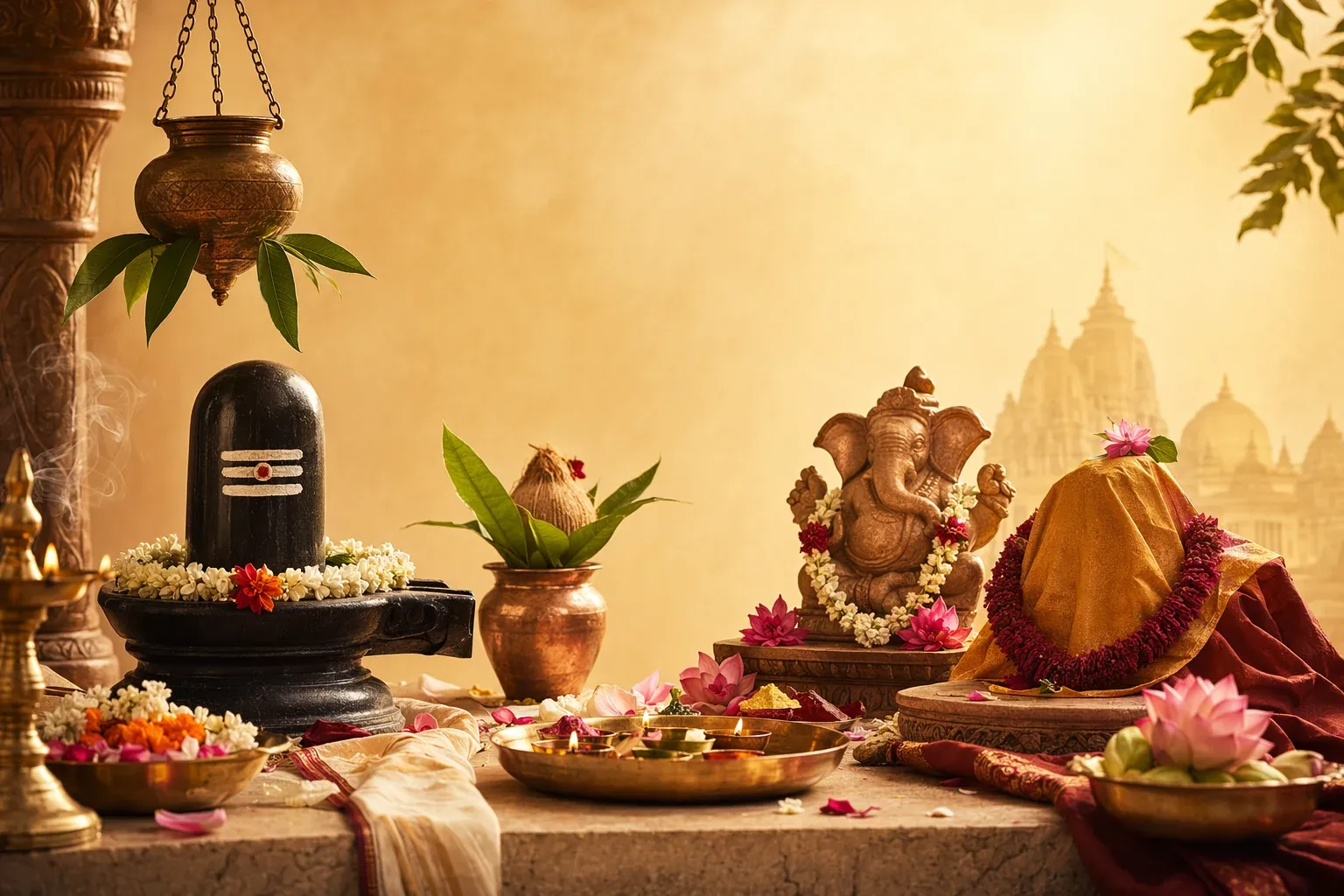
Different forms, shared reverence
Prana Pratishtha may be discussed for a shivling, a Ganesha murti, a Vishnu or Devi image, a Hanuman murti, a yantra, or another sacred form. Beginners sometimes assume that the same rules apply everywhere. The shared spirit is reverence, but the details can differ greatly.
A shivling is worshipped differently from a child form of Krishna. A Ganesha murti used for a festival may be treated differently from a permanent temple Ganesha. A household image may require different care from a public temple deity. The deity, material, purpose, duration, and tradition all matter.
Shivling Prana Pratishtha
A shivling represents Shiva in a deeply symbolic and aniconic form. Worship may include abhishekam with water, milk, bilva leaves, flowers, mantra recitation, lamps, and offerings. In temples, a consecrated shivling may receive daily abhishekam and regular arati according to local Shaiva tradition.
Because shivling worship can involve specific rules of placement, direction, offerings, and daily care, families should seek guidance before formal consecration at home. Many homes keep a small shivling for devotional worship, but formal installation carries responsibility. The right approach depends on tradition and capacity.
Ganesha murti Prana Pratishtha
Ganesha is widely worshipped as the remover of obstacles, lord of beginnings, patron of wisdom, and beloved household deity. Ganesha murtis appear in homes, shops, temples, schools, and festivals. This wide presence can make people think all Ganesha installations are the same, but they are not.
During Ganesh Chaturthi, temporary Ganapati sthapana is performed with devotion and later concluded with visarjan. A permanent temple Ganesha murti, however, may undergo formal Prana Pratishtha and then receive continuing worship. A small home Ganesha may simply be placed respectfully and worshipped daily without formal consecration.
Other murtis and deity forms
Murtis of Rama, Krishna, Vishnu, Lakshmi, Durga, Saraswati, Hanuman, Subrahmanya, and other deities each belong to particular devotional moods and ritual traditions. Clothing, ornaments, food offerings, festival days, mantras, and daily routines may differ.
For example, Krishna in child form may be served with a mood of loving care. Hanuman worship may emphasize strength, devotion, protection, and service to Rama. Devi worship may vary widely by form, from Lakshmi's auspicious grace to Durga's protective power. A temple priest understands these differences and guides worship accordingly.
Murti material and condition
The material of the sacred form can matter. Stone, metal, wood, clay, crystal, and painted images may be treated differently. Temporary clay murtis have different ritual expectations from permanent stone temple murtis. A damaged murti may require consultation before repair, replacement, immersion, or re-consecration.
This is one reason beginners should avoid making assumptions. A sacred object is not only judged by appearance. Its ritual status, history, and condition matter.
Home worship without anxiety
Many families worry that they are doing something wrong if their home murti has not undergone formal Prana Pratishtha. In most cases, that worry is unnecessary. A clean altar, sincere prayer, simple offerings, and respectful handling are common and meaningful parts of Hindu home life.
Formal consecration is a commitment. If a family wants it, they should consult a priest or tradition bearer. If they do not, they can still practice devotion with humility. For a fuller discussion, read Can Prana Pratishtha be done at home?
Temple worship and public responsibility
In a public temple, consecration affects not only one family but an entire community. The temple must maintain daily worship, festival calendars, cleanliness, priestly service, and visitor respect. A consecrated shivling or murti becomes the center of public darshan.
This is why temple Prana Pratishtha is often elaborate. It is not only about the moment of consecration. It prepares the temple for ongoing worship over many years. For timing and re-consecration questions, see types of Pratishtha.
A few beginner examples
A student keeps a small Saraswati image on a desk and offers a flower before exams. This is devotional remembrance, not necessarily formal consecration.
A family brings home a clay Ganesha for Ganesh Chaturthi, worships for several days, and performs visarjan. This is temporary festival installation.
A village renovates an old Shiva temple and consults priests for proper renewal before reopening regular worship. This may involve re-consecration or related rites, depending on the tradition.
Respectful questions to ask
Instead of asking only, Which mantra should I say? beginners should ask: Is this form temporary or permanent? Is it for home or temple? What daily care is expected? Has a priest given guidance? What is our family tradition? What should be done if the murti is damaged or moved?
These questions create a respectful path. They also reduce fear, because the answer may be simpler than expected.
Frequently asked questions
Is shivling worship allowed at home?
Many families do worship a shivling at home, but practices vary. For formal installation or daily abhishekam rules, consult a knowledgeable priest or elder.
Does every Ganesha murti need Prana Pratishtha?
No. Temporary festival murtis, household murtis, and temple murtis can have different ritual treatment.
Can a damaged murti be repaired?
Sometimes, but the response depends on the material, damage, and ritual status. Ask a qualified guide before acting casually.
What is the safest beginner attitude?
Be sincere, keep the altar clean, avoid exaggerated claims, and seek guidance before formal consecration. Begin with understanding what Prana Pratishtha means.