
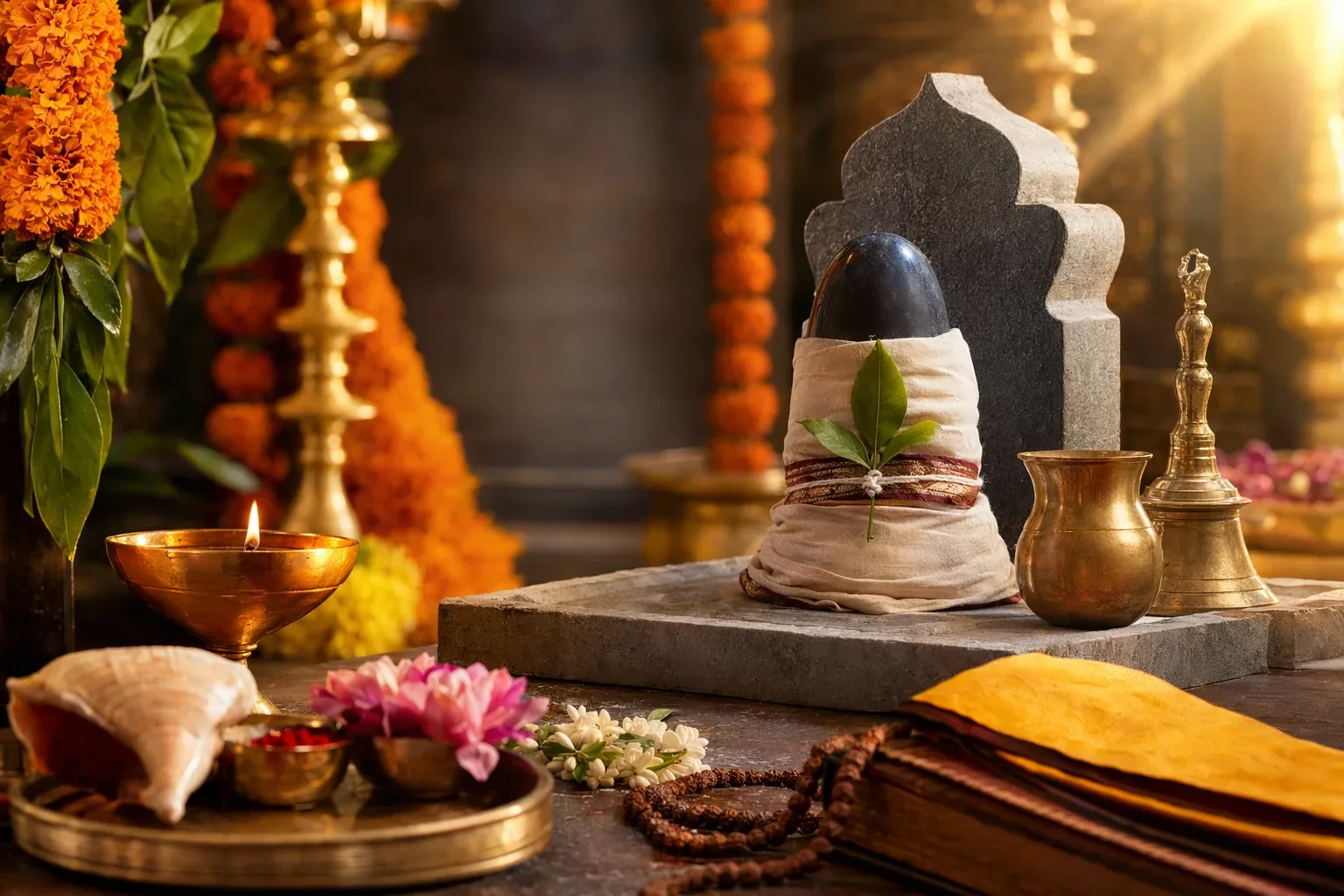
Why mantras matter in Prana Pratishtha
Mantras are central to Prana Pratishtha, but they are often misunderstood. A beginner may search for a single phrase and assume that reciting it creates consecration. Hindu ritual traditions do not treat the matter so casually. Mantras carry sacred sound, meaning, authority, and lineage. Their role depends on who recites them, how they are used, what rite surrounds them, and which deity is being worshipped.
Prana Pratishtha is not a loose collection of words. It is a consecration guided by tradition, usually performed by trained priests or acharyas. Mantras are woven into purification, invocation, offerings, fire rites, nyasa, darshan, and daily worship.
Meaning is more than translation
A translation can help beginners understand the direction of a mantra. It may show that the mantra invites presence, offers honor, requests blessing, or identifies the deity with supreme reality. But translation alone does not capture the full function of mantra.
In Hindu practice, sound itself matters. Pronunciation, meter, accent, repetition, and ritual placement can be important. A mantra may also carry meaning through association with scripture, guru tradition, deity worship, and centuries of practice. This is why a mantra is not the same as an ordinary sentence.
Context protects the tradition
Context includes the deity, the form being consecrated, the temple or home setting, the calendar, the officiating priests, preparatory rites, offerings, and expected care afterward. A mantra used in one tradition may not be used the same way in another. A Shiva consecration, Vishnu temple ceremony, Devi installation, Ganesha worship, or shivling rite may each have its own textual and customary framework.
This variety does not make the tradition confused. It shows that Hindu worship is living and specific. For a broader overview of the ceremony, read what happens during Prana Pratishtha.
Why this article does not give a procedure
It is respectful to explain the role of mantras. It is not respectful to present sacred consecration as a self-directed checklist for beginners. Prana Pratishtha may involve mantras that require initiation, priestly training, ritual purity, correct sequence, and responsibility after the rite.
Providing a simplified procedure can create false confidence and anxiety. Someone may worry that one missed syllable has caused harm, or may claim consecration without understanding the commitment. A better beginner approach is to learn the meaning, honor the tradition, and consult qualified guidance when needed.
Common types of mantra use
Although details vary, mantras in Prana Pratishtha may serve several broad purposes. Some purify the place, vessels, worshipper, and ritual materials. Some invoke deities, guardians, gurus, or sacred rivers. Some honor the chosen deity directly. Some are used with offerings into fire. Some accompany the ritual honoring of the murti's limbs or the opening of darshan.
The point is not that every ceremony includes the same set in the same order. The point is that mantra gives sacred language to each act. It aligns the physical offering with devotion, memory, and theological meaning.
The role of the priest or acharya
A trained priest does more than read words aloud. The priest knows how the rite is structured, what substitutions are acceptable, how to handle interruptions, how to pronounce the mantras, and what responsibilities follow. In many traditions, the priest also represents a lineage of learning.
This does not make devotees passive. Devotees participate through faith, attention, offerings, sankalpa, service, and darshan. But the technical ritual responsibility belongs to those trained for it.
Mantra and devotion
It is possible to respect priestly tradition while also honoring simple devotion. A person who chants the name of Rama, Shiva, Devi, Krishna, Ganesha, or Hanuman with love is not doing something inferior. Nama japa, stotra recitation, bhajan, and silent prayer all have honored places in Hindu life.
The difference is purpose. Personal prayer nourishes devotion. Formal Prana Pratishtha establishes a sacred form for worship. They are related, but not identical. For the basic meaning, see What Is Prana Pratishtha?
A beginner example
Suppose a family invites a priest to bless a new home altar. The priest may chant familiar mantras, perform puja, and guide the family in simple daily worship. The family may hear words they do not fully understand, but they can still participate respectfully by listening, offering flowers, and asking for explanations afterward.
In a large temple ceremony, many priests may chant together for hours or days. The scale is different, and so is the responsibility. Both settings show how mantra works with community, place, and intention.
How to learn respectfully
Beginners can learn meanings from reliable books, teachers, temple classes, and elders. They can ask: Which tradition is this from? Is this mantra for general prayer or for a specific rite? Who is qualified to recite it in this context? What daily practice follows?
These questions are better than collecting sacred words without guidance. They help learning remain humble and accurate.
Frequently asked questions
Is there one Prana Pratishtha mantra?
No single mantra covers every tradition, deity, and ceremony. Different texts and lineages use different mantras and sequences.
Can I chant deity names at home?
Yes, many people chant divine names, stotras, and prayers at home. That is different from performing formal consecration.
Are mantras powerful by themselves?
Traditions honor mantra deeply, but they do not reduce sacred rites to isolated words. Context, guidance, devotion, and responsibility matter.
What should I do if I need a consecration?
Consult a trained priest, acharya, or trusted temple connected with your tradition, especially if the worship will continue at home.