
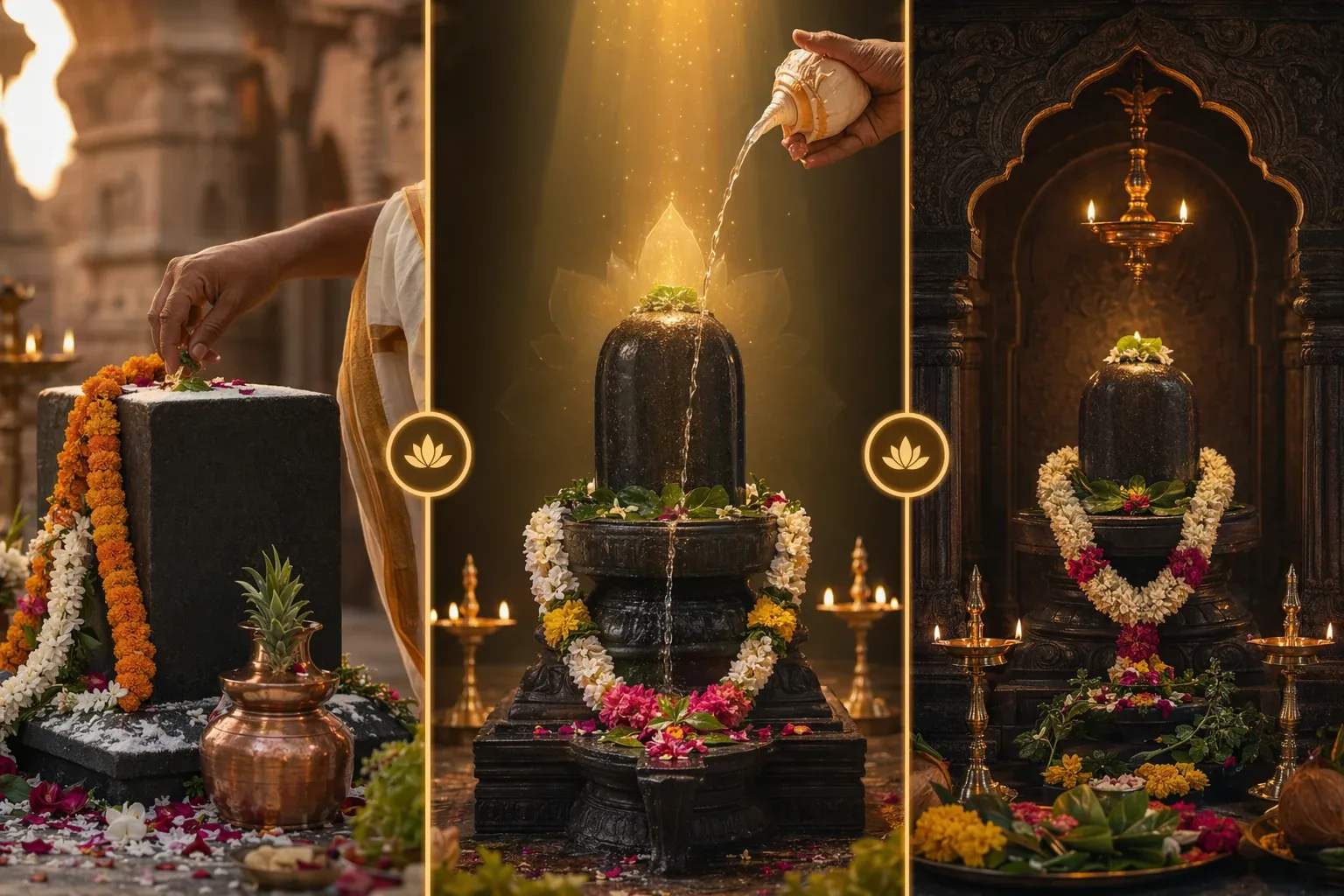
Two words that are often mixed up
Prana Pratishtha and Sthapana are closely related terms, so it is natural for beginners to confuse them. Both can appear when people speak about placing a deity image, opening a temple, or beginning worship. But they do not always mean the same thing.
In simple language, **Sthapana** means placing, establishing, or installing something in a proper location. **Prana Pratishtha** means ritually invoking and establishing divine presence in a form so that it becomes a consecrated focus of worship. Sthapana can be general; Prana Pratishtha is more specific and sacred in a formal sense.
What Sthapana usually means
The Sanskrit root behind sthapana has the sense of placing or establishing. In religious life, it may refer to installing a murti on an altar, placing a kalasha for a puja, setting up a temporary image for a festival, or establishing a deity in a shrine. The word can be used broadly.
For example, during Ganesh Chaturthi, families may speak of Ganapati sthapana when they bring a Ganesha murti home and place it respectfully for worship. In many cases, this is a temporary devotional installation, followed by visarjan. It is meaningful, but it may not be identical to the formal Prana Pratishtha of a permanent temple deity.
What Prana Pratishtha means
Prana Pratishtha is the consecration through which the deity's presence is ritually invited and honored in a murti, shivling, yantra, or sacred form. It is normally performed by trained priests or acharyas according to a tradition. It often includes purification, sankalpa, mantra recitation, offerings, fire rites, and a central act of consecration.
After Prana Pratishtha, the form is treated with special care. It is no longer approached as only an object of art or devotion. It becomes a living center of worship, darshan, and service. For a simple explanation of the idea, read what Prana Pratishtha means.
A helpful comparison
Think of Sthapana as giving a sacred form its place. Think of Prana Pratishtha as ritually recognizing divine presence in that form. The two may happen together in a temple ceremony, but they are not interchangeable.
A family may place a framed image of Krishna on a clean shelf. That is a form of respectful placement. A priest may perform puja for a newly placed household murti. That may be called installation in ordinary speech. A temple committee may invite acharyas for a detailed consecration lasting several days. That is Prana Pratishtha in the formal sense.
Why the difference matters
The distinction protects beginners from two mistakes. The first mistake is thinking that a home picture or small murti is meaningless without formal consecration. That is not true. Devotional remembrance, prayer, and family worship can be sincere and spiritually important without temple-style consecration.
The second mistake is treating Prana Pratishtha casually, as if it were only a label placed on any object. Formal consecration carries responsibility. It asks for ongoing worship, cleanliness, respect, and guidance. Understanding the difference helps people choose the right level of practice.
Temple example
A new Vishnu temple is built. The murti is carved, transported, and placed in the sanctum. The physical placement is part of the larger installation. But the temple is not considered fully ready for regular public worship until the consecration rites are completed according to that tradition. The Prana Pratishtha marks the sacred beginning of daily darshan.
Afterward, the temple does not treat the murti as a display piece. Priests perform daily seva, dress the deity, offer food, wave lamps, chant prayers, and open the shrine for devotees.
Home example
A household buys a small brass Ganesha and places it on a clean altar before beginning daily prayers. The family may offer flowers, chant familiar names of Ganesha, and ask for wisdom before study or work. This can be called a form of sthapana in everyday language.
If the family wants formal Prana Pratishtha, they should consult a priest. The priest may advise a simple blessing, a household installation, or may say full consecration is not necessary for that form. This is why home Prana Pratishtha needs guidance rather than guesswork.
Festival example
Temporary festival murtis show the distinction especially well. During festivals, images are installed, worshipped with devotion, and later immersed or respectfully concluded. The practice has its own sacred logic. Permanent temple Prana Pratishtha, however, establishes ongoing worship for years or generations.
Both can be beautiful. They simply have different purposes and durations.
Language can vary
Different families and regions may use words differently. Someone may say Prana Pratishtha when they mean a simple puja, while another may reserve the term for formal temple consecration. Rather than arguing over vocabulary, it is better to ask: What ritual was performed? Who guided it? What daily responsibilities follow?
These questions reveal the practical difference.
Frequently asked questions
Is Sthapana always less sacred?
No. Sthapana can be sacred and meaningful. It simply does not always imply formal consecration with the responsibilities of Prana Pratishtha.
Can both happen in one ceremony?
Yes. A temple ceremony may include physical installation and formal consecration as parts of one larger event.
Does a home altar need Prana Pratishtha?
Not usually. Many homes maintain devotional altars without formal consecration. When in doubt, ask a trusted priest or elder.
What should beginners remember?
Sthapana gives a sacred form its place; Prana Pratishtha ritually establishes it as a consecrated focus of worship. The difference is explained by purpose, responsibility, and tradition.