Three mudras you have probably seen
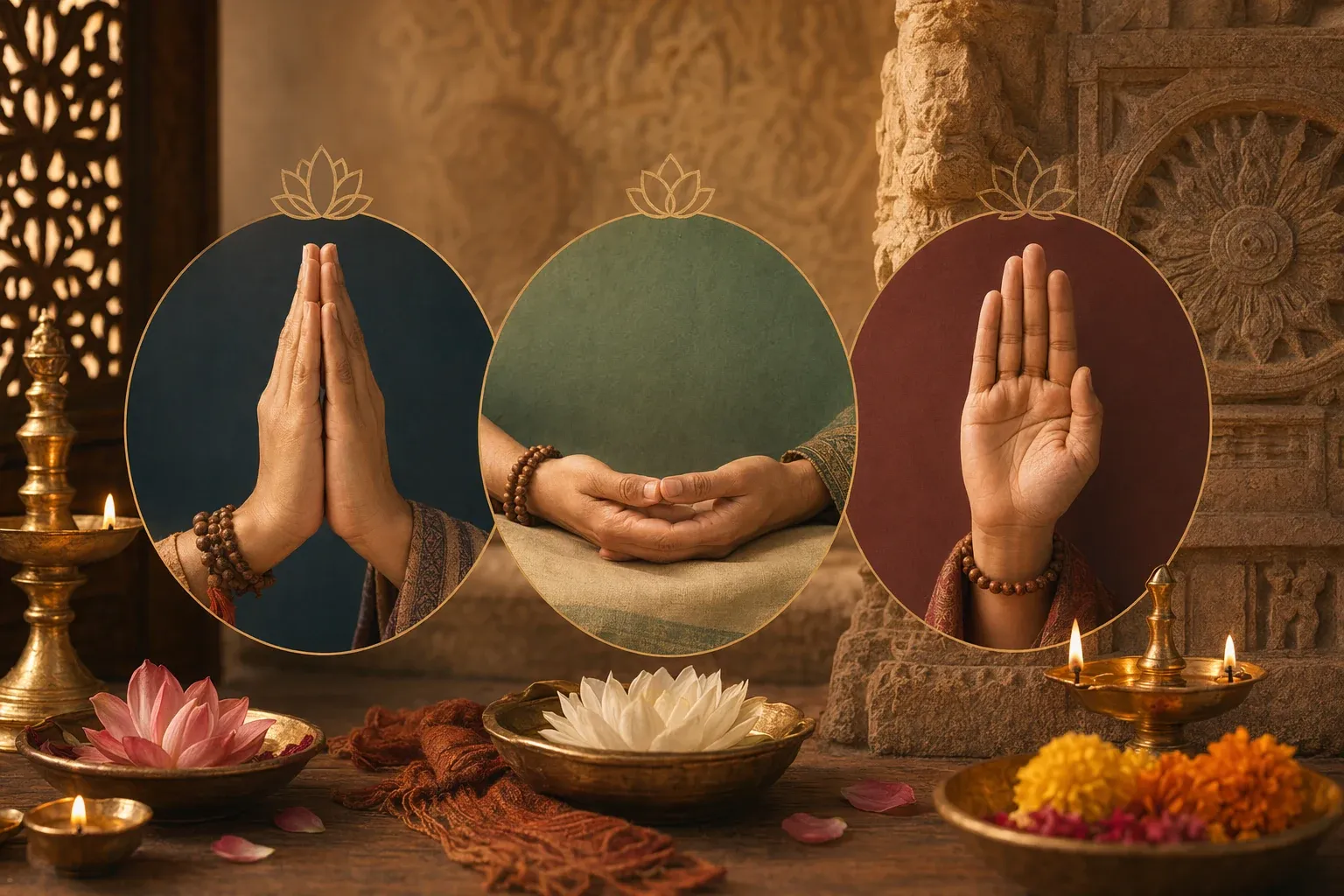
Even if you do not know many Sanskrit names, you have likely seen Anjali, Dhyana, and Abhaya Mudra. They appear in homes, temples, yoga classes, statues, paintings, and social greetings. These three gestures are a good doorway into understanding how mudras carry meaning beyond hand position.
Anjali Mudra often says respect. Dhyana Mudra often suggests meditation. Abhaya Mudra often communicates reassurance. But each one becomes richer when you notice where it appears and what emotion surrounds it.
Anjali Mudra: folded hands with respect
Anjali Mudra is the gesture of bringing both palms together, usually near the chest. It is widely recognised through namaste. In many Indian families, it is used while greeting elders, praying before a deity, entering a sacred space, or saying thank you with humility.
The beauty of Anjali Mudra is that it is simple but not small. It can hold devotion, greeting, apology, gratitude, and attention. In a yoga class, it may mark the beginning or ending of practice. In a temple, it may express reverence. In daily life, it can say, “I see you with respect.”
To practise it, keep the palms lightly together. Do not crush the hands. Let the shoulders relax. The gesture is more about sincerity than force.
Dhyana Mudra: hands resting in meditation
Dhyana Mudra is associated with meditation and inner stillness. In many images, both hands rest in the lap, one placed over the other. The thumbs may touch lightly, forming a gentle shape. You may see this mudra in images of the Buddha, yogis, and meditative figures.
For a beginner, Dhyana Mudra solves a practical problem: where should the hands go while sitting quietly? When the hands rest in the lap, the shoulders can soften and the body can settle. The gesture quietly says, “Let attention turn inward.”
In art, Dhyana Mudra does more than show someone sitting. It helps the viewer understand the mood of contemplation. The body is still, the face is calm, and the hands support that message.
Abhaya Mudra: the raised palm of reassurance
Abhaya Mudra is commonly shown with one hand raised, palm facing outward. The word abhaya is often linked with fearlessness or the absence of fear. In temple sculpture and Buddhist art, this mudra can communicate reassurance, protection, blessing, or calm confidence.
It is important not to reduce Abhaya Mudra to a casual “stop” sign. In sacred art, the raised palm is usually gentle, not aggressive. It tells the devotee or viewer: do not be afraid; there is steadiness here.
You may see Abhaya Mudra in images of deities, saints, and the Buddha. The gesture often works with the whole image: posture, expression, ornaments, symbols, and story.
How the same gesture changes by setting
Anjali Mudra in a school assembly, temple, yoga class, and classical dance performance may look similar, but the feeling changes. Dhyana Mudra in a meditation app image is not the same as Dhyana Mudra in an old sculpture. Abhaya Mudra on a deity image has a devotional context that a random hand pose does not.
This is why context is the first teacher. Before asking, “What does this mudra mean?” ask, “Where am I seeing it?” The answer will become clearer.
Example: reading a temple image slowly
Imagine a deity image with one hand raised in Abhaya Mudra and another hand lowered in a giving gesture. The face is calm. Devotees stand with folded hands. The scene is not only about hand positions. It is about relationship: the devotee offers reverence, the deity offers reassurance and grace. Reading the mudra helps you understand the emotional conversation in the image.
Why these three are worth learning well
These mudras appear again and again across Indian visual culture, so learning them gives you a strong base. Once you recognise folded hands, meditation hands, and the raised palm, many images become easier to approach. You start looking with patience instead of scrolling past.
Respectful learning tips
When visiting a temple, avoid treating sacred gestures like museum trivia. Observe quietly. If someone explains the meaning, listen. If you take photos where allowed, do so respectfully. If photos are not allowed, accept it without argument.
When using these mudras in personal practice, keep the mood appropriate. Anjali is not only for content aesthetics. Dhyana is not a costume of spirituality. Abhaya is not a dramatic command. Each gesture has dignity.
A note on pronunciation
Do not worry if Sanskrit words feel unfamiliar at first. Say them slowly, listen to reliable teachers, and avoid making fun of names. Careful pronunciation is a small but meaningful sign of respect.
FAQ
Is Anjali Mudra the same as namaste?
Anjali Mudra is the gesture; namaste is a greeting often expressed with that gesture. They are closely connected but not exactly the same thing.
Can I use Dhyana Mudra for meditation at home?
Yes. It is simple and comfortable for many people. Support your hands if your shoulders feel tense.
What does Abhaya Mudra mean in art?
It is commonly understood as reassurance, fearlessness, blessing, or protection, depending on the tradition and image.
Where to go next
For Buddhist hand gestures, read `buddha-buddhism-mudras-meaning`. For hand-sign basics, read `mudra-hands-hand-signs-types-explained`. For the wider idea of mudra, read `what-is-mudra-meaning-purpose-beginners`.