
First, a careful answer
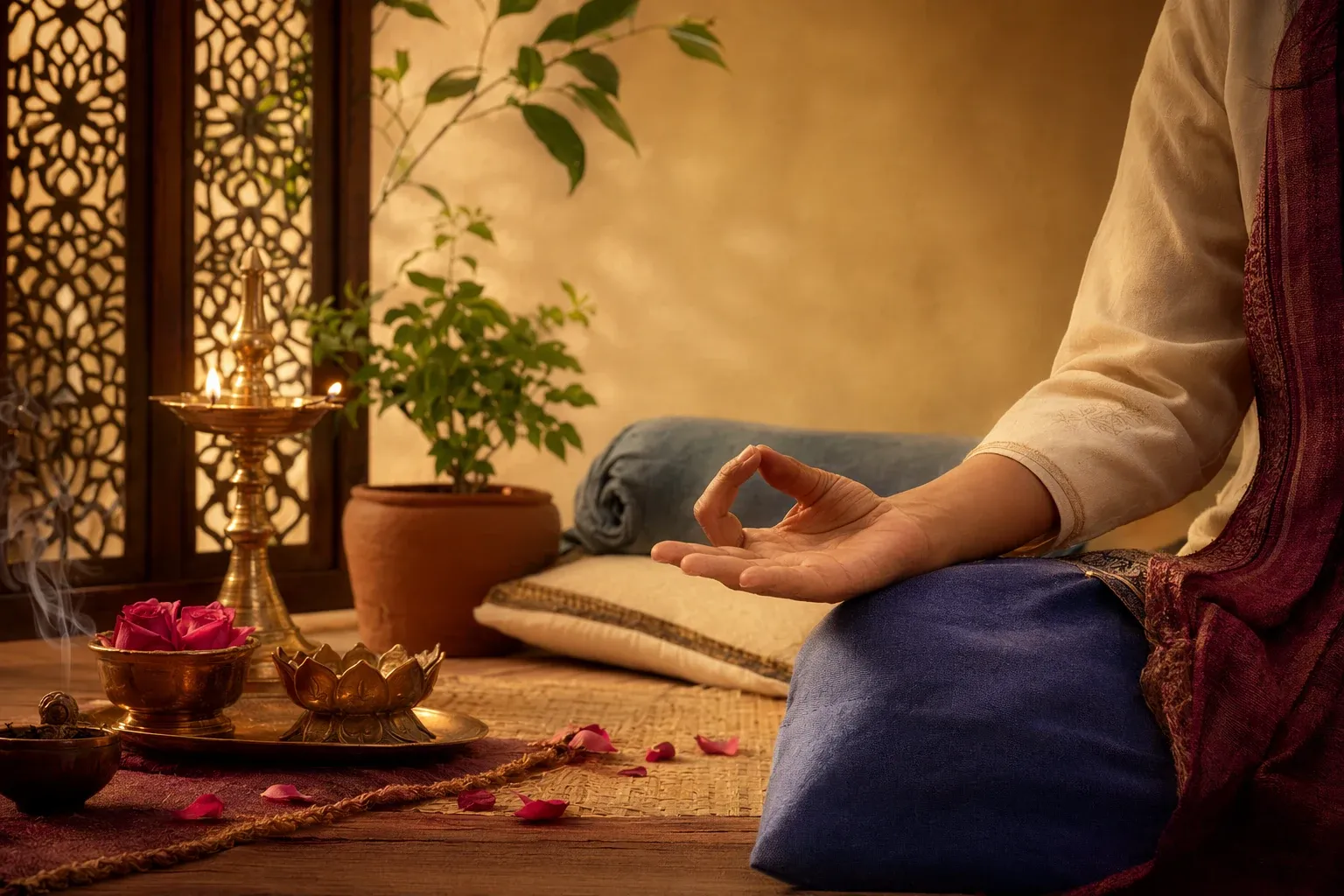
If you are asking which mudra is good for sleep or stress, the safest answer is: choose a simple, comfortable gesture that helps you slow down, but do not treat it as a cure. Anjali Mudra, Dhyana Mudra, or a soft Chin Mudra can be used as part of a calming routine. They may help you pause, breathe, and shift away from constant scrolling or overthinking.
But sleep problems and intense stress can have many causes: study pressure, work, family tension, anxiety, health issues, trauma, screen habits, caffeine, irregular schedules, or depression. A mudra cannot replace proper care. If sleep loss or stress is severe, long-lasting, or affecting daily life, please speak with a qualified doctor, counsellor, therapist, or trusted adult.
Why mudras may feel calming
Mudras can give the hands a quiet place to rest. When the body becomes still and the breath becomes natural, the mind may also begin to soften. The gesture acts like a small signal: now I am pausing. This can be useful before sleep or after a stressful day.
The calming effect is not magic. It often comes from the full routine: dimmer lights, less phone use, slower breathing, a safe environment, and a meaningful gesture. The mudra is one part of that routine.
Simple mudras to try
Anjali Mudra for settling
Bring the palms together near the chest. Let the shoulders relax. Take five slow, natural breaths. You can silently say, “I am allowed to pause.” This is helpful when the mind feels scattered.
Dhyana Mudra for quiet sitting
Sit comfortably and rest the hands in the lap, one palm over the other. Let the thumbs touch lightly or stay relaxed. Use this for two to five minutes before bed or during a break. If sitting on the floor is uncomfortable, use a chair.
Chin Mudra for breath awareness
Touch the thumb and index finger lightly. Rest the hands on the thighs. Notice the breath without forcing it. If the fingers feel tense, release. Keep it simple.
A five-minute night routine
First, put the phone away or keep it across the room. Lower bright lights if possible. Sit on the bed or a chair. Bring hands into Anjali Mudra for three breaths. Then rest them in Dhyana Mudra for two or three minutes. Let thoughts come and go. End by relaxing the hands and lying down.
This routine does not guarantee sleep. It simply gives the mind a softer landing. If you do it regularly, your body may start recognising it as a bedtime signal.
A two-minute stress reset
When stressed during the day, sit or stand with both feet steady. Use Anjali Mudra or simply rest the hands together. Inhale naturally. Exhale slowly. Name one thing you can do next: drink water, reply to one message, ask for help, take a walk, or continue studying for ten minutes. Then release the mudra and do that one action.
Stress often becomes worse when everything feels huge. A mudra can create a pause before choosing the next small step.
What not to do
Do not hold a mudra until your fingers hurt. Do not use mudras to avoid medical care. Do not believe posts that promise instant sleep, permanent anxiety removal, or guaranteed emotional healing. Do not blame yourself if a mudra does not work. You are not failing; you may simply need a different kind of support.
Also be careful with intense breath practices before sleep. Strong breath holds or fast breathing can make some people feel uncomfortable. If you are new, breathe naturally.
Make the room support the practice
A mudra works better as part of a kind environment. Reduce loud notifications, avoid heavy arguments at bedtime when possible, and keep the room a little darker. If you share a room, even sitting quietly with headphones off for two minutes can help mark the shift toward rest.
When to seek help
Please seek professional support if you cannot sleep for many nights, wake with panic, feel hopeless, have thoughts of self-harm, rely heavily on substances to sleep, or cannot function in daily life. Talk to a doctor, mental health professional, campus counsellor, helpline, or trusted adult. If there is immediate danger, contact local emergency services.
Spiritual and cultural practices can sit beside professional care. You deserve both respect and real support.
Example: exam stress
A student feels anxious before an exam. Instead of scrolling for “powerful mudra for success,” they sit for three minutes with Anjali Mudra. They breathe, remember their revision plan, drink water, and sleep on time. The mudra did not create marks. It helped them return to a steadier choice. That is a healthy way to use it.
FAQ
Which mudra is best for sleep?
There is no guaranteed best mudra. Dhyana Mudra or Anjali Mudra can be gentle choices as part of a bedtime routine.
Which mudra is best for stress?
Anjali Mudra is simple and grounding for many beginners. Use it with slow breathing and one practical next step.
Can mudras treat anxiety or insomnia?
No. They may support relaxation for some people, but anxiety and insomnia may need professional care. Please seek help if symptoms are strong or ongoing.
Where to go next
For practice duration, read `how-long-hold-mudra-best-time-practice`. For beginner meditation mudras, read `mudra-yoga-meditation-best-for-beginners`. For a balanced view of prana and chakra searches, read `prana-mudra-chakra-heart-chakra-balanced-guide`.