
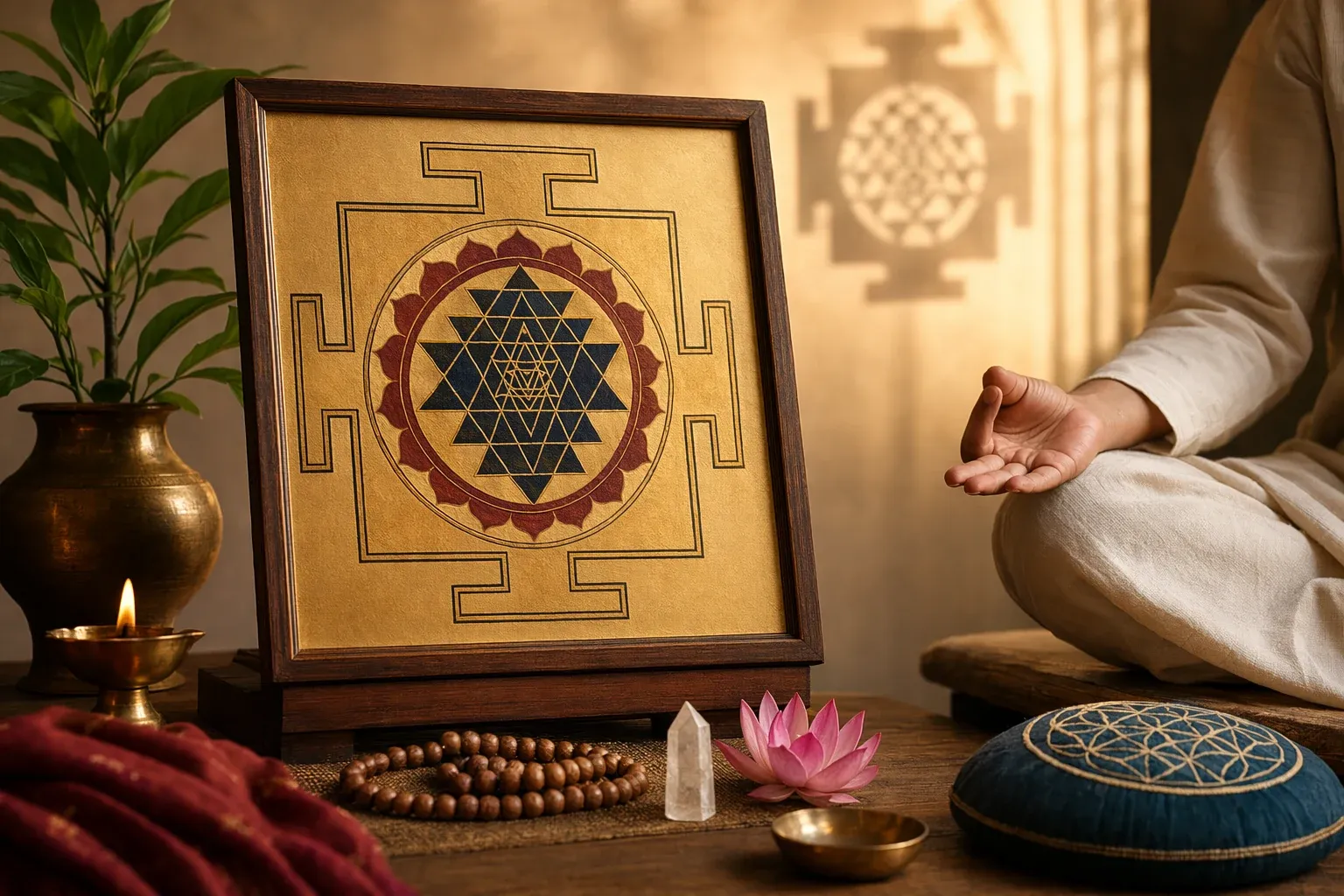
What yantra meditation means
Yantra meditation is the practice of using a sacred diagram as a visual support for attention. The eyes rest on the form, the breath settles, and the mind gradually becomes less scattered. In Hindu traditions, a yantra may also be linked with a deity, mantra, and worship, so the practice can be devotional as well as meditative.
For beginners, the most helpful attitude is simplicity. You do not need to force a mystical experience or understand every geometric detail on the first day. A yantra can begin as a steady visual anchor, much like a lamp flame, a murti, or a mantra can anchor the mind in other forms of practice.
Choosing a yantra for your first practice
Start with one yantra, not many. If you already have devotion to a deity such as Ganesha, Lakshmi, Shiva, Hanuman, Surya, or Devi, choose a yantra associated with that form and learn its background. If you are mainly interested in focus, choose a clear, well-printed design that does not strain the eyes.
The Sri Yantra is famous, but it is visually complex. Some beginners love it; others find it too busy at first. A simpler Ganesha or meditation yantra may be easier. The key is not status. The key is whether the diagram invites reverence and steadiness. For the symbolism behind the forms, read `yantra-symbols-shapes-sacred-geometry-explained`.
Preparing the place
Choose a clean, quiet spot where the yantra can be placed at eye level or slightly below. Avoid placing it casually on the floor, under piles of objects, or in places of obvious impurity. If the yantra is used devotionally, it may be placed near a home altar, lamp, flowers, or a small offering according to family custom.
You do not need an elaborate arrangement to begin. A clean cloth, respectful placement, and a few minutes of undisturbed time are enough for simple meditation. More formal ritual practices should be learned from a qualified teacher or family tradition.
Posture and gaze
Sit comfortably with the spine upright but not stiff. A chair is fine if sitting on the floor is uncomfortable. Place the yantra at a distance where the central point can be seen without squinting. Let the shoulders relax and keep the breath natural.
Begin by looking at the whole yantra. Then allow your gaze to settle near the center, often the bindu. Do not stare aggressively. A soft, steady gaze is better. If the eyes water or become tired, close them for a few breaths and visualize the form gently, then open them again.
A simple ten-minute practice
Start with a short bow or inward gesture of respect. If you have a mantra connected with the yantra and have received or learned it appropriately, repeat it softly or mentally. If not, you can simply breathe and hold a devotional intention such as gratitude, clarity, or surrender.
For the first two minutes, observe the outer boundary and shape of the yantra. For the next few minutes, follow the design inward: square, circle, petals, triangles, center. Then rest your attention at the center. When thoughts arise, do not fight them. Notice them and return to the point. In the last minute, close the eyes and sense the image inwardly. End with thanks.
This small practice is often more sustainable than an ambitious routine that collapses after two days. Regularity matters more than length.
What to do when the mind wanders
The mind will wander. That does not mean you are failing. The yantra is there precisely because attention needs support. Each return to the center is part of the practice.
If you feel restless, widen your attention to the full diagram. If you feel dull or sleepy, sit a little straighter, open the eyes more fully, and notice the sharpness of the lines. If emotions arise, do not use the yantra to suppress them harshly. Let the breath soften and return with patience.
Devotion, not pressure
Some people approach yantras because they have heard promises of quick success, wealth, protection, or spiritual power. Traditional Hindu practice is more subtle than that. A yantra may be used for blessings and worship, but it is not wise to treat it as a guaranteed instrument for desire.
A healthier approach is devotional: “May my mind become clearer. May I act with wisdom. May this practice connect me with the divine.” This attitude protects the practitioner from anxiety and superstition.
How often should beginners practice?
Begin with five to ten minutes daily or several times a week. If daily practice becomes mechanical or stressful, reduce the length but keep the respect. Morning is common because the mind is fresher, though evening can also be suitable.
Avoid switching yantras constantly. Stay with one long enough to develop familiarity. Over time, the diagram may feel less like an object and more like a doorway into quiet attention.
Using a yantra with mantra
Yantra and mantra often belong together. The yantra provides visible form; the mantra provides sacred sound. However, not every mantra should be used casually, and some belong to specific initiatory contexts. For general devotion, many families use well-known names or stotras they have inherited.
If you are unsure, keep the practice simple. Respectful silence is better than careless use of something you do not understand. For a simple comparison, see `yantra-mantra-tantra-difference-simple-guide`.
FAQ
Can I meditate on a digital yantra?
Yes, for basic focus it can help, especially when traveling. For devotional use, many people prefer a clean printed or metal yantra placed respectfully. Avoid treating a sacred image like casual screen clutter.
Should I close my eyes or keep them open?
Begin with eyes open, then close them briefly to notice the inner impression. Alternating can be useful. Do not strain.
Is yantra meditation safe for beginners?
Simple visual meditation is generally gentle, but anyone with eye strain, anxiety, trauma sensitivity, or medical concerns should proceed slowly and seek appropriate support. Avoid intense practices without guidance.
Where should I keep the yantra after meditation?
Keep it clean and respectfully placed. A home altar, meditation shelf, or quiet study corner can work. Placement suggestions are discussed in `where-to-place-yantra-at-home-respectful-guide`.