
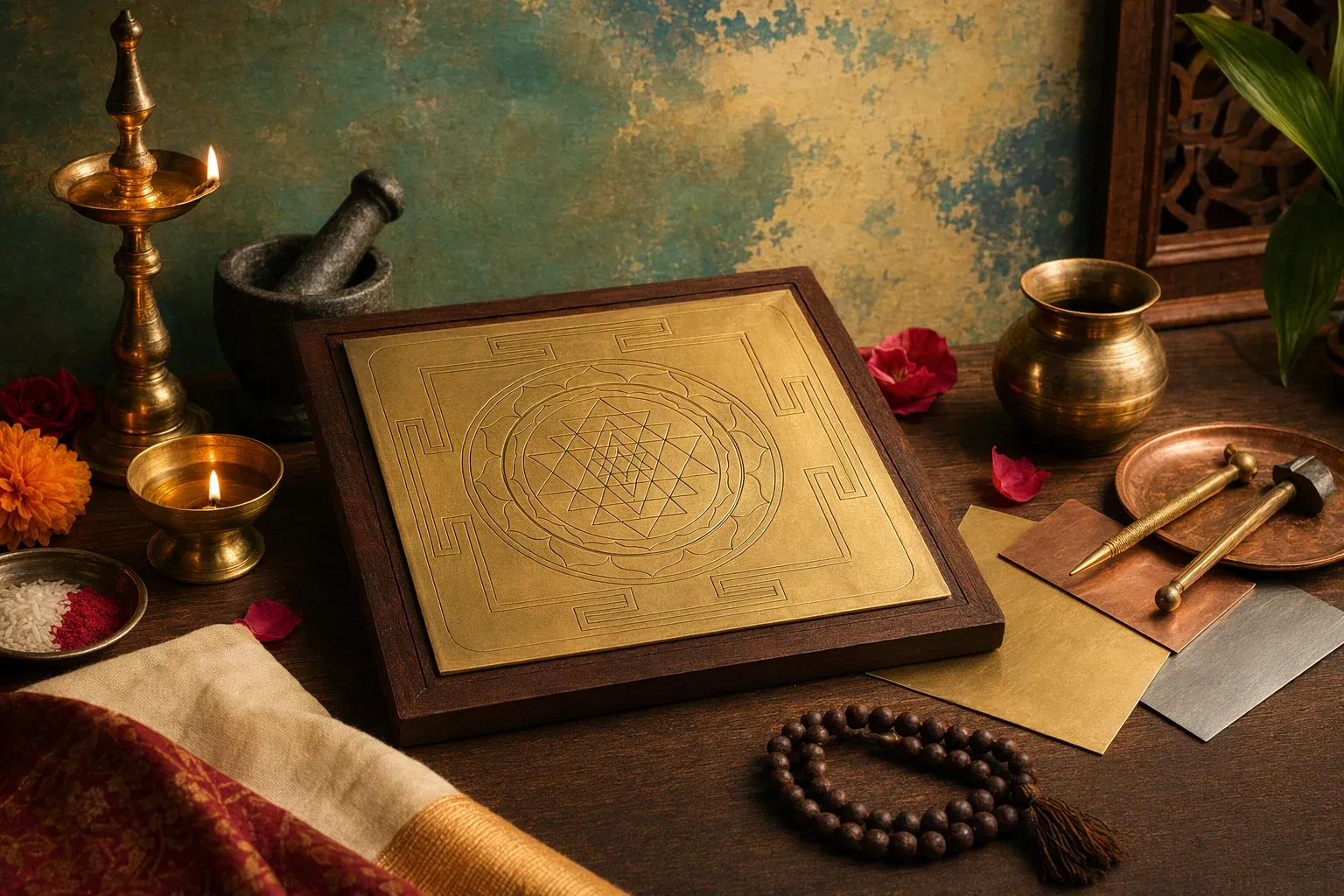
Begin with intention
Before choosing or making a yantra, ask why you want one. Is it for meditation, family worship, devotion to a deity, study of sacred geometry, or a specific practice inherited from your tradition? A clear intention helps you avoid collecting sacred objects out of fear, fashion, or exaggerated promises.
A yantra deserves respect. It is not merely a design to download, print, and forget. Even if you begin simply, treat it as a sacred support and approach it with humility.
Buying a yantra
Many people buy a yantra as a printed image, framed artwork, copper plate, silver plate, bhojpatra drawing, or three-dimensional form. When buying, look for clarity and accuracy. Lines should be clean, the central point should be visible, and the diagram should not be distorted for decorative effect.
Avoid sellers who promise guaranteed miracles or use fear to push a purchase. A trustworthy source will usually speak with respect and restraint. If the yantra is tied to a particular deity or tradition, learn the basics before bringing it home. For common deity yantras, see `common-hindu-yantras-lakshmi-ganesha-hanuman-shiva-kali`.
Drawing a yantra yourself
Drawing a yantra can be a meaningful contemplative exercise, especially for simple forms. Use clean paper, a steady hand, and a quiet mind. Bathe or wash your hands, sit respectfully, and avoid drawing while distracted or angry. If you are copying a traditional yantra, use a reliable reference.
However, some yantras are geometrically complex or ritually specific. The Sri Yantra, for example, is difficult to draw accurately. If precision matters for worship, it may be better to obtain a well-made yantra or learn from someone knowledgeable. Do not invent deity yantras casually and present them as traditional.
Choosing materials
Paper is acceptable for learning and simple meditation. A framed print can be practical for home use. Copper is common for engraved yantras and is often considered auspicious. Silver and gold may be used in special contexts but are not necessary for sincere practice.
The best material is one you can maintain respectfully. A costly metal yantra neglected in dust is not superior to a simple clean image used with devotion. Avoid materials that will quickly tear, stain, or be placed in disrespectful conditions.
Accuracy and symbolism
Accuracy matters because yantras are symbolic forms, not random patterns. The bindu, triangles, lotus petals, square boundary, and other elements are arranged purposefully. If the design is badly altered, the symbolism may become confused.
This does not mean a beginner must become anxious over every line. For meditation, a clear and respectful image is usually enough. For formal ritual, seek guidance. To understand the main symbols, read `yantra-symbols-shapes-sacred-geometry-explained`.
Consecration: what to understand
Consecration means ritually preparing or enlivening a sacred object for worship. In many Hindu traditions, this may involve purification, mantra, invocation, offerings, and the presence of a priest, guru, or qualified practitioner. Different yantras and lineages have different procedures.
For this reason, it is not responsible to give a universal home formula and claim it fully consecrates every yantra. Some practices are simple and household-based; others are formal and should be learned properly. If you need a consecrated yantra for serious worship, consult your family priest, temple, guru, or trusted tradition.
A simple respectful home welcome
If you are not performing formal consecration, you can still welcome a yantra respectfully. Clean the place where it will be kept. Place the yantra on a fresh cloth or altar. Light a lamp if that is customary and safe. Offer flowers or a simple prayer. Mentally dedicate the yantra to clarity, devotion, and right living.
This is not a substitute for lineage-specific consecration. It is a humble household gesture. The difference matters. Humility protects both the practitioner and the tradition.
Daily or occasional care
Keep the yantra clean. Dust framed images gently. Wipe metal plates with care and avoid harsh substances that may damage them. Remove old flowers or offerings. If you cannot do daily worship, offer a brief bow or moment of gratitude when you pass the space.
Do not let care become anxiety. Sacred practice should bring steadiness. If you miss a day, return respectfully rather than falling into guilt or fear.
What not to do
Do not place the yantra on the floor, near shoes, in bathrooms, or under clutter. Do not use it as a fashion graphic without understanding. Do not sell homemade designs as ancient or authoritative if they are personal art. Do not perform intense rituals from random sources, especially those involving fire, sharp objects, secrecy, or promises of control over others.
Also avoid mixing many yantras and mantras in a confused way. More objects do not automatically mean more devotion. Often, one well-kept sacred support is better.
When a yantra is damaged
If a paper yantra tears or becomes dirty, handle it respectfully. Many families wrap old sacred images before retiring them according to local custom. Some immerse items in water, but this may not be environmentally responsible or legally allowed in many places. Choose a clean, respectful, and eco-conscious method.
If a metal yantra is damaged, ask a priest or knowledgeable elder whether it should be repaired, retired, or replaced.
FAQ
Can I print a yantra at home?
Yes, for simple meditation or devotion, a clean print can be acceptable. Use a clear source, print respectfully, and place it properly rather than treating it as scrap paper.
Must every yantra be consecrated?
For formal worship, many traditions prefer or require consecration. For basic meditation, a respectfully kept image may be enough. Follow your tradition when possible.
Can I make a yantra for someone else?
You can share a respectful printed or drawn yantra, but avoid claiming spiritual authority you do not have. Encourage the person to learn its meaning and care.
Where should I keep it after bringing it home?
Choose a clean altar, meditation shelf, or quiet sacred corner. Avoid disrespectful places. More details are in `where-to-place-yantra-at-home-respectful-guide`.