
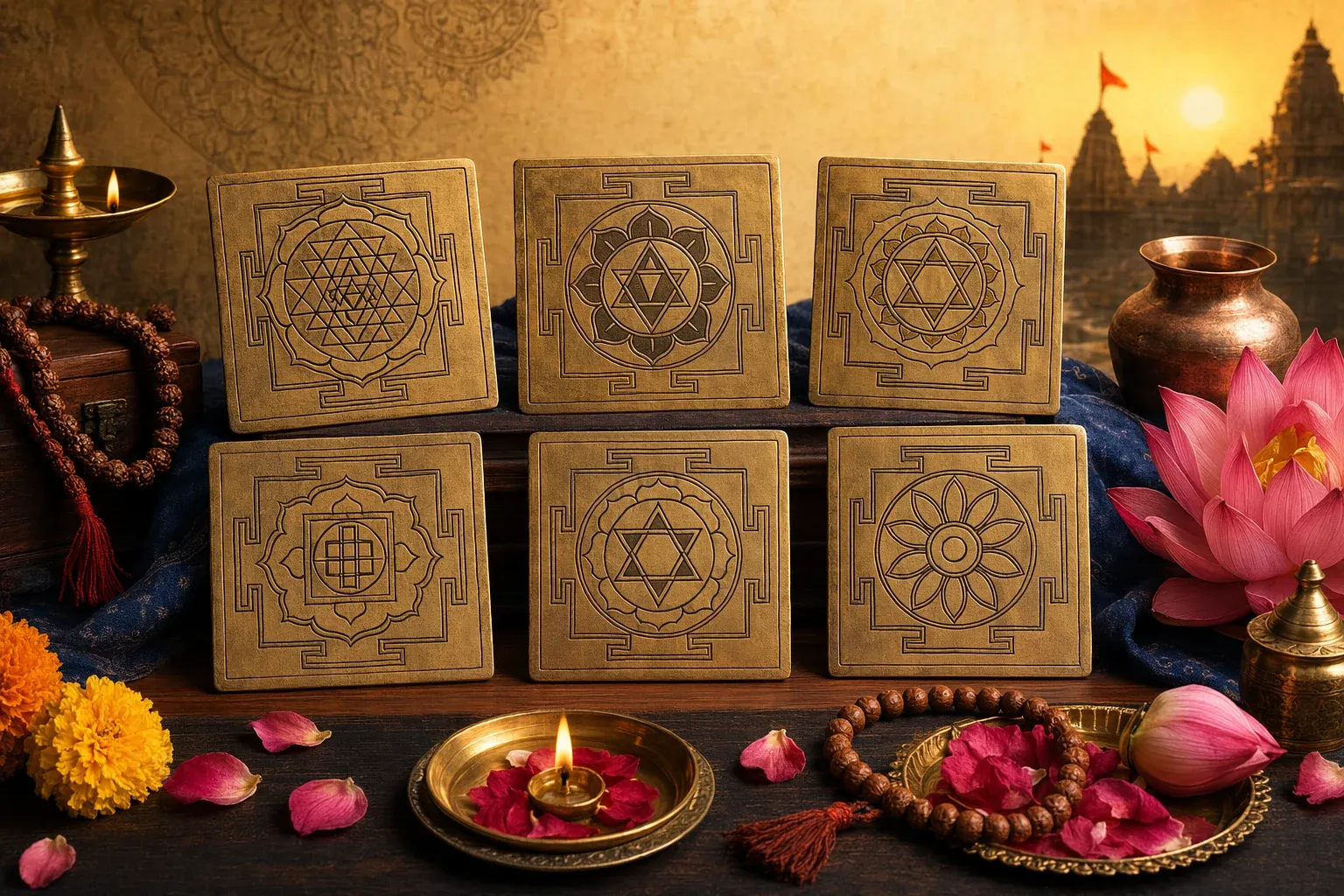
Understanding common yantras
Hindu yantras are often associated with particular deities and devotional intentions. A Lakshmi Yantra may be connected with auspicious prosperity, a Ganesha Yantra with wise beginnings, a Hanuman Yantra with courage and devotion, and a Shiva Yantra with inner stillness. These associations are meaningful, but they should not be reduced to commercial promises.
A yantra is best approached as a sacred support within worship, meditation, and ethical living. The deity is not a “function” to be activated. Devotion asks for reverence, humility, and sincere effort.
Lakshmi Yantra
The Lakshmi Yantra is associated with Sri Lakshmi, the goddess of auspiciousness, abundance, beauty, and grace. In household worship, Lakshmi is honored not only for money but for harmony, generosity, cleanliness, nourishment, and good fortune in a broad sense.
A respectful Lakshmi practice may include keeping the space clean, lighting a lamp, offering flowers, and praying for prosperity that supports dharma. It should not encourage greed or anxiety. The deeper question is: does wealth flow with gratitude and generosity, or does it make the heart smaller?
Ganesha Yantra
Ganesha is beloved as the remover of obstacles and the lord of beginnings. A Ganesha Yantra is often kept by students, artists, business owners, and families beginning new efforts. It can remind the devotee to start with humility, intelligence, patience, and steadiness.
Ganesha worship is especially beginner-friendly in many Hindu households because his presence is warm and accessible. Still, the yantra deserves respect. It is not a lucky token to be tossed into a drawer. Use it as a reminder to act wisely and complete what you begin.
Hanuman Yantra
Hanuman represents strength, devotion, courage, service, and unwavering remembrance of Rama. A Hanuman Yantra may be used by devotees seeking protection, discipline, and fearlessness. Many people also recite the Hanuman Chalisa or remember Hanuman on Tuesdays or Saturdays according to custom.
The heart of Hanuman worship is bhakti and seva. If the yantra inspires courage but not humility, the lesson is incomplete. Hanuman’s strength is inseparable from devotion.
Shiva Yantra
A Shiva Yantra is connected with Lord Shiva, often associated with stillness, transformation, meditation, dissolution of ego, and auspicious consciousness. Devotees may use it for contemplation, inner quiet, and worship of Shiva as Mahadeva.
Shiva worship can be very simple: water offered to a Shiva linga, repetition of “Om Namah Shivaya,” or silent meditation. A Shiva Yantra should be kept clean and approached calmly. It is not mainly about controlling outer events; it points inward toward awareness, restraint, and surrender.
Kali Yantra
Kali is a fierce and compassionate form of the Divine Mother, associated with time, transformation, protection, and the cutting of ego and ignorance. A Kali Yantra carries a powerful devotional mood and should not be treated casually or used for sensational purposes.
Many Kali practices belong to specific traditions and may require guidance. A beginner drawn to Kali can start with respectful prayer, learning her stories, and approaching the yantra with humility rather than thrill-seeking. Fierce does not mean reckless; it means sacred intensity held by devotion.
Surya Yantra
The Surya Yantra is associated with the Sun, vitality, clarity, discipline, and illumination. Devotees may connect it with morning prayers, Surya Namaskar, or offerings of water to the rising sun according to family custom.
Surya worship can remind a person to live with regularity and openness. The sun gives light without favoritism. A Surya Yantra can therefore support reflection on health, discipline, leadership, and truthfulness. It should not replace medical care or practical responsibility for wellbeing.
Saraswati and Durga Yantras
A Saraswati Yantra is connected with learning, speech, music, arts, and wisdom. Students and artists may keep it with reverence, but the yantra does not replace study or practice. It supports the attitude of learning.
A Durga Yantra is associated with the protective and victorious form of the Divine Mother. Durga worship emphasizes courage, righteousness, and the power that removes oppression. As with all Devi yantras, respectful care and traditional understanding are important.
Choosing among many yantras
It is tempting to collect yantras for every possible need. A better approach is to choose according to genuine devotion, family tradition, or a clear meditative purpose. One yantra used sincerely is more meaningful than many objects gathered out of fear or greed.
If you already worship a deity, begin there. If your family has a kuladevata or established practice, respect that continuity. If you are unsure, speak with a trusted elder, priest, or teacher. For selection and care, see `how-to-make-choose-consecrate-yantra-at-home`.
Placement and care
Most yantras should be placed in a clean puja space, meditation area, or respectful shelf. Avoid the floor, bathrooms, shoe areas, and clutter. If the yantra is used for worship, keep offerings fresh and the area tidy.
Placement can vary by tradition. Do not let directional rules become a source of fear. A calm, clean, reverent place is the foundation. More placement guidance appears in `where-to-place-yantra-at-home-respectful-guide`.
FAQ
Which yantra is best for beginners?
A Ganesha Yantra or a yantra connected with your existing family devotion is often a gentle beginning. The best choice is the one you can respect and care for sincerely.
Can I keep Lakshmi and Ganesha yantras together?
Many households worship Lakshmi and Ganesha together, especially during Diwali. Keep them respectfully arranged and avoid overcrowding.
Are fierce deity yantras unsafe?
They should not be approached with fear, but they deserve seriousness. Practices connected with Kali or certain forms of Devi may be best learned from a qualified tradition.
Do yantras guarantee results?
No. Yantras support worship, focus, and devotion. They do not replace effort, ethics, prayer, or guidance. For a broader explanation, read `how-yantra-works-tradition-focus-devotion`.