
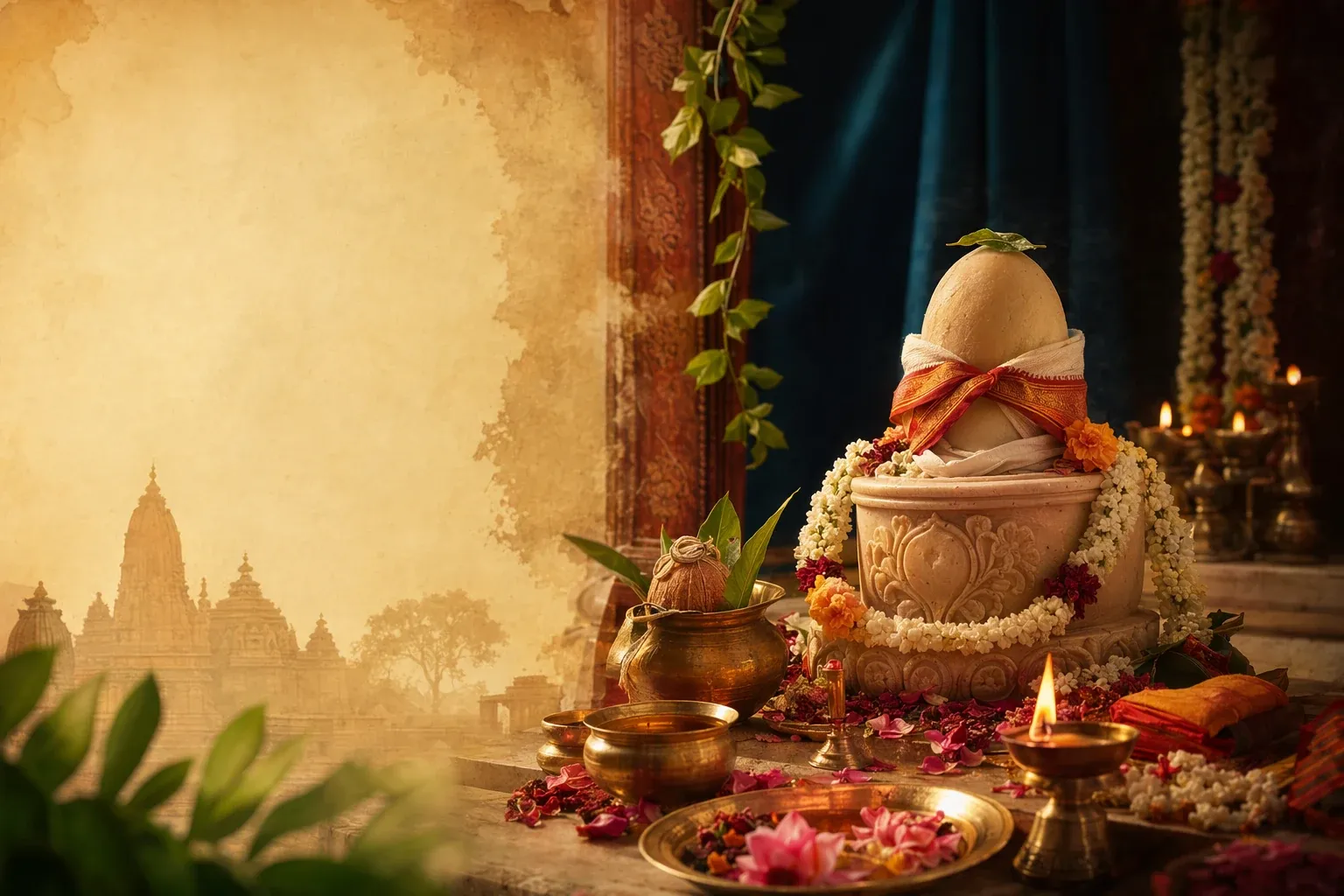
A simple meaning of Prana Pratishtha
Prana Pratishtha is a sacred Hindu consecration in which a deity's presence is ritually invited and honored in a murti, shivling, yantra, or temple image. The Sanskrit words are often explained as **prana**, meaning life breath or vital presence, and **pratishtha**, meaning establishment or installation. In simple terms, it is the rite through which an image is no longer treated as only carved stone, metal, clay, or wood. It becomes a revered focus of darshan, worship, and relationship with the divine.
This does not mean Hindu traditions imagine that God was absent before and then becomes limited inside an object. The idea is more refined. The divine is understood as all-pervading, yet human beings need a form through which love, attention, gratitude, and discipline can be expressed. Prana Pratishtha gives that form a recognized sacred status within a community or household.
Why consecration matters
A murti may be beautiful before Prana Pratishtha, but beauty alone is not the point. Consecration changes how devotees relate to it. After the rite, the image is approached with the respect given to a living presence. People offer water, flowers, incense, food, lamp light, music, silence, and prayer. The murti becomes a center around which daily life can be organized.
In a temple, this matters even more because worship is not private emotion alone. The consecrated deity becomes the heart of a public sacred space. The temple calendar, festivals, daily arati, offerings, and darshan hours all take shape around that presence. Devotees may come with grief, joy, vows, thanks, confusion, or quiet devotion. Prana Pratishtha gives the community a shared point of reverence.
The purpose is relationship, not magic
A helpful way to understand the purpose is to think of relationship. When a respected guest comes home, people clean the house, prepare a seat, offer water, cook carefully, and speak with attention. The guest was already a person before entering the home, but the welcome creates a relationship. Similarly, Prana Pratishtha is a formal welcome to divine presence in a chosen form.
This is why the rite is not usually described as a trick, spell, or shortcut. It is a solemn act performed within a lineage of worship, scripture, temple practice, and priestly training. Different sampradayas and regional traditions may explain details differently, but the shared spirit is reverence.
What changes after Prana Pratishtha?
The most visible change is responsibility. A consecrated image is not handled casually. In temples, priests maintain daily worship, bathing rites, decoration, food offerings, lamps, and closing rituals. In homes, families may keep simpler forms of care according to their tradition and capacity.
This does not mean every home altar must be complicated. Many families keep pictures or small murtis for devotional remembrance without formal consecration. Others invite a priest for a specific installation or blessing. The distinction matters because Prana Pratishtha carries an expectation of ongoing respect. For more on this, see what happens after Prana Pratishtha.
Is the divine really inside the murti?
Hindu thought gives more than one language for this. Some devotees speak with loving directness: the deity is present here. Some philosophers say the murti is an authorized support for worship. Some teachers say the form helps the mind move from scattered thought toward sacred awareness. These are not necessarily contradictions. Devotion often uses simple language for a deep reality.
The important point is that the murti is not worshipped as ordinary matter. It is honored as a consecrated presence. This is why darshan, the act of seeing and being seen by the deity, becomes central. Devotees do not only look at art; they stand before a sacred form with humility.
Difference from simply placing a murti
Many beginners confuse Prana Pratishtha with placing a deity image on an altar. Placing a murti, picture, or shivling respectfully is often called sthapana or installation in a general sense. Prana Pratishtha is a more specific consecration, usually guided by trained priests and tradition. The difference is explained in detail in Prana Pratishtha vs Sthapana.
This distinction is useful because it prevents fear. A family can keep devotional images at home with sincerity. At the same time, they can understand why a formally consecrated temple deity is maintained with precise daily worship.
A beginner-friendly example
Imagine a village builds a small temple for Devi. Before consecration, the structure is complete and the murti is carefully made. People may admire it and feel devotion. On the consecration day, priests perform purification, recitation, offerings, and ritual acts according to the chosen tradition. After that, the temple opens for regular darshan. The community now relates to the murti as the living center of worship.
Or imagine a family moving into a new home. They may place framed images of Rama, Krishna, Shiva, Ganesha, or Durga on a clean altar and pray daily. That is devotional worship. It may not be Prana Pratishtha in the formal temple sense, but it can still be sincere and meaningful.
Frequently asked questions
Is Prana Pratishtha required for every murti?
No. Many homes keep murtis or pictures for daily remembrance without formal Prana Pratishtha. Formal consecration is especially important for temple deities and certain forms of installed worship.
Who performs Prana Pratishtha?
It is generally performed by trained priests or acharyas who know the relevant tradition, texts, mantras, and ritual responsibilities. The details vary by deity, region, and lineage.
Is it only about mantras?
Mantras are important, but they are not isolated formulas. Their meaning depends on purity rules, offerings, intent, lineage, and the full ritual context. See Prana Pratishtha mantras for a careful explanation.
Can the purpose be explained in one sentence?
Prana Pratishtha formally establishes a sacred form as a living focus of divine worship, so devotees may approach it with reverence, care, and darshan.