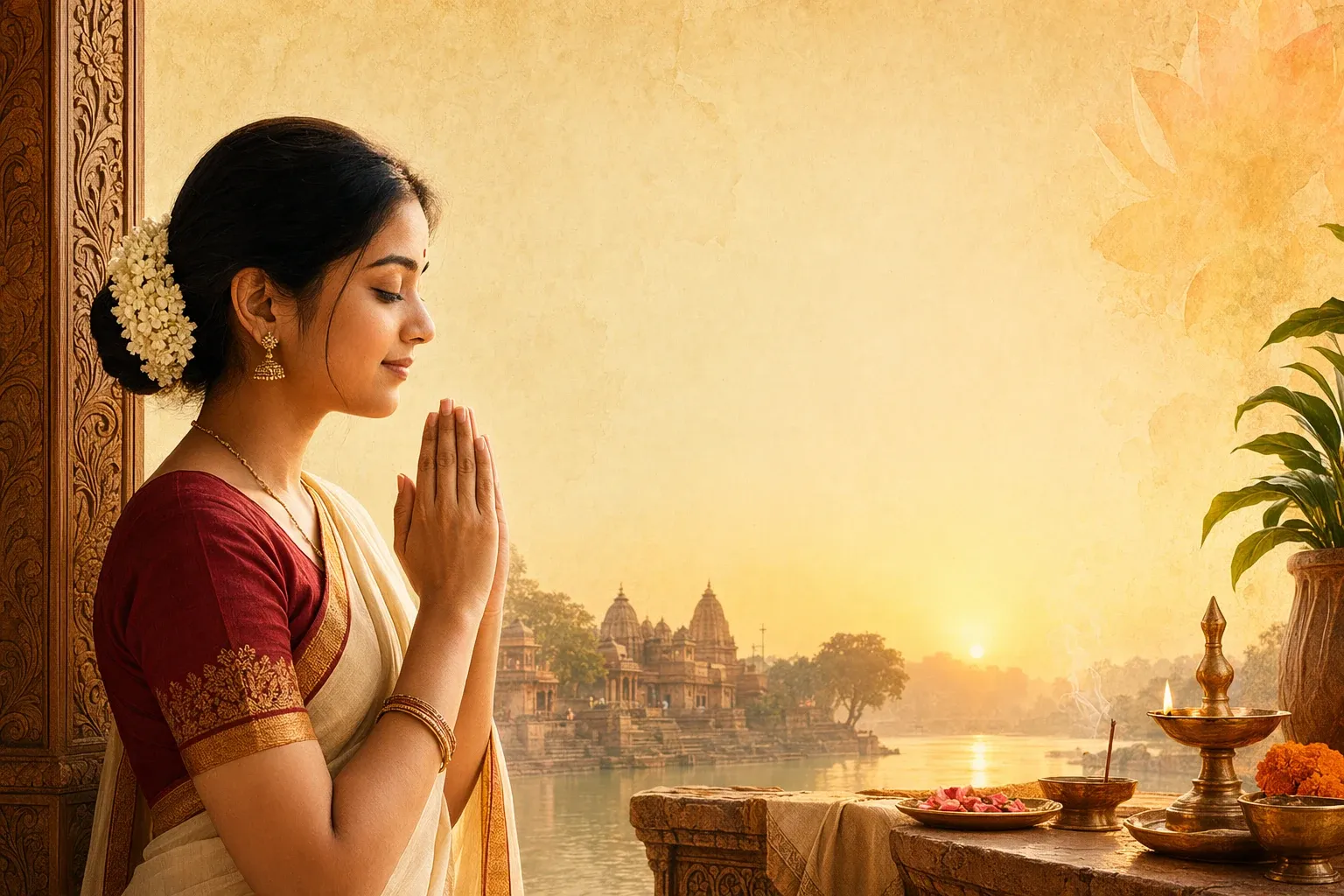
People do Namaste with folded hands because the gesture expresses respect without needing physical contact. The palms come together near the chest, the head may bow slightly, and the person greets another with attention. In daily life it can mean hello, welcome, or goodbye. In a deeper sense, it can mean “I honour you” or “I bow to the sacred dignity within you.”
The folded-hands gesture is simple, but it carries many layers: social courtesy, spiritual humility, bodily focus, and cultural memory.
The gesture of joined palms
The joined palms used in Namaste are often called Anjali Mudra in yoga and Indian art. “Anjali” suggests offering, reverence, or salutation. When the hands join, the body becomes balanced. The right and left sides meet. The gesture draws attention inward instead of outward.
This is one reason Namaste feels calm. It is not a wave from far away or a handshake that depends on touch. It is a centred greeting. The hands say: I am present, I recognise you, and I meet you respectfully.
Respect without touch
Namaste is especially useful because it shows respect without physical contact. That can matter in formal settings, devotional spaces, health-conscious moments, or situations where people do not know each other well. It allows warmth without invading personal space.
This does not mean Indian greetings never involve touch. Touching elders’ feet, embracing relatives, or shaking hands in modern settings can all exist in different contexts. Namaste is one graceful option among many.
Bowing and humility
A slight bow often accompanies Namaste. Bowing lowers the head and softens ego. It is a bodily reminder that greeting another person should not be arrogant. Even a small bow can change the mood of a meeting.
In spiritual settings, bowing may be directed toward a deity, teacher, elder, sacred text, or gathering. In everyday life, the bow may be very small. The meaning remains respect.
Why the hands are placed near the heart
Many people place the folded hands near the chest. This location gives the gesture warmth and sincerity. It suggests that the greeting is not only from the mouth but from the heart. Some may raise the hands slightly higher for elders, teachers, or devotional situations, but beginners should avoid copying gestures without understanding.
A simple chest-level Namaste is usually respectful and natural.
Namaste in temples and devotional life
In temples, people may fold their hands before a deity, during prayer, while receiving blessings, or while greeting others. The gesture becomes devotional because it expresses surrender, reverence, and gratitude. It can also appear during bhajans, aarti, and personal prayer at home.
Here the folded hands are not merely polite. They become an offering of attention. The person is saying, through the body, that the moment matters.
Namaste with elders and teachers
Many Indian families teach children to greet elders with folded hands or similar respectful greetings. The purpose is not only manners. It is also a way to teach humility, gratitude, and awareness of relationships.
Teachers, gurus, grandparents, guests, and respected community members may be greeted this way. The exact words and gestures vary by language and region, but the value of respectful greeting is widely understood.
Namaste in yoga
In yoga classes, folded hands often appear at the start or end of practice. The gesture can help students pause, breathe, and close the practice with gratitude. When a teacher says Namaste, students may reply in the same way.
Used well, it is a mindful close. Used carelessly, it becomes a decorative habit. Teachers and students should remember that the gesture belongs to Indian cultural and spiritual traditions, not only to modern studio style.
For beginners, how to start yoga at home gives broader context for respectful practice.
Is folded-hands Namaste religious or cultural?
It can be both, depending on setting. A Namaste before a deity is devotional. A Namaste to a neighbour may be social. A Namaste to a teacher may be respectful. A Namaste at the end of meditation may be spiritual.
The same gesture can hold different levels of meaning because Indian life does not always separate culture, manners, and devotion sharply. Context tells you how to read it.
Common mistakes to avoid
Do not mock the gesture or exaggerate it as a costume. Do not assume every Indian person expects Namaste in every setting. Do not treat it as a replacement for learning local greetings. India has many languages and greeting traditions, including Namaskar, Pranam, Vanakkam, Sat Sri Akal, Ram Ram, and many more.
Also avoid pretending the gesture has only one secret meaning. It is better to say it often expresses respect, humility, greeting, or reverence.
How to do Namaste respectfully
Bring the palms together gently near the chest. Keep the fingers upward. Relax the shoulders. Bow slightly if appropriate. Say Namaste clearly, or use the greeting preferred in that region or family. Keep the tone warm and simple.
You do not need dramatic music, long pauses, or forced seriousness. Respect can be quiet.
For more on hand gestures in Indian art and practice, read Anjali, Dhyana, and Abhaya Mudra.
The simple takeaway is that people do Namaste with folded hands because the body can speak respect before words do. The gesture joins humility, greeting, and attention in one small movement.
A respectful beginner habit
When learning Indian cultural words, avoid turning them into slogans. Ask what the word means, where it is used, and how people from the tradition understand it. That habit keeps learning warm, accurate, and humble.