
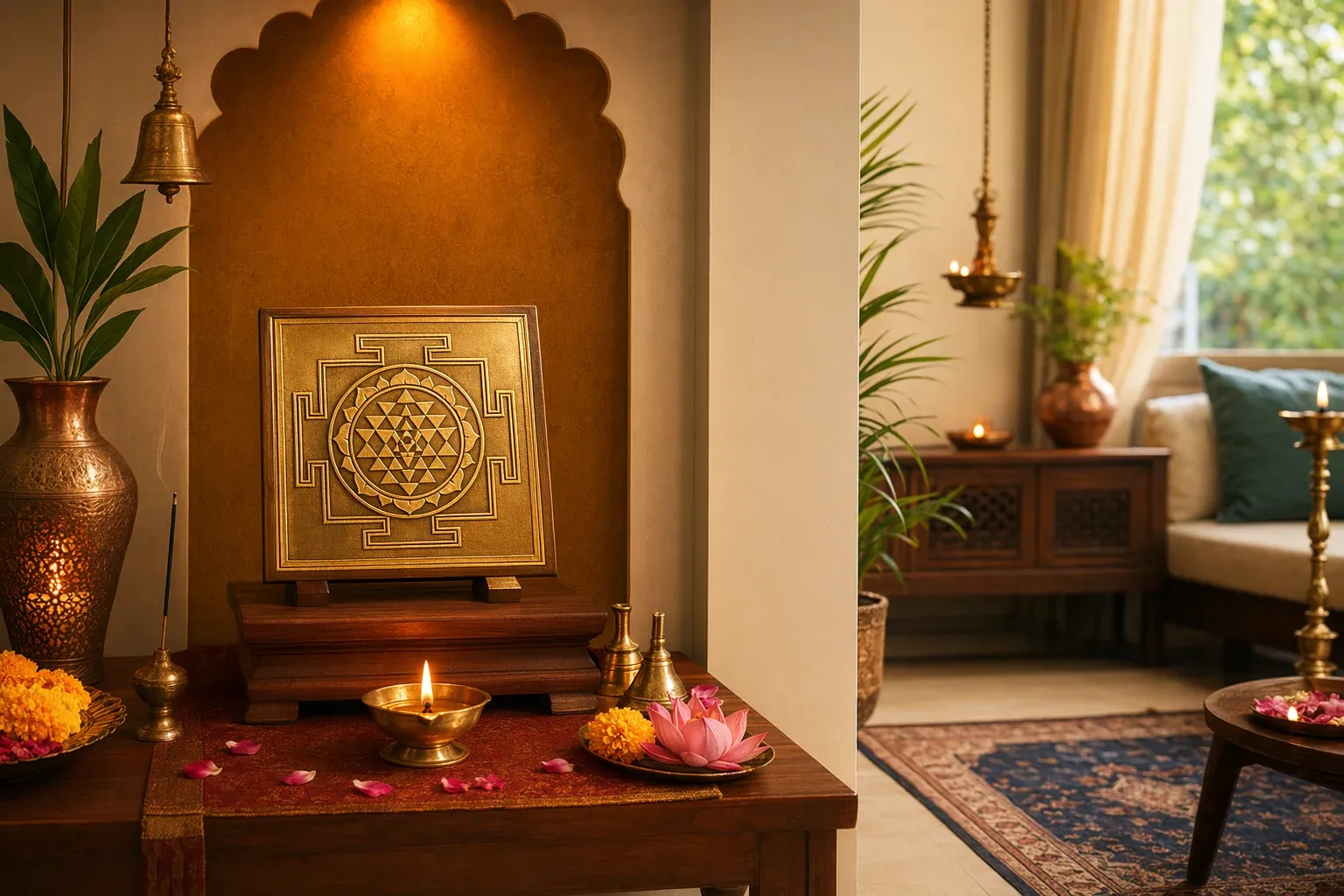
Placement begins with respect
A yantra is traditionally treated as a sacred support, not as ordinary wall art. The best place for it at home is therefore a clean, calm, and respectful space where it will not be ignored, stepped over, or mixed with clutter. For many families, this means the home altar or puja space. For others, it may be a meditation shelf, study corner, or clean place of prayer.
The exact placement can vary by family custom, regional practice, deity, and teacher. This guide offers beginner-friendly principles rather than rigid promises. If your family or guru has a clear instruction, honor that first.
The home altar or puja space
The most natural place for a devotional yantra is the puja area. There it can be near a lamp, incense, flowers, scriptures, or images of deities according to your household tradition. Keeping it with other sacred items helps remind the family that the yantra is part of worship, not a decorative object.
If the altar is small, place the yantra so it remains visible and clean. Avoid stacking random objects on it. If it is a metal plate, some people keep it flat; if it is framed, it may stand upright. Use common sense and reverence.
Meditation or study corner
A yantra used mainly for meditation can be placed at eye level in a quiet corner. The space should support steadiness. A desk can work if it is kept clean and not covered with food wrappers, bills, and unrelated devices. A shelf with a small cloth is often better.
For students or householders, a study corner can be meaningful when the yantra is approached with prayer for clarity and discipline. Still, do not reduce the yantra to an exam charm. Let it remind you to study sincerely and act with integrity.
Entrance placement
Some families place certain yantras near the entrance for auspiciousness or protection. If you do this, keep the placement dignified. It should not be where shoes hit it, where it is exposed to dirt, or where people brush against it carelessly.
A framed image above eye level may be more suitable than a loose paper near the floor. If the entrance is noisy or dusty, the home altar may be a better choice.
Direction and facing
People often ask which direction a yantra should face. Traditional recommendations differ depending on the yantra, deity, and lineage. Some household guides suggest east or north for many sacred objects because these directions are associated with sunrise, clarity, and auspiciousness. However, it is better not to become anxious if your home layout does not allow an ideal direction.
Cleanliness, reverence, and regular attention matter more than fear. If possible, sit facing east or north during meditation, but do not let direction become a source of panic. For deeper ritual placement, consult someone you trust within your tradition.
Places to avoid
Avoid placing a yantra on the floor, inside a bathroom, near shoes, under a bed, or in a place where it may be handled carelessly. Avoid keeping it in a kitchen area where it will be splashed or covered with grease unless your household has a specific clean shrine there. Avoid using sacred yantras as coasters, fashion props, or casual stickers.
If a printed yantra becomes torn or dirty, do not throw it into trash with disrespect. Many families wrap old sacred images and dispose of them according to local custom, such as placing them respectfully in a clean natural setting where permitted. Follow environmentally responsible options and local rules.
Keeping the yantra clean
Dust the area regularly. If the yantra is framed, clean the glass gently. If it is metal, wipe it according to the material; do not use harsh chemicals on engraved or plated surfaces. If offerings are made, remove wilted flowers and old food promptly.
Cleanliness is not only physical. The mood of the space matters. A yantra placed in a room of constant quarrel, neglect, and disrespect will not support the mind in the same way as a space approached with care.
Placement for different yantras
A Lakshmi Yantra is often kept in a puja place or clean area associated with household prosperity and gratitude. A Ganesha Yantra may be placed where prayers are offered before new beginnings. A Hanuman Yantra may be kept where devotees recite Hanuman Chalisa or remember courage and service. A Shiva or Kali Yantra should be approached with particular reverence, and formal worship may require guidance.
These are general observations, not universal rules. For a closer look at common yantras, see `common-hindu-yantras-lakshmi-ganesha-hanuman-shiva-kali`.
If you live in a small apartment
A small home can still have a respectful sacred place. Use a clean shelf, a small box altar, or a cloth-covered corner. If you share space with people who do not understand your practice, choose a place where the yantra will remain safe and undisturbed.
When traveling, some people keep a small printed yantra in a clean pouch. Use it respectfully, then put it away carefully. The heart of the practice is not the size of the display but the quality of attention.
FAQ
Can I keep a yantra in my bedroom?
Many people prefer the puja room or meditation area. If the bedroom is the only clean and private place, keep the yantra on a respectful shelf or altar, not under pillows, near shoes, or in clutter.
Should a yantra face east?
East or north is often suggested for sacred practice, but customs vary. Do your best without fear. Reverence and cleanliness are essential.
Can I place more than one yantra together?
Yes, but avoid collecting many yantras without understanding or care. A few meaningful sacred supports are better than a crowded display that receives no attention.
What if I cannot do daily worship?
Keep the yantra clean and offer simple respect when you can. A brief bow or moment of gratitude is better than elaborate promises you cannot maintain. For care and selection, read `how-to-make-choose-consecrate-yantra-at-home`.