The simple meaning of mudra
A mudra is a meaningful gesture used in Indian spiritual practice, yoga, meditation, dance, and sacred art. Most beginners first notice mudras as hand positions: palms joined in namaste, fingers touching during meditation, or a deity shown with one palm raised in blessing. The word is often explained as a “seal,” “mark,” or “gesture.” In simple words, a mudra is a physical sign that carries an inner meaning.
A mudra is not just a cool hand pose for photos. It belongs to living traditions where the body, breath, attention, and feeling are connected. Sometimes a mudra expresses respect. Sometimes it helps a person sit with focus. Sometimes it tells a story in dance or temple sculpture. The meaning changes with the setting.
Why people use mudras
People use mudras for three broad reasons: attention, expression, and remembrance. In meditation, a hand mudra can give the mind something quiet and steady to return to. In prayer, a mudra can show humility or devotion without needing many words. In classical dance, mudras become a language for flowers, rivers, animals, gods, emotions, and everyday actions.
For Gen Z beginners, a helpful way to understand mudra is this: it is body language with cultural depth. Just as a thumbs-up, folded hands, or a heart sign says something instantly, a traditional mudra also communicates. The difference is that many mudras have centuries of usage behind them, so they deserve care rather than casual copying.
Mudra is not only about fingers
Many online posts make mudras look like finger puzzles. But the hand shape is only one part. The posture, facial expression, breath, intention, and context matter too. Anjali Mudra with folded hands may mean greeting when you meet an elder, reverence in a temple, or centering before yoga. The same shape can feel different because the moment is different.
Some traditions also speak about body mudras, eye gestures, and symbolic postures. Still, for most beginners, hand mudras are the easiest entry point. They are simple, visible, and common in daily Indian culture.
Common beginner examples
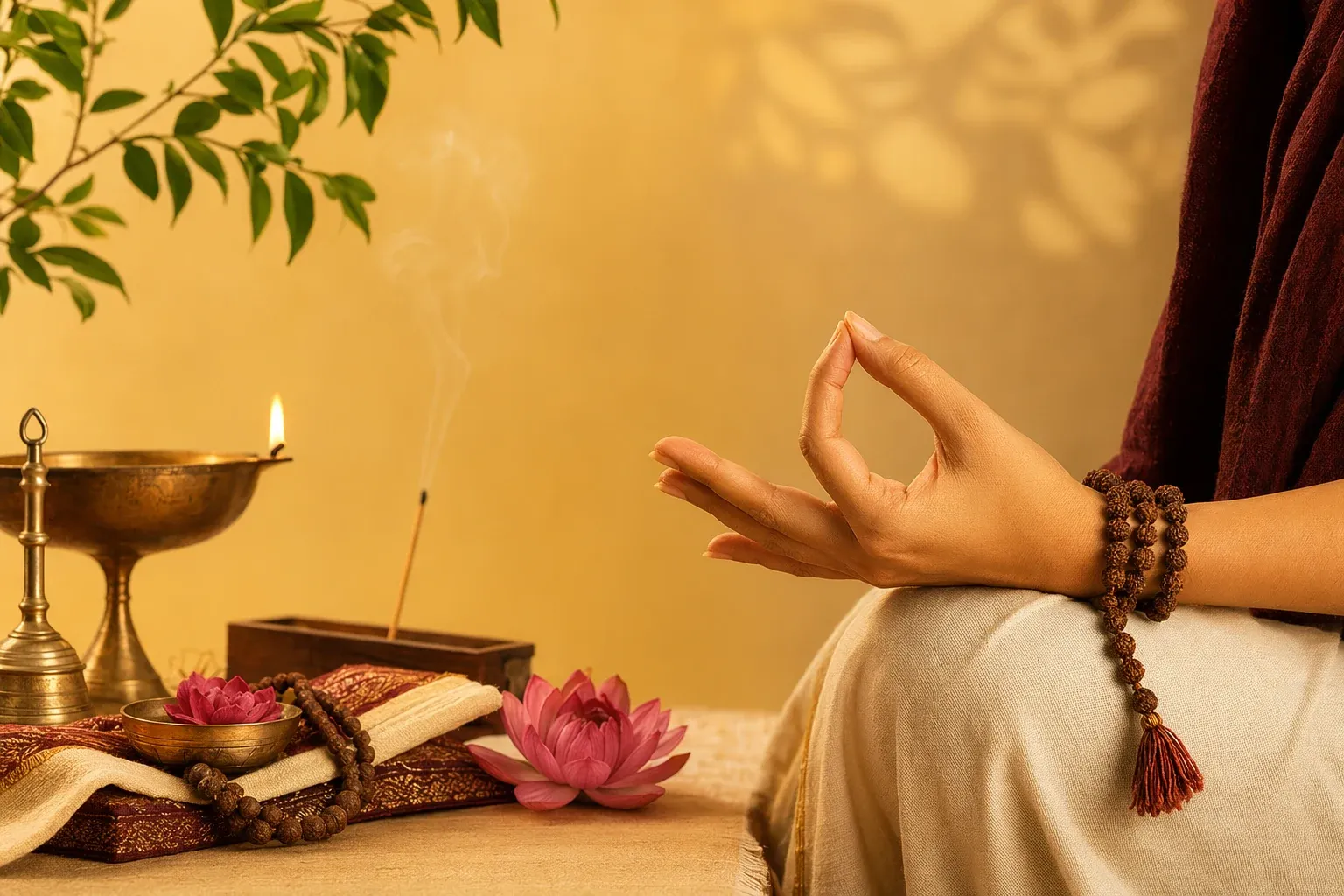
Anjali Mudra is the familiar gesture of bringing both palms together near the chest. It is used for namaste, prayer, gratitude, and respectful greeting. Dhyana Mudra is often seen in meditation images, with hands resting in the lap. Abhaya Mudra shows a raised palm, often understood as reassurance or fearlessness in temple and Buddhist art.
In yoga classes, you may also see Chin Mudra or Jnana Mudra, where the thumb and index finger touch lightly. Teachers may use them during breathing or meditation. If you are new, do not worry about memorising many names. Start by learning the meaning of a few gestures properly.
A respectful way to begin
Begin with one mudra, not ten. Choose Anjali Mudra before prayer, Dhyana Mudra during quiet sitting, or a simple meditation hand position taught by a reliable yoga teacher. Sit comfortably. Keep the hands soft. Notice whether the gesture helps you feel more present. If it feels forced, relax.
Avoid treating mudras like instant fixes. A mudra can support attention, devotion, or a mindful routine, but it is not a replacement for sleep, food, exercise, therapy, medical care, or honest conversations. Traditional practices work best when approached with balance.
Example: one-minute Anjali practice
Sit or stand with your spine comfortable. Bring the palms together near the heart area. Let the thumbs rest lightly. Take three slow breaths. Mentally say thank you to one person, place, or lesson. Then release the hands gently. This small practice can make a greeting, prayer, or start of study feel more grounded.
A small daily-life example
Think about entering a quiet temple after a noisy street. You may automatically lower your voice and bring the hands together. The mudra helps the body understand the moment before the mind explains it. In the same way, a student can use one simple gesture before reading, chanting, or meditation to mark a respectful beginning.
Mistakes beginners can avoid
Do not press the fingers painfully. Do not copy sacred gestures only for aesthetic drama. Do not claim a mudra will cure a problem. Do not mix random meanings from social media without checking the tradition. If a teacher, dancer, monk, priest, or elder explains a gesture, listen carefully. Context is part of the learning.
How to keep learning
Good learning is slow. Pick one article, one teacher, or one family practice and stay with it for a while. When you meet a new mudra, ask for its name, use, and setting. That simple habit keeps curiosity respectful.
FAQ
Is a mudra religious?
Some mudras are used in religious settings, but mudras also appear in yoga, meditation, dance, and art. The same gesture can carry devotional, cultural, or practical meaning depending on where it is used.
Can beginners practise mudras at home?
Yes. Start with simple, respectful gestures such as Anjali Mudra or Dhyana Mudra. Keep the practice short and comfortable.
Do mudras have guaranteed effects?
No. People may find them calming or focusing, but mudras should not be presented as guaranteed solutions. Use them as supportive cultural and mindful practices, not as medical treatment.
Where to go next
If you want hand-shape basics, read `mudra-hands-hand-signs-types-explained`. For practice timing, read `how-long-hold-mudra-best-time-practice`. For temple meanings, continue with `anjali-dhyana-abhaya-mudra-meanings`.