
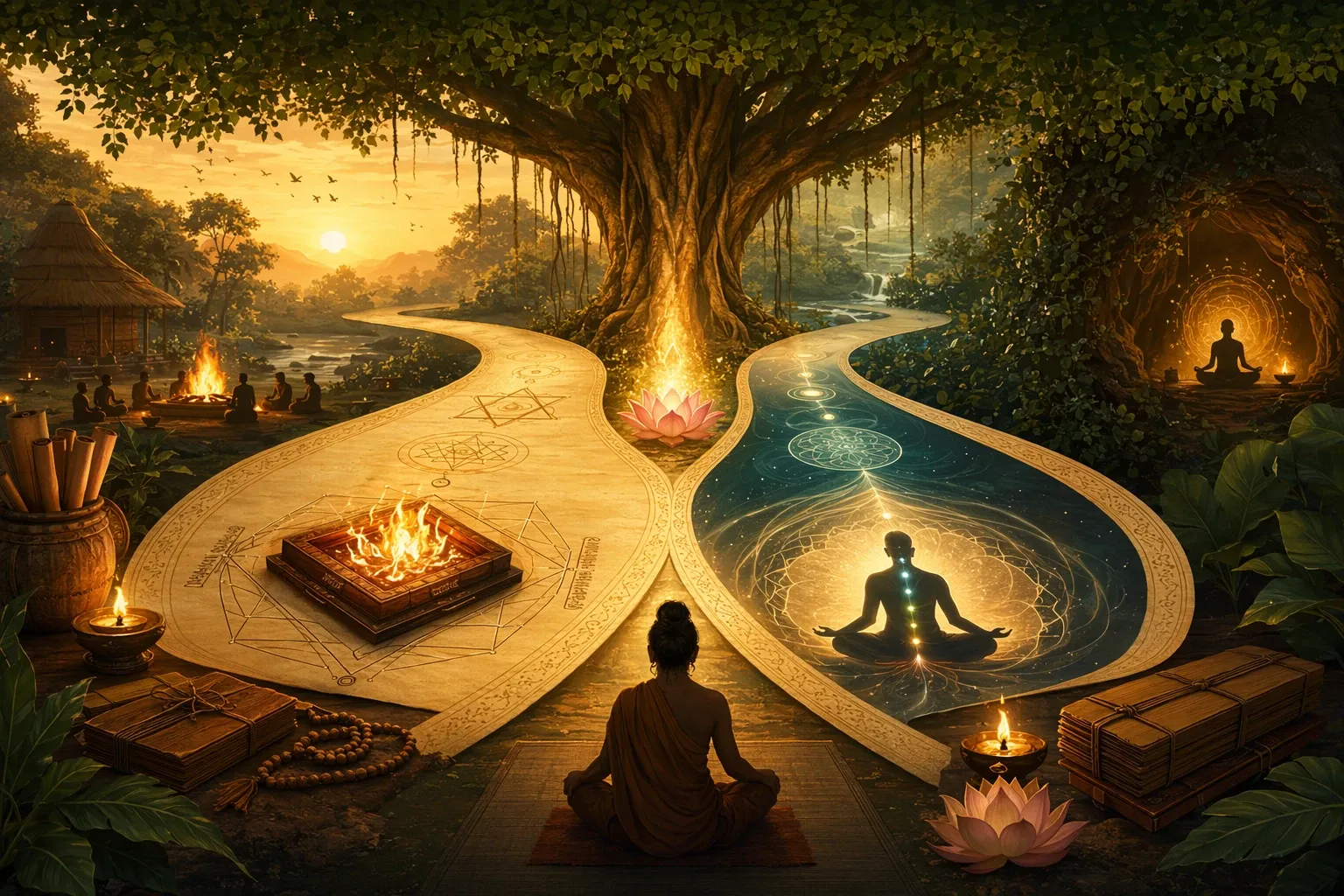
If you searched for 'upanishads and vedas', this guide is for you. Bhaktilipi will keep it simple, respectful, and beginner-friendly.
Related search angles behind this guide include: upanishads vedas, are upanishads part of vedas, are upanishads and vedas same, what is upanishads in vedas, vedic upanishads.
Reader questions answered here: Are Upanishads part of the Vedas?; Are the Upanishads and Vedas the same?; What is the place of Upanishads in Vedic literature?.
Quick answer
The Upanishads are part of the Vedic tradition, but the words “Upanishads” and “Vedas” do not mean exactly the same thing. The Vedas are a larger sacred corpus; the Upanishads are the philosophical wisdom sections associated with that corpus.
A simple way to remember it: all principal Upanishads belong to the Vedic world, but the Vedas include much more than the Upanishads, such as hymns, ritual material, chants, and explanations.
What are the Vedas?
The Vedas are among the oldest and most respected sacred texts of Hindu tradition. The four Vedas are Rigveda, Yajurveda, Samaveda, and Atharvaveda. They include hymns, mantras, ritual formulas, chants, and layers of explanation.
The Vedic world was strongly oral. Teachers and students preserved sound with discipline, and the material developed through different schools and branches.
What are the Upanishads?
The Upanishads focus more directly on spiritual knowledge and philosophical inquiry. They ask about the Self, ultimate reality, death, knowledge, liberation, and the limits of ordinary desire.
This is why the Upanishads often feel different from Vedic hymns or ritual instructions. They are still connected to the Vedas, but their tone is more inward and reflective.
What does Vedanta mean?
Vedanta literally means “end of the Veda.” It can mean the concluding portion of Vedic learning and also the philosophical traditions that grew from the Upanishads, Brahma Sutras, and Bhagavad Gita.
So when someone says the Upanishads are Vedanta, they usually mean the Upanishads represent the wisdom-end or philosophical culmination of the Vedic tradition.
Are they the same or different?
They are connected, not identical. Saying “Upanishads are Vedas” can be acceptable in a broad sense because they are part of Shruti and Vedic literature. But saying “the Vedas are only the Upanishads” is wrong.
The Vedas are like a large sacred library. The Upanishads are a powerful philosophical section within that library.
Beginner takeaway
If you are new, use this simple sentence: The Upanishads are philosophical texts within the Vedic tradition, especially associated with Vedanta.
This answer avoids confusion and helps you understand why Hindu philosophy, Vedic chanting, yajna, and Upanishadic wisdom are related but not the same thing.