
The Six Darshanas of Hindu Philosophy Explained Simply
The six darshanas are six classical ways of seeing and thinking within Hindu intellectual tradition: Nyaya, Vaisheshika, Samkhya, Yoga, Mimamsa, and Ved…
The six darshanas are six classical ways of seeing and thinking within Hindu intellectual tradition: Nyaya, Vaisheshika, Samkhya, Yoga, Mimamsa, and Ved…
A practical beginner guide to Vedic Mathematics: meaning, examples, benefits, limits, historical caution, and a safe practice plan.
A practical beginner guide to Indian mathematics books, courses, biographies, safe online resources, and a simple 30-day learning plan.
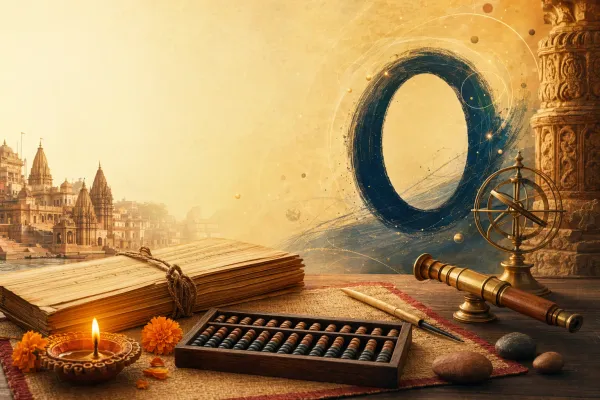
A clear beginner explanation of zero and the Indian number system: place value, Brahmagupta, examples, global spread, and classroom activities.
A clear beginner guide to Indian mathematics: meaning, timeline, key thinkers, real contributions, and how to study the subject without hype.
Indian and Western astronomy developed in different cultural settings, yet they also exchanged ideas through Greek, Arab, Persian, and Indian scholarly worlds.

To learn Indian astronomy, begin with sky basics, calendar ideas, history, simple mathematics, reliable books, observatories, clubs, and patient practice.
Vedic Jyotisha connects sacred timekeeping, calendar calculation, observation, and later interpretive traditions, so it should be understood with respect and nuance.
Nakshatras are traditional star-based sky divisions connected with the Moon, calendars, sacred timekeeping, and India’s cultural understanding of the night sky.