Why mudra hands feel confusing at first
Mudra hands can look simple from outside, but beginners often feel confused because the same fingers can appear in many traditions. A hand sign in yoga may be used for meditation. A similar shape in Bharatanatyam may tell a story. A raised palm in a temple sculpture may communicate protection, blessing, or reassurance. So the first rule is: do not learn the hand shape alone; learn the setting too.
In everyday language, people say “mudra hands” for meaningful hand gestures. That is fine as a starting point. But a mudra is not just a hand selfie. It is a sign with purpose, discipline, and cultural memory.
Three simple types beginners can remember
1. Greeting and devotion mudras
These are gestures used to show respect, prayer, gratitude, or humility. Anjali Mudra, with palms joined, is the easiest example. You see it in homes, temples, yoga classes, and greetings. The hands are not just pressed together; the mood is also important. A hurried namaste and a quiet prayer can share the same hand shape but feel different.
2. Meditation and yoga mudras
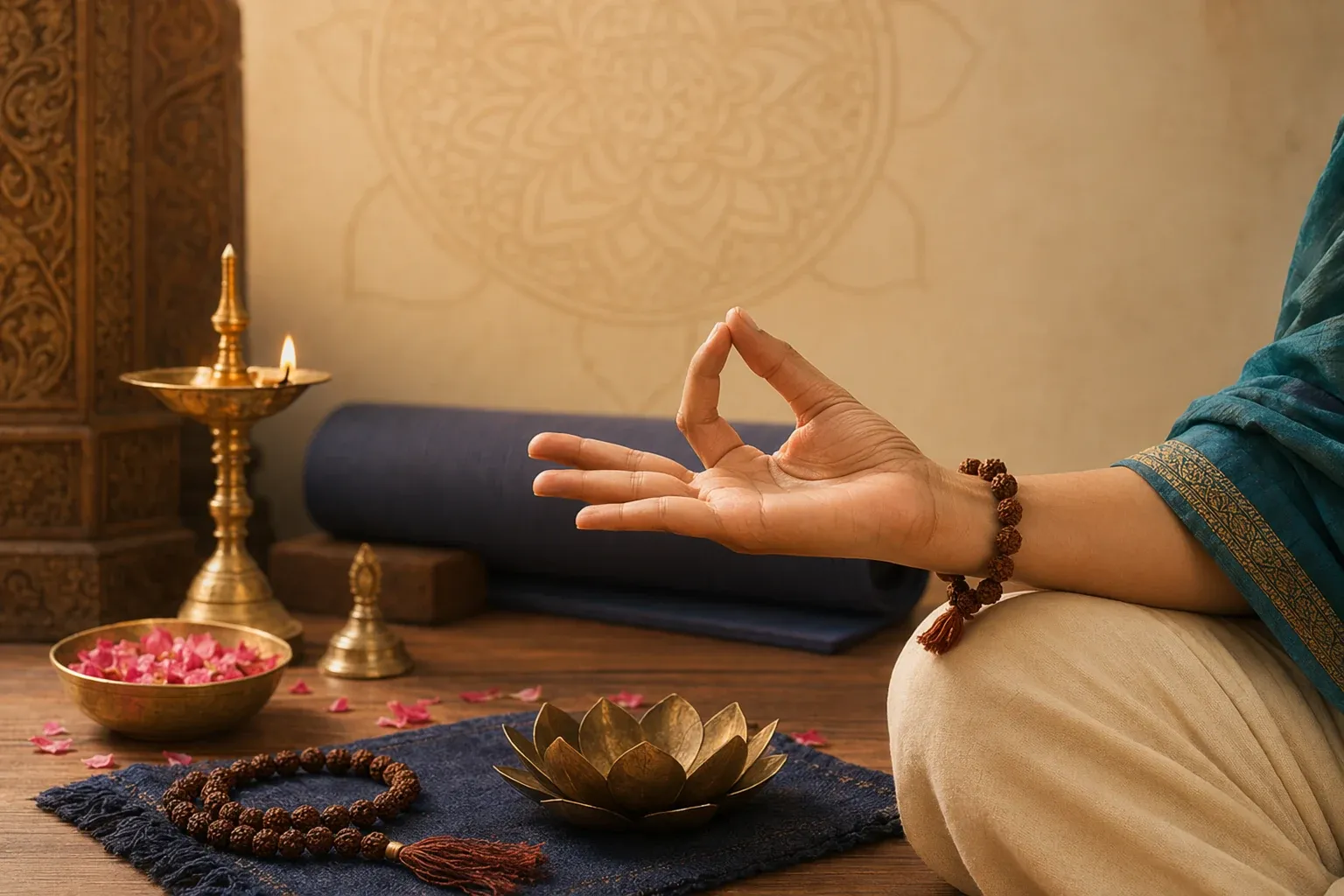
These are gestures used while sitting, breathing, chanting, or practising yoga. Chin Mudra and Jnana Mudra are common examples where the thumb and index finger touch. Dhyana Mudra, with hands resting in the lap, is seen in meditation images. These mudras can help beginners settle their attention, but they should be comfortable and gentle.
3. Storytelling and art mudras
In classical dance and sculpture, hands become a visual language. A dancer can show a bird, a river, a king, a flower, rain, anger, wonder, or devotion through hand positions. In temple and Buddhist art, a hand may show teaching, reassurance, meditation, or offering. Here, the mudra is part of a larger scene.
Common hand signs you may recognise
Anjali Mudra is the folded-hands gesture. It can mean namaste, prayer, respect, or gratitude. Dhyana Mudra is the meditation gesture, usually with both hands in the lap. Abhaya Mudra has the palm raised outward; in art it often suggests reassurance or “do not fear.” Varada Mudra often shows the palm lowered, linked with giving or compassion in sacred images.
Chin Mudra and Jnana Mudra are popular in yoga spaces. The thumb and index finger touch lightly, while the other fingers extend or relax. Teachers may explain them differently depending on lineage, so it is okay if you hear small variations.
How to form mudra hands without strain
Keep the hands clean, relaxed, and natural. Touch the fingers lightly instead of squeezing. If your wrist, fingers, or shoulders feel uncomfortable, adjust or release. A mudra is not more meaningful because it hurts. Comfort is especially important during longer sitting.
If a hand shape is difficult, practise for a few breaths only. Some people have stiff joints, injuries, or different hand mobility. Respect your body. A sincere, comfortable version is better than a forced perfect-looking one.
Example: learning one mudra properly
Choose Anjali Mudra. First learn the shape: palms together, fingers upward, thumbs near the chest. Then learn the feeling: respect, greeting, gratitude, or prayer. Then observe where it appears: at home before a deity, before a meal in some families, at the end of yoga class, or when greeting elders. This one mudra already teaches you that hands, mind, and culture meet together.
Why context changes meaning
A raised hand in Abhaya Mudra on a Buddha image is not the same as a random “stop” sign. A dancer’s hand showing a lotus is not the same as a casual hand pose. Context protects meaning. Ask: Where is this used? Who taught it? Is it devotional, artistic, meditative, or social? That question will save you from many online misunderstandings.
Practice idea: observe before copying
For one week, notice mudra hands around you. Look at a temple calendar, a dance clip, a yoga class photo, or a family prayer moment. Write down where the gesture appears and what mood it carries. This builds cultural understanding before physical practice.
Beginner mistakes to avoid
Do not collect dozens of mudra names without understanding any of them. Do not assume every hand sign is from one religion or one yoga school. Do not use sacred gestures as props for jokes. Do not promise that one finger position will fix sleep, anxiety, exams, heartbreak, or health issues. Mudras can support attention and expression, but life needs wider care.
FAQ
Are mudra hands the same in yoga and dance?
Not always. Some shapes may look similar, but their names, meanings, and rules can differ. Bharatanatyam has its own hand-gesture system, while yoga uses mudras in another way.
Which mudra hand sign should I learn first?
Anjali Mudra is the best first choice because it is familiar, respectful, and widely understood. Dhyana Mudra is also useful if you want a simple meditation gesture.
Should fingers be tight or relaxed?
Relaxed. Light contact is enough. If you feel pain, numbness, or strain, release the gesture.
Where to go next
For the bigger meaning of mudra, read `what-is-mudra-meaning-purpose-beginners`. For meditation use, read `mudra-yoga-meditation-best-for-beginners`. For dance language, explore `mudras-in-bharatanatyam-classical-dance`.