
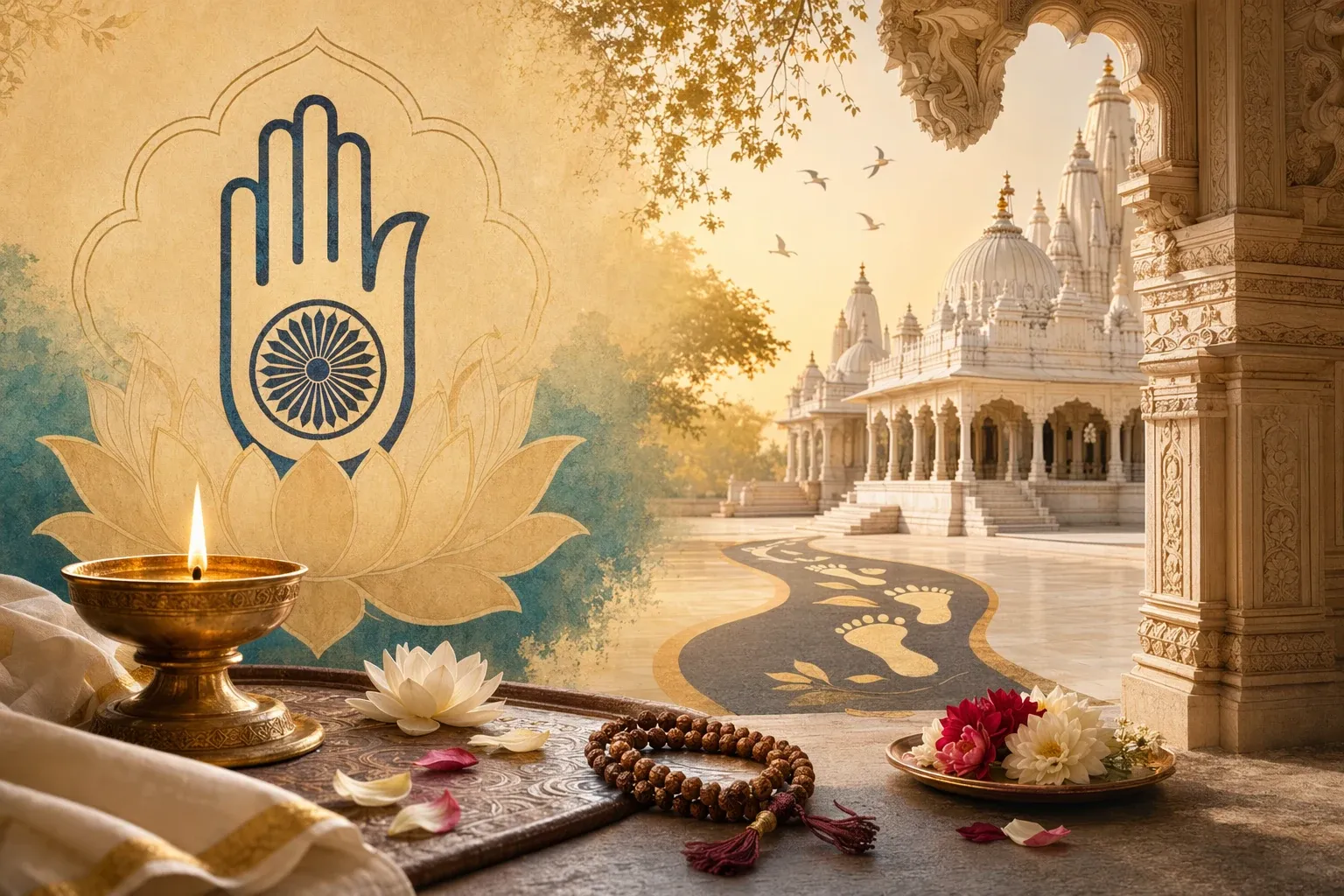
Jain symbols, temples, and pilgrimage places are not only beautiful cultural markers. They point toward a disciplined spiritual path: non-violence, self-control, purity, liberation, and reverence for the Tirthankaras. For first-time visitors, understanding the meaning behind the space makes the visit more respectful.
A Jain temple can feel peaceful, bright, detailed, and highly ordered. But it is not a tourist backdrop. It is a sacred place where devotees come to worship, bow, reflect, recite, and remember the qualities of perfected beings.
What a Jain temple is for
Jain temples, often called derasars or mandirs depending on region and language, are places of worship and reflection. The central image usually represents a Tirthankara, such as Mahavira, Parshvanatha, Adinatha, or another revered teacher. Devotees may offer rice, flowers, lamps, sandal paste, or other items according to tradition and temple rules.
The image is not treated as a creator God who controls the world. It is a focus for reverence, memory, and aspiration. The devotee bows before qualities like perfect knowledge, detachment, non-violence, and liberation.
Important Jain symbols
The raised hand with a wheel is one of the best-known Jain symbols. It represents ahimsa and the reminder to stop violence. The wheel suggests dharma and the movement of spiritual teaching. The word or idea of ahimsa sits at the heart of Jain ethics.
Other symbols include the swastika in its ancient Indian auspicious meaning, the three dots representing right faith, right knowledge, and right conduct, and the crescent-like symbol associated with the liberated state. Because symbols can be misunderstood outside their cultural context, they should be explained carefully and respectfully. Our Hindu symbols guide is useful for seeing how Indian symbols often carry meanings very different from modern assumptions.
Basic visitor etiquette
If you visit a Jain temple, dress modestly, speak softly, follow local instructions, and avoid treating the space like a photo studio. Remove shoes where required. Do not touch images, objects, books, or ritual items unless invited. Photography may be restricted, especially near sanctums, so ask before taking pictures.
Food discipline may also matter. Many Jain spaces are strict about vegetarian food, and some may have rules about leather items, water, timing, or cleanliness. If you are unsure, ask politely. A respectful question is always better than a confident mistake.
Why pilgrimage matters
Jain pilgrimage places are called tirthas, crossing places. The idea is not only travel; it is spiritual remembering. A pilgrim visits a place connected with Tirthankaras, monks, nuns, sacred events, temples, or community memory. Famous Jain pilgrimage sites include Shatrunjaya, Sammed Shikhar, Shravanabelagola, Ranakpur, Mount Abu, and many regional tirthas.
Pilgrimage can involve walking, fasting, temple worship, charity, listening to teachings, and family devotion. For many Jains, it renews identity and reminds them that life should be guided by restraint and liberation, not only comfort and consumption.
How to learn before visiting
Before visiting, learn the temple’s rules from official sources, local community members, or trusted guides. Check timings, dress expectations, food rules, photography rules, and whether non-Jains can enter all areas. Some temples welcome visitors warmly but expect discipline; others may have stricter access norms.
Do not reduce Jain sacred spaces to architecture alone. Marble, carvings, domes, and images are beautiful, but their deeper meaning lies in the values they point toward: ahimsa, aparigraha, humility, and liberation.
Common temple mistakes by first-time visitors
The most common mistake is treating the temple as only architecture. Jain temples can be visually stunning, but the space is for worship and discipline. Avoid loud posing, casual jokes near the sanctum, touching images for photographs, or stepping into restricted areas. If you are visiting for learning, move slowly and observe how devotees behave.
Another mistake is misunderstanding symbols. The swastika in Jain and wider Indian traditions is an ancient auspicious sign, not the modern hate symbol many people first think of. Context matters. When writing or speaking publicly, explain this carefully so respect does not become confusion.
Pilgrimage as self-training
A Jain pilgrimage may involve climbing steps, walking long distances, waking early, fasting, giving charity, or following strict food and conduct rules. These are not random hardships. They train the body and mind to remember that comfort is not the final goal of life.
For young readers, this is the deeper lesson: pilgrimage turns travel into discipline. You may admire the marble and landscape, but the heart of the journey is humility, restraint, and remembrance of the path shown by the Tirthankaras.
Why the atmosphere feels so calm
Many Jain sacred spaces feel calm because the visual language points toward stillness. Tirthankara images are usually meditative, symmetrical, detached, and peaceful. Lamps, clean marble, careful arrangement, and quiet movement all support the same message: slow down, reduce inner noise, and remember the soul’s highest possibility.
This calm is not just aesthetic. It trains attention. A visitor who enters respectfully may notice how the space encourages silence, careful steps, and mindful speech. In that sense, the temple teaches even before any formal explanation begins.
What beginners should remember
If symbols interest you, compare this with our Om/Aum symbol guide to see how sacred signs need cultural context before interpretation.
Jain symbols and temples teach through visual language. The hand reminds us to stop harm, the Tirthankara image points toward perfected qualities, and pilgrimage turns travel into spiritual memory. A first-time visitor should go with quiet curiosity, clean conduct, and respect for the community that keeps the sacred space alive.