Namaste is usually pronounced “nuh-muh-stay.” You may also hear it closer to “nah-muh-stay” depending on accent and language background. The main point is to keep it gentle, clear, and respectful: na-ma-ste, three simple beats, without turning it into a dramatic performance.
The word is widely used in India and across yoga communities around the world. Because it carries cultural and sometimes spiritual meaning, pronunciation matters. You do not need a perfect accent to be respectful, but you should avoid careless or exaggerated versions.
A simple pronunciation guide
Break the word into three parts: na, ma, ste.
The first sound is short: “nuh” or “nah.” The second is “muh” or “mah.” The last part is often said like “stay,” though in Indian pronunciation it may be slightly softer and less stretched than the English word stay. So a beginner-friendly version is: nuh-muh-stay.
Say it evenly. Do not shout the final syllable. Do not make it comic or overly theatrical. A calm voice matches the meaning better than a dramatic one.
What does Namaste mean?
Namaste comes from a respectful Sanskrit expression often explained as “I bow to you” or “salutations to you.” In everyday use it can mean hello, welcome, or goodbye. In spiritual explanation, many people understand it as honouring the sacred presence or inner dignity in another person.
Knowing the meaning helps with pronunciation because the word is not random sound. It is a greeting of respect. The tone should feel warm, humble, and steady.
Namaste, Namaskar, and Pranam
You may also hear Namaskar or Namaskaram in different regions and language settings. Pranam is another respectful greeting, often used toward elders, teachers, or sacred figures. These words are related in the broad sense of offering respect, but their use can vary by region, family, and tradition.
A beginner does not need to master every greeting at once. Start by saying Namaste clearly, then learn local forms as you meet them.
Common pronunciation mistakes
One common mistake is saying it like “nama-stayyyy” with an overly long final sound. Another is swallowing the middle syllable so the word becomes “nam-stay.” A third is using a joking accent. These mistakes may seem small, but they can make the greeting feel less respectful.
Another mistake is treating the word as only a yoga catchphrase. In India, Namaste belongs to everyday greeting culture as well as devotional and reflective settings. It can be used when meeting someone, welcoming guests, greeting elders, or closing a thoughtful conversation.
Where to place the stress
English speakers often want to stress one syllable strongly. Namaste is better said with a gentle flow. If you need a guide, place light emphasis near the final part, but do not make it harsh. Think: na-ma-ste, not NA-ma-stay or na-MA-stay.
The body language matters too. If you fold your hands and slightly bow, the sound naturally becomes softer. The gesture can help you pronounce the word with the right mood.
Should you fold your hands while saying it?
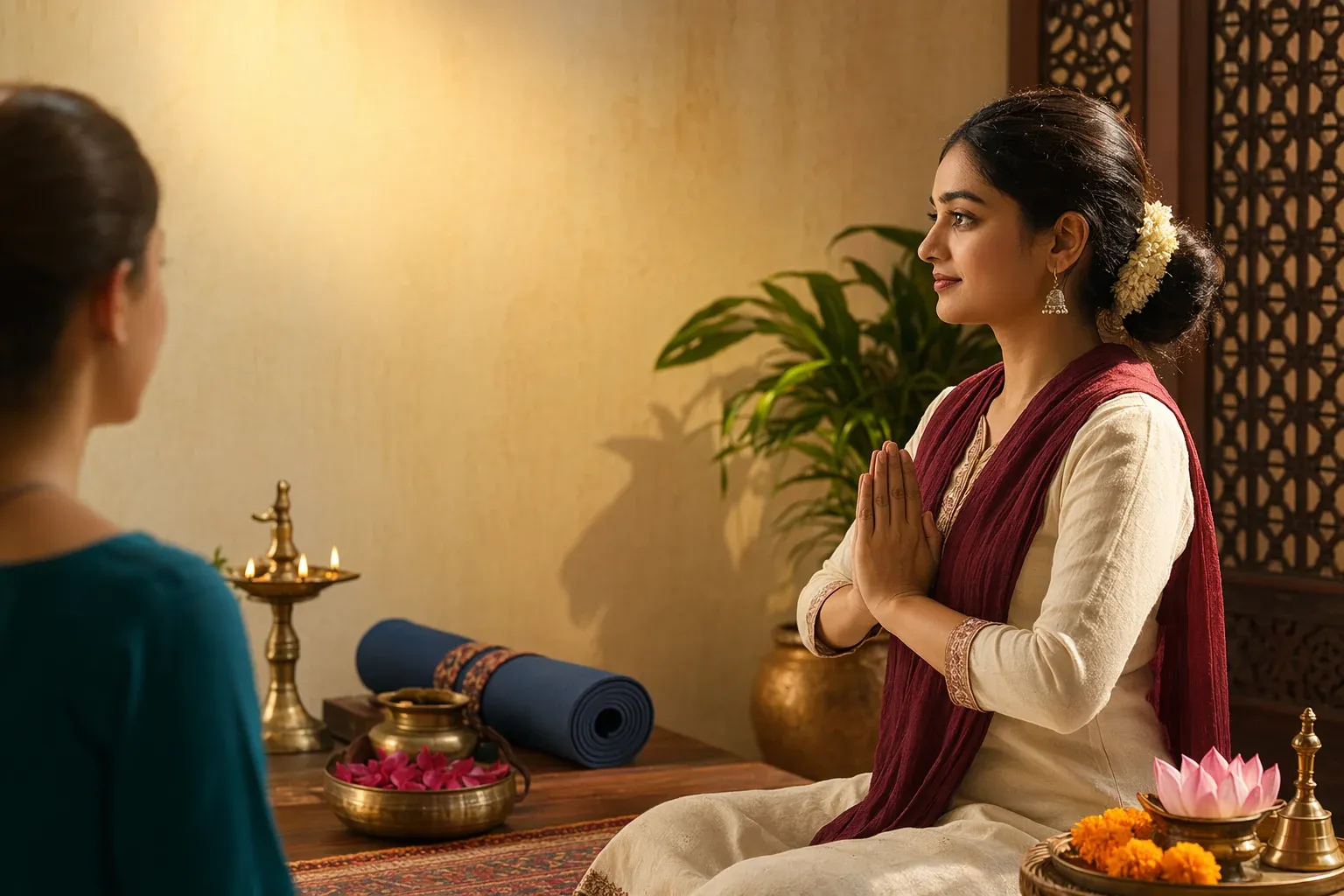
Often, yes. Namaste is commonly paired with palms joined near the chest. This gesture is connected with Anjali Mudra in yoga and Indian art contexts. It is not mandatory in every casual situation, but it expresses the meaning beautifully.
The hands should be relaxed, not stiff. The bow should be slight unless the setting calls for deeper reverence. In a temple, around elders, or in a formal greeting, the gesture may feel more important.
For more context, read Anjali, Dhyana, and Abhaya Mudra.
Can non-Indians say Namaste?
Yes, if they use it respectfully and understand that it comes from living Indian traditions. The problem is not respectful learning. The problem is using the word as a joke, a brand decoration, or a vague exotic mood without caring what it means.
If you are in a yoga class, temple, Indian home, cultural event, or conversation where the greeting fits, saying Namaste thoughtfully is usually welcome. If you are unsure, observe the setting first.
Namaste in yoga classes
In yoga classes, teachers often say Namaste at the end. Students may reply with Namaste. The pronunciation should remain natural. A teacher can help by explaining the word briefly, especially when students are new.
Yoga is not only exercise in its Indian roots, so words used in yoga spaces deserve care. You do not need to overcomplicate the greeting, but you should avoid reducing it to a trendy sign-off.
Practice sentence examples
You can say, “Namaste, aunty,” when greeting an elder respectfully. You can say, “Namaste, everyone,” when opening a cultural talk. You can say, “Namaste,” at the end of a yoga class, with folded hands and a calm tone.
In each case, the pronunciation stays simple: nuh-muh-stay. The meaning changes slightly with context, but the respect remains.
Final pronunciation tip
If you remember only one thing, remember the rhythm: na-ma-ste. Three parts, soft voice, respectful intention. Pronunciation is not about showing off. It is about honouring the word enough to say it carefully.
For a deeper meaning-based explanation, you may also read how to start yoga at home to understand why Indian practices often combine word, body, and attention.
Namaste is easy to say, but it becomes meaningful when sound, gesture, and respect come together.
A respectful beginner habit
When learning Indian cultural words, avoid turning them into slogans. Ask what the word means, where it is used, and how people from the tradition understand it. That habit keeps learning warm, accurate, and humble.