
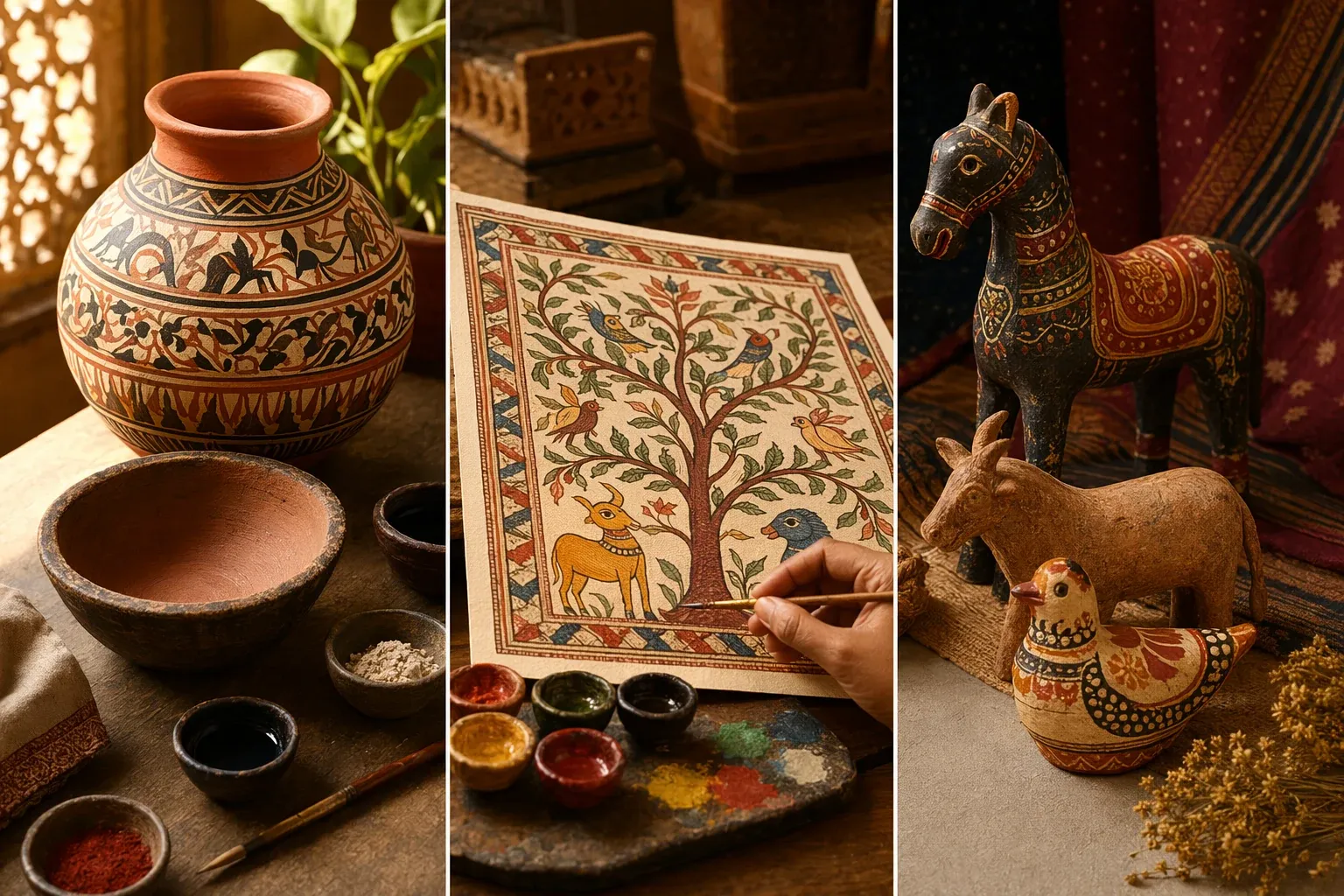
Genuine Indian folk art is about maker, context, material, and tradition. This guide helps buyers and learners evaluate originals, prints, and replicas with fairness. This article introduces the subject in clear language for readers who want cultural context, visual clues, and practical appreciation.
Genuine does not always mean old
A genuine Indian folk artwork does not have to be antique. Many living artists create new paintings, textiles, masks, scrolls, and ritual-inspired works today. Genuine means the piece has an honest relationship to maker, tradition, material, and context. A new Madhubani painting by a named Mithila artist can be genuine. A machine print sold as hand-painted is not honest, even if the design looks attractive.
Start with attribution
Ask for the artist’s name, community, region, or workshop. Some older pieces may not have full documentation, but contemporary sellers should usually know who made the work or where it came from. Attribution matters because folk art is often treated as anonymous style. Naming artists restores dignity and helps buyers understand value. If a listing only says ethnic tribal Indian wall art with no further detail, pause and ask questions.
Look at the surface
Handmade work often shows small variations in line pressure, pigment density, spacing, and texture. A printed replica may show uniform dots from digital printing, perfectly repeated patterns, or flat colour sitting on the surface. Use a magnifying glass if needed. In a painting, look for brush direction, pen marks, layering, and tiny corrections. Handmade variation should not be confused with poor quality; it is often part of the work’s living character.
Check materials honestly
Materials can include handmade paper, cloth, natural pigments, acrylics, poster colours, ink, vegetable dyes, mineral colours, or commercial paper. Do not assume acrylic means fake. Many genuine contemporary artists use modern materials. The issue is honesty. If a seller claims natural dyes, ask how they know. If a cloth is block printed, it should not be described as freehand painting. Accurate material description builds trust.
Understand replicas and prints
Replicas are not always bad. Museum prints, licensed reproductions, student copies, and decor prints can make art accessible. Problems arise when replicas are sold as originals or when sacred and community motifs are copied without credit. A print should be priced and labelled as a print. A student copy should not be sold as a master artist’s work. Clarity protects both buyer and artist.
Compare with known examples
Before buying, look at reliable examples from museums, artist collectives, craft councils, books, and trusted galleries. Compare line quality, composition, motifs, borders, and materials. If you are studying a form for the first time, our guide to famous folk art forms can help you recognize basic differences. The goal is not to become suspicious of everything, but to train your eye.
Price can be a clue, not proof
A very low price for a large, detailed hand-painted work should raise questions. Detailed folk art takes time. However, price alone does not prove authenticity. Some artists sell small works affordably; some tourist markets overcharge for prints. Consider size, detail, artist recognition, sourcing, and material together. Fair pricing respects labour without turning every purchase into a luxury object.
Ask about process
A genuine seller should be able to explain whether the piece is hand-painted, block printed, screen printed, digitally printed, embroidered, woven, or mixed media. They may know the artist, village, workshop, or cooperative. They may describe the tradition’s themes. If answers are evasive or overly romantic, be cautious. Phrases like ancient secret tribal art may sound appealing but often hide a lack of real knowledge.
Watch for copied signatures
Some replicas copy not only a design but also a signature or artist name. This is especially harmful because it misuses trust. Check whether the signature looks printed, repeated across multiple listings, or inconsistent with the seller’s story. For recognized artists, compare signatures through reliable sources when possible. If documentation is important for your purchase, ask for a certificate or direct provenance.
Sacred motifs require extra care
Replicas of shrine cloths, deity paintings, marriage motifs, or ritual wall designs can be sensitive. Even if legally sold, they should be described respectfully and displayed thoughtfully. A copied sacred image used on shoes, floor mats, or disposable party decor may feel offensive. Our home decor guide offers placement suggestions for art with devotional associations.
When buying online
Online buying makes careful questions more important. Request close-up images, ask about size and material, confirm whether the work is original or print, and check return policies. Look for sellers who credit artists and provide context. Be wary of listings that use the same image for multiple supposedly unique paintings. A handmade item may have similar designs, but each piece should show individual variation.
Madhubani as an example
In Madhubani painting, handmade originals often show confident outlines, dense filling, and slight variations in pattern. Prints may flatten the texture and repeat exactly. Yet many artists also create editions, small practice works, and affordable pieces. Ask who painted it, what materials were used, and whether the image is original, copied from a common motif, or reproduced from another work.
If you already bought a replica
Do not panic or feel ashamed. Use the experience to learn. If it was honestly sold as a print, enjoy it as a print and avoid presenting it as original. If it was misrepresented, contact the seller or platform. For future purchases, keep notes, receipts, and artist information. You can also support a living artist next time, even with a small piece.
The fairest way to judge
The fairest question is not simply real or fake. Ask whether the piece is honestly described, fairly priced, respectfully sourced, and connected to a maker or tradition. Genuine art deserves recognition; replicas deserve accurate labels; buyers deserve clarity; artists deserve credit. When those four things meet, appreciation becomes healthier for everyone.
Continuing the journey
For related reading, see home decor guide. Let the next artwork you see become a patient conversation with region, maker, material, symbol, and use. Indian folk art rewards slow attention, and every careful question adds depth to the first moment of visual delight.