
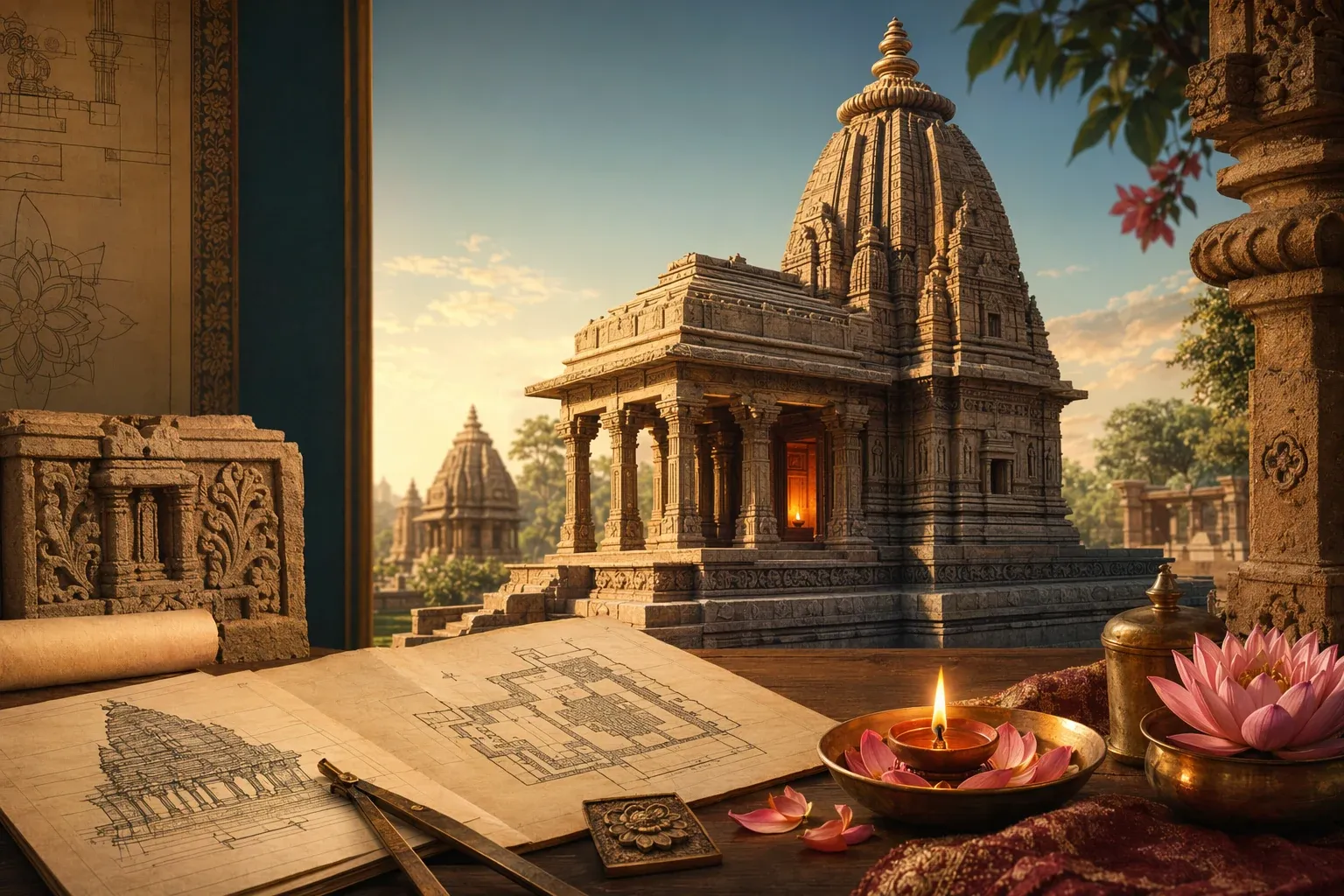
The Gupta period is often called a classical age of Indian art, but that phrase can hide more than it explains. For temple architecture, the Gupta and closely related post-Gupta centuries matter because they show an important stage in the making of the free-standing Hindu shrine. These temples were not as huge as later Chola, Chandela or Kalinga monuments. Their importance lies in clarity, experiment and survival.
When students hear “Gupta temple architecture”, they should avoid two extremes. One extreme is to say the Guptas invented Hindu temples. That is too simple. Sacred spaces and image worship existed earlier, and many early buildings have not survived. The other extreme is to ignore the Gupta period because its temples are smaller. That also misses the point. Small early shrines can show how later forms became possible.
The historical setting
The Gupta Empire flourished in north India roughly from the fourth to sixth century CE, with its political high point under rulers such as Samudragupta and Chandragupta II. The wider Gupta age also includes related regional powers and artistic zones, so art historians often use “Gupta art” for a broader cultural style rather than only objects made under direct imperial control.
This period produced refined sculpture in stone, metal and terracotta, along with important Buddhist, Jain and Hindu images. In temple architecture, the surviving evidence is uneven. Some temples were brick, some stone, some have been damaged, and many early structures are lost. Still, enough remains to show that builders were giving the Hindu shrine a more durable and recognisable form.
Why Gupta temples look modest today
Many Gupta-period temples do not look grand when compared with Brihadeshwara, Khajuraho or Konark. Some survive as ruined sanctums, platforms or fragments. Their towers may be lost. Their surrounding structures may have disappeared. This can make them feel incomplete to a casual visitor.
But historical importance is not the same as size. A small early temple can preserve a crucial idea: a square sanctum, a raised platform, a carefully framed doorway, sculptural panels and a superstructure above the sacred centre. These are the building blocks from which later temple architecture grew in many regions.
The square sanctum and sacred focus
One of the key features of many early structural temples is the square garbhagriha, or sanctum. The square creates a stable centre. Inside it, the main image or symbol of the deity is placed. The devotee’s attention is drawn toward that centre through the doorway and approach.
This may sound simple, but it is architecturally powerful. Once the sanctum becomes the heart of the plan, other spaces can be added around it: porch, mandapa, circumambulatory path, subsidiary shrines and outer walls. Gupta-period shrines help us see this grammar forming. The temple becomes not just a shelter for an image, but a measured sacred body.
Doorways as sacred thresholds
Gupta temple doorways are especially important. The entrance to the sanctum is not treated like an ordinary door. It may be richly carved with river goddesses such as Ganga and Yamuna, floral bands, guardian figures and auspicious motifs. The devotee crosses from the outer zone into the deity’s presence.
This threshold symbolism continued strongly in later Indian temples. The doorway teaches the visitor that sacred space has levels. You do not rush into the inner chamber as if entering a shop. You prepare, pause and cross with awareness. Stone carving makes that change visible.
Deogarh and the Vaishnava imagination
The Dashavatara Temple at Deogarh in present-day Uttar Pradesh is one of the most discussed examples connected with Gupta-period temple architecture. It is usually dated around the early sixth century CE and is associated with Vishnu worship. Although damaged, it remains a key monument because of its square plan, raised setting and sculptural panels.
The temple’s famous reliefs show Vishnu in cosmic and narrative forms, including themes such as the reclining Vishnu and stories linked with his avatars. These images are not random decoration. They help the devotee and viewer understand the deity’s nature through story, theology and visual form. The building and sculpture work together.
Brick, stone and regional variation
Gupta-period temple architecture was not made in one material only. Some important early temples used brick, while others used stone. The Bhitargaon temple in Uttar Pradesh, often connected with the Gupta or late Gupta period, is famous as an early brick temple with terracotta decoration. Sites such as Tigawa, Sanchi Temple 17, Nachna-Kuthara and Deogarh are often discussed in the broader story of early structural temples.
Because the evidence is scattered, scholars are cautious. Dates may be debated; labels such as “Gupta” and “post-Gupta” may overlap; restorations and damage affect what we see. For a beginner, the lesson is not to memorise one neat list. The lesson is to recognise a period of transition, when the Hindu temple was becoming more defined as a free-standing architectural form.
Connection with sculpture and image worship
Gupta art is known for balanced, graceful religious sculpture. This matters for temple architecture because the temple and the image developed together. A shrine needed a consecrated focus. The image needed a sacred architectural home. Doorframes, wall niches and panels allowed multiple forms of the divine to appear around the main sanctum.
In a Vishnu temple, the panels could present cosmic preservation, avatar stories and royal-devotional ideals. In a Shiva context, the linga, guardians and associated deities could shape the sacred meaning of the space. The temple did not simply house sculpture. It organised sculpture into a devotional journey.
Why the Gupta period matters later
Later Indian temples became larger, taller and more regionally distinctive. The curving shikharas of North India, the pyramidal vimanas of South India, the layered temple complexes of many regions and the dense sculptural programmes of medieval temples all developed through long processes. Gupta-period temples are important because they show earlier steps in that development.
They also remind us that Indian art history is not only about spectacular monuments. It is also about prototypes, experiments and forms that became influential. A small stone shrine with a carved doorway may teach more about architectural evolution than a huge temple whose mature style hides its earlier roots.
A careful way to remember Gupta temples
A simple memory line is this: Gupta-period temple architecture matters because it gives us early surviving examples of structural Hindu shrines with a focused sanctum, sacred doorway, sculptural meaning and emerging tower forms. It does not mark the birth of all temples, but it marks a visible and influential chapter in their development.
That careful wording is important. Tradition may see temples through devotion and sacred continuity. Historians study surviving evidence, style, inscriptions, materials and dates. Both views can be respected when we do not force one to erase the other. The Gupta temple is a devotional space, an artistic object and a historical clue at the same time.
Questions people ask
Why is Gupta period temple architecture important?
It is important because it preserves early examples of structural Hindu shrines with square sanctums, carved thresholds, deity imagery and architectural ideas that later became more elaborate in regional temple styles.
What are common features of Gupta temple architecture?
Common features include a compact sanctum, raised platform, carved doorway, deity panels, simple but meaningful plans and early forms of superstructure. Surviving examples vary because many are damaged or debated.
Did the Guptas invent Hindu temples?
No. Earlier sacred spaces and shrines existed. The Gupta period matters because surviving temples from this era show the structural Hindu temple becoming clearer and more durable in stone and brick.