

Hindu Vedic Cosmology Explained Simply
Hindu Vedic cosmology is not one neat diagram. It is a layered way of thinking about creation, order, time, worlds and the human place inside the universe.
Satarupa Banerjee is a passionate blog writer with a keen interest in creating engaging, informative, and reader-friendly content. She specializes in crafting articles that blend creativity with clarity, helping audiences connect with inspirations.
Hindu Vedic cosmology is not one neat diagram. It is a layered way of thinking about creation, order, time, worlds and the human place inside the universe.
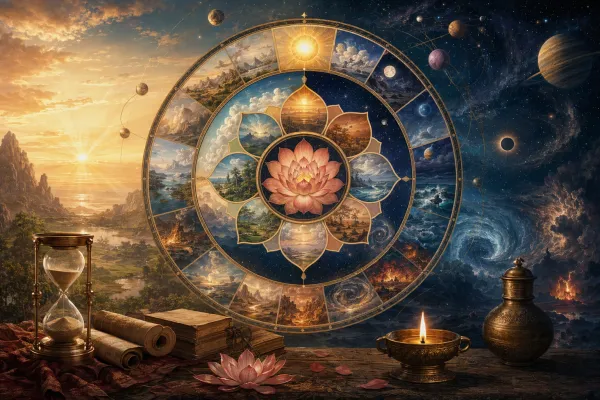
The age of Hindu cosmology has two sides: old textual traditions and the vast time cycles described inside those traditions.
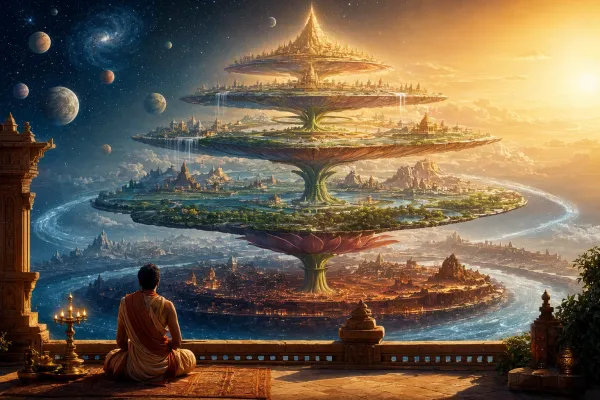
A Hindu cosmology map is best read as a sacred learning diagram, not as one final flat picture of the universe.

Hindu cosmology is more than a picture of space. It is a way of thinking about the universe, time, life, duty, and spiritual order.

Guru kripa means the grace or compassionate guidance of a teacher. Here is a clear, respectful way to understand it without hype.

Guru-shishya is sacred in many traditions, but it also shapes Indian music, dance, yoga, crafts, and mentorship. Here is the balanced view.

Famous guru-shishya pairs are not celebrity rankings. They are windows into how Indians have imagined learning, trust, practice and responsibility.

Guru-shishya learning and school education are not enemies. They solve different problems, and students can learn something valuable from both.

The guru-shishya tradition is very old, but it did not look the same in every century. Here is a careful, simple history of oral learning and gurukuls.