
If you searched for 'when vedas were written', this guide is for you. We will keep it simple, respectful, and beginner-friendly.
Related reader questions behind this guide include: vedas period, when vedas was written, when vedas were composed, how vedas originated, where did vedas come from.
Quick answer
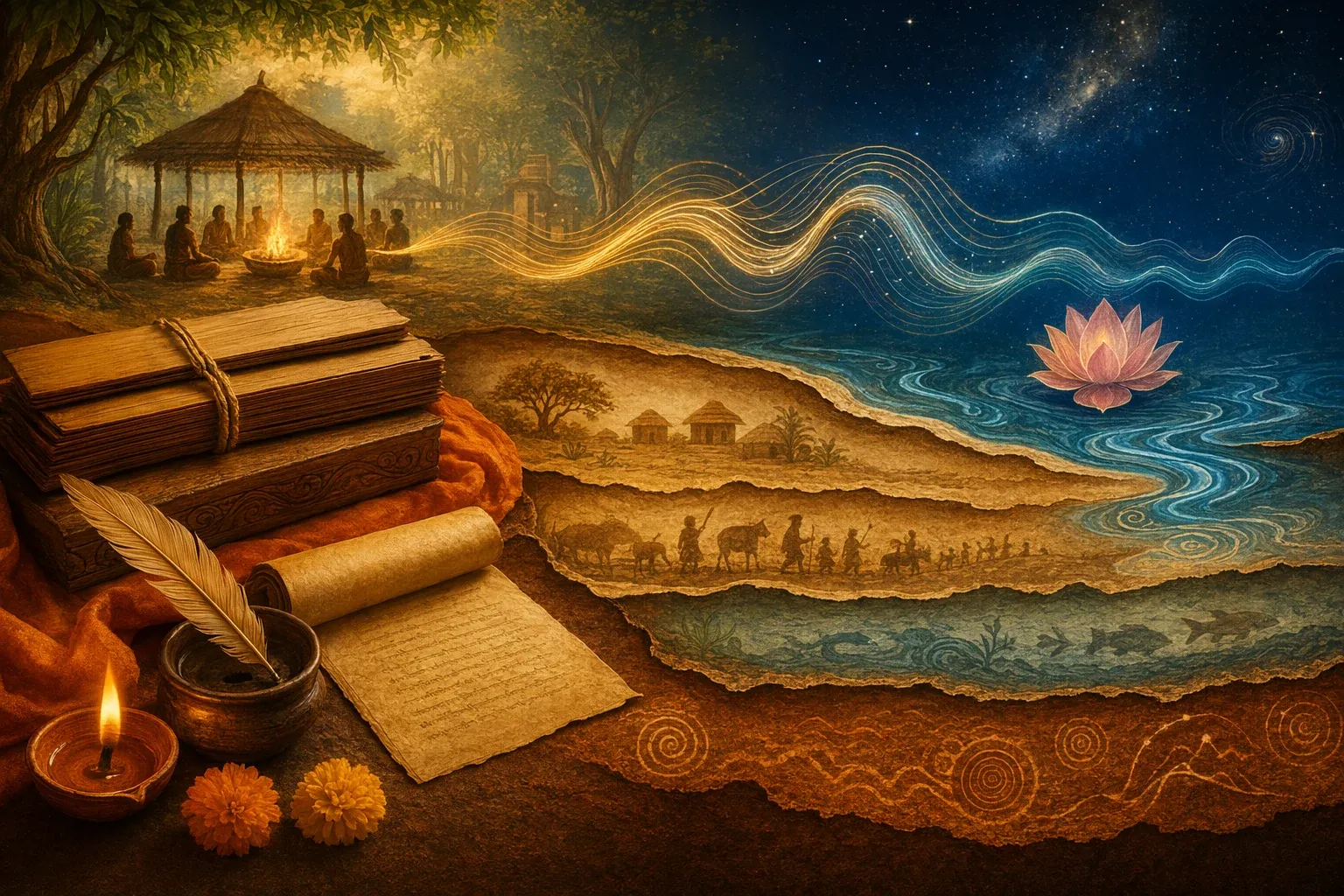
The Vedas were preserved orally before they were written down. That is why the better question is not only “when were the Vedas written?” but “when were they composed, recited, transmitted, and later recorded in manuscripts?”
Scholars often place early Vedic composition in the second millennium BCE, while traditional Hindu views may frame the Vedas as timeless sacred knowledge. A respectful explanation should keep both context and caution.
Composed vs written down
In modern life, writing often comes first. In Vedic tradition, sound came first. Teachers trained students to memorise exact pronunciation, accents, and sequence.
This means a manuscript date does not equal the origin date of the tradition. A written copy may be much later than the oral material it records.
What is the Vedic period?
The Vedic period is a historical label used for the age in which Vedic culture, ritual, language, and social ideas developed in ancient India. It is usually divided into early and later phases by historians.
Exact dates are debated because evidence includes language, archaeology, comparison, and later textual memory. So be careful with claims that sound too exact, like naming one single year for all Vedas.
Where did the Vedas originate?
The Vedic tradition is connected with ancient northern Indian cultural regions, especially areas remembered in early Vedic geography. Over time, Vedic learning spread, developed, and interacted with many regions and traditions.
It is better to say “the Vedas emerged and were preserved in ancient Indian Vedic culture” than to reduce them to one modern city or one simple map point.
Why oral tradition matters
Vedic recitation developed strict methods to preserve sounds accurately. Different recitation patterns helped protect the text from memory errors. This is one reason the oral tradition is admired around the world.
For many Hindu practitioners, this oral preservation is not just academic. It is sacred discipline, where sound, teacher, student, and memory are all part of dharma.
Beginner timeline
A simple timeline is: ancient revelation/realisation in traditional understanding; long oral composition and preservation; development of Vedic schools; later manuscript recording; modern printed editions and translations.
This avoids weak certainty and helps readers understand why “written” is only one chapter in the Vedas’ long life.