If you searched for 'which yoga is best', this Bhaktilipi guide gives you a simple, respectful starting point.
Reader questions behind this guide: Which yoga is best for beginners?; What are the main types of yoga?; How are traditional and modern yoga styles different?.
The aim is beginner-friendly clarity: Indian cultural context, practical usefulness, and careful language without unsupported miracle claims.
Quick answer
There is no single “best yoga” for everyone. A student seeking focus, a devotee seeking bhakti, a beginner seeking flexibility, and a seeker studying philosophy may need different approaches.
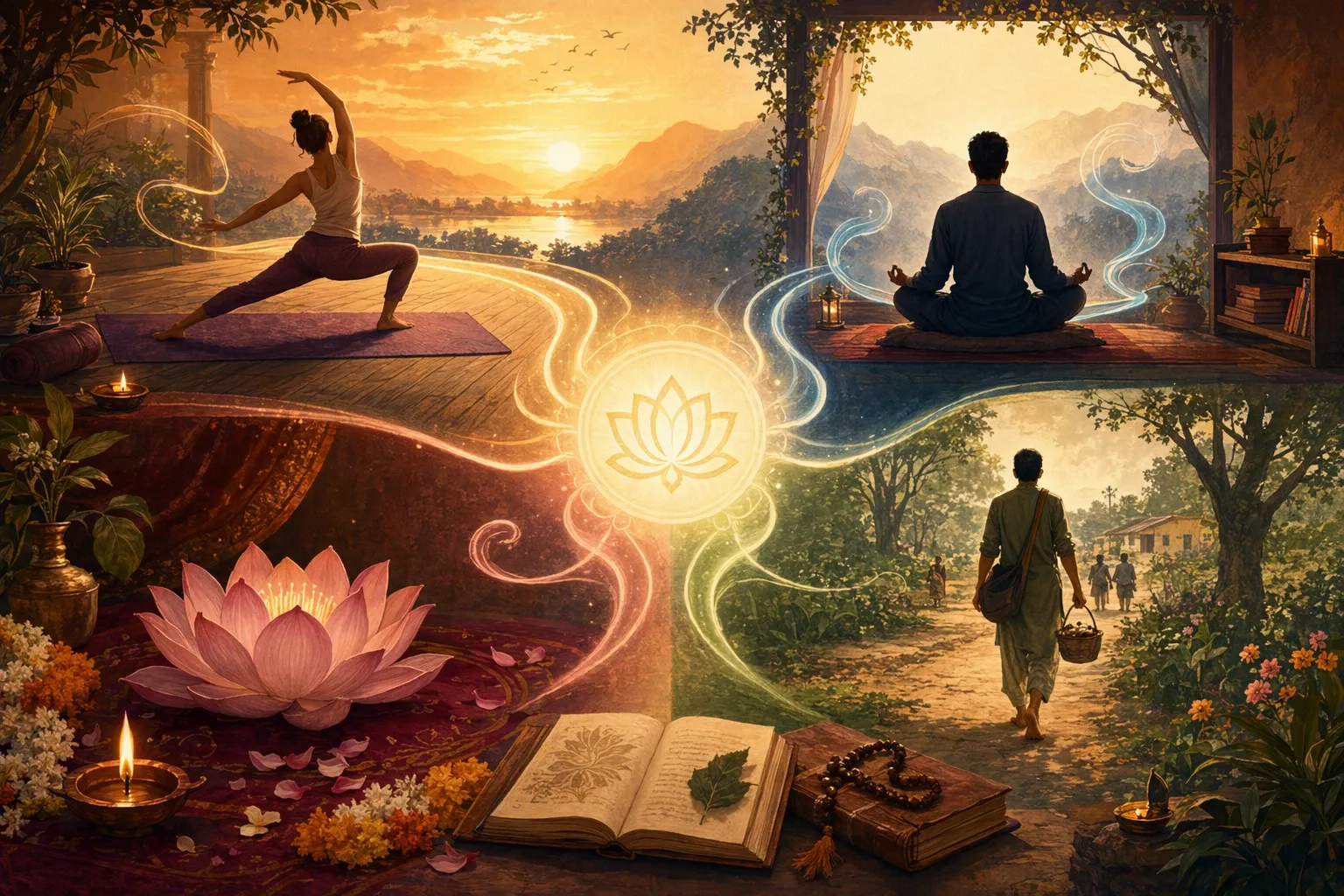
Traditional yoga includes paths like Karma Yoga, Bhakti Yoga, Jnana Yoga, and Raja Yoga. Modern classes often use style names like Hatha, Ashtanga, Vinyasa, Yin, Power Yoga, or Restorative Yoga.
Traditional paths
Karma Yoga is the path of selfless action: doing one’s duty without clinging to ego and reward. Bhakti Yoga is the path of devotion, where love for the Divine becomes the heart of practice.
Jnana Yoga is connected with knowledge and inquiry, while Raja Yoga is often linked with disciplined meditation and the control of mind. These paths can overlap in real life; they are not always separate boxes.
Hatha Yoga
Hatha Yoga is commonly used today for posture-and-breath based practice. A beginner Hatha class may include gentle asanas, breathing, relaxation, and basic alignment.
Historically, Hatha Yoga has deeper traditions and texts, but modern studio usage is often simpler. For beginners, Hatha can be a steady place to start if the teacher is careful and not extreme.
Modern styles
Ashtanga and Vinyasa are usually more active and flowing. Yin is slower and holds poses for longer. Restorative Yoga focuses on deep rest. Power Yoga is usually fitness-oriented and may be intense.
Names can vary by teacher and studio, so do not choose only by label. Ask about pace, difficulty, safety, and whether the class is suitable for beginners.
How to choose
If you want calm and basic mobility, start with beginner Hatha or gentle yoga. If you want devotion and Indian spiritual context, explore Bhakti-related learning with a trustworthy teacher. If you want philosophy, begin with Yoga Sutras or Bhagavad Gita guidance.
Avoid comparing yourself with advanced practitioners. The right yoga is the one that helps you become safer, steadier, kinder, and more disciplined over time.
Cultural respect tips
Do not treat Sanskrit words, mantras, or sacred symbols as random decoration. If a practice comes from Indian tradition, learn its meaning and use it respectfully.
At the same time, do not panic if you are a beginner. Start sincerely, ask questions, and let respect grow with understanding.