
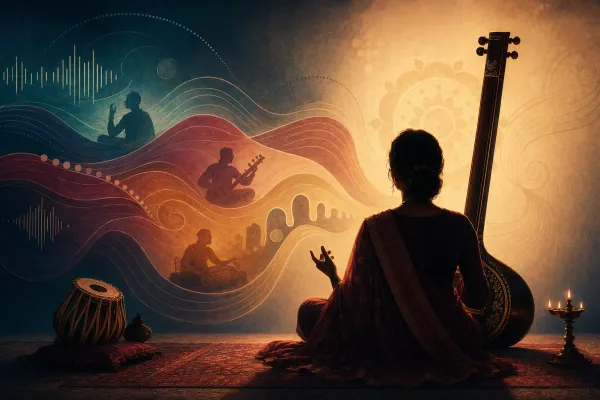
Indian Classical Vocal Music: Singing Styles Explained Simply
Voice is central to Indian classical music because even instruments often try to express the subtlety of singing.
Voice is central to Indian classical music because even instruments often try to express the subtlety of singing.
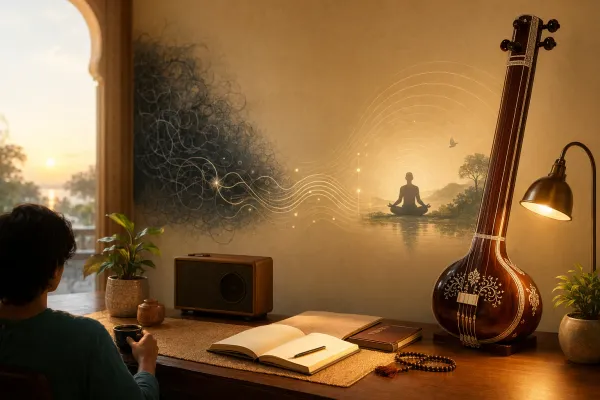
Indian classical music can support calm and focus for many listeners, but we should avoid exaggerated medical or intelligence claims.
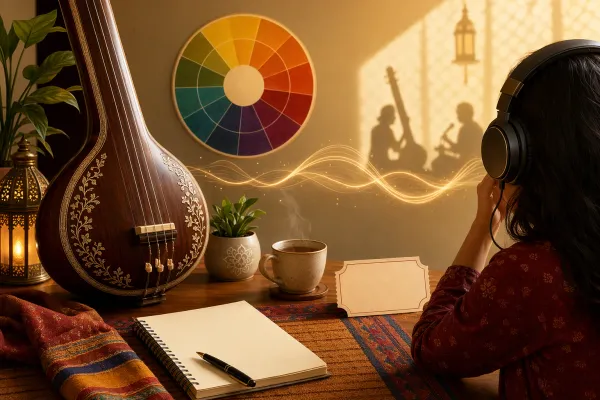
Indian classical music becomes easier when you stop trying to understand everything at once and start listening layer by layer.
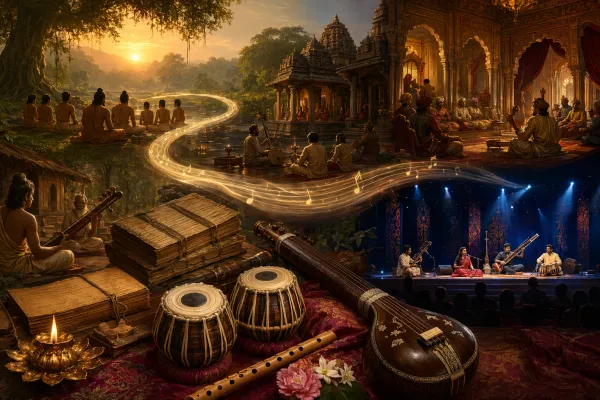
Indian classical music has no single inventor. It grew through ancient chant, theory, devotion, courts, temples, teachers, and living practice.
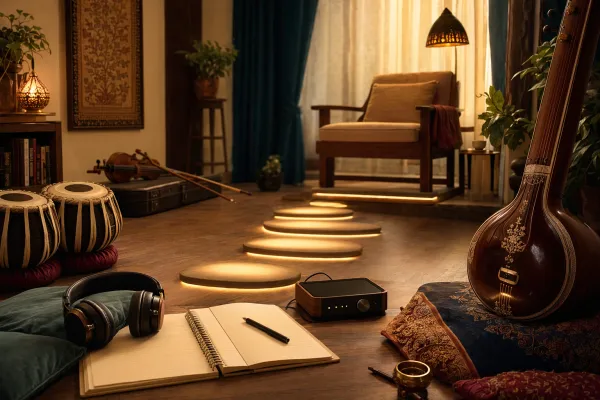
You can start learning Indian classical music at almost any age, but you need patience, listening, guidance, and regular riyaz.
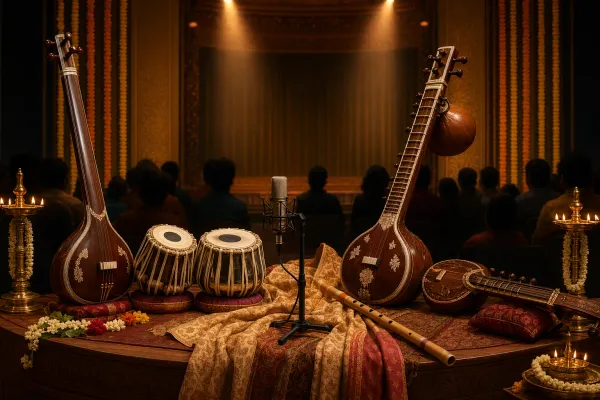
Famous-artist lists are only starting points. The real aim is to discover different sounds, traditions, gharanas, banis, and moods.
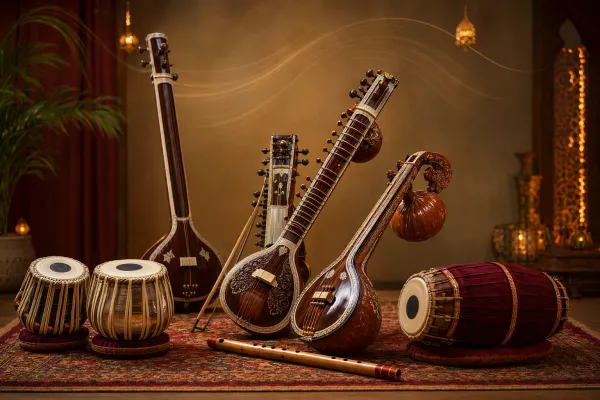
Indian classical instruments each have a role: melody, rhythm, drone, accompaniment, or a mix of these beautiful musical duties.
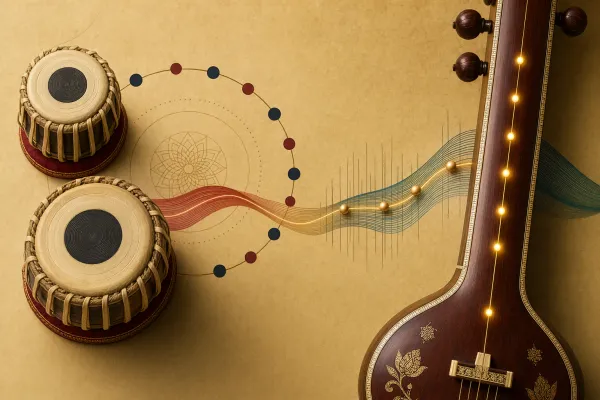
Swara, laya, and taal are three basic words that help beginners understand how Indian classical music moves.

A raga is more than a scale. It is a melodic personality with notes, movements, mood, and rules that guide creative expression.