Samskara vs Samsara: Meaning in Hinduism, Yoga, and Buddhism
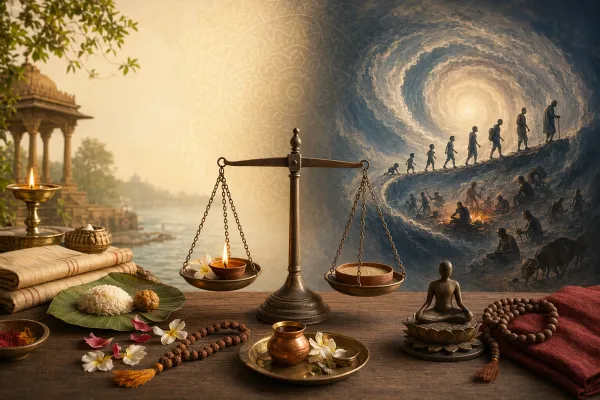
Samskara usually means impressions, formations, or rites; samsara means the cycle of conditioned existence. Context makes the difference.
Samskara usually means impressions, formations, or rites; samsara means the cycle of conditioned existence. Context makes the difference.
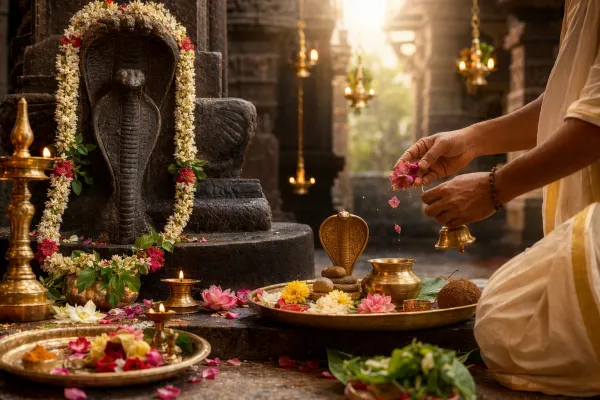
Sarpa Samskara Pooja is a serpent-related temple ritual approached by devotees with faith, repentance, and prayer—not fear or guaranteed claims.
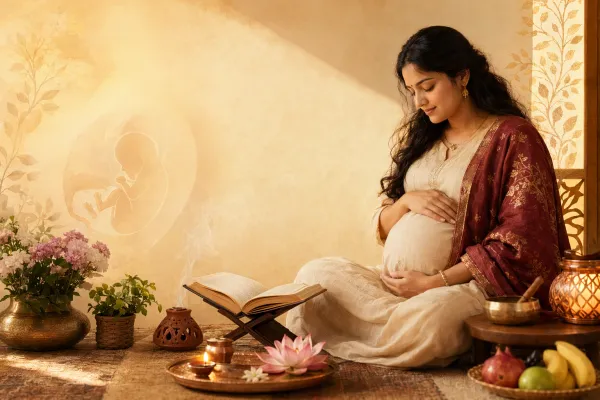
Garbha Samskara is a cultural and spiritual pregnancy tradition, not a replacement for professional prenatal medical care.
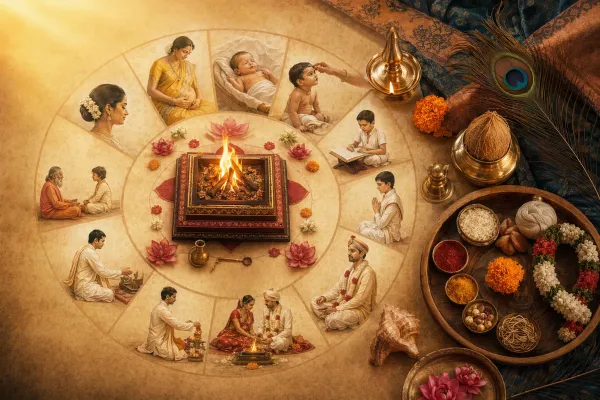
A beginner-friendly guide to the sixteen samskaras, why lists vary, and how these Hindu life rites are understood today.
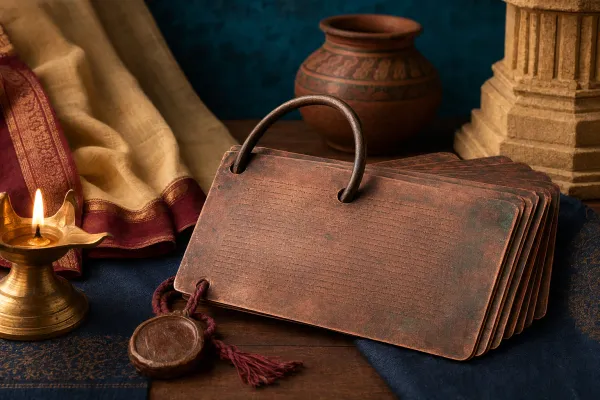
Copper plate inscriptions were durable Indian records that preserve land grants, royal authority, village boundaries, taxes, witnesses, and social memory.
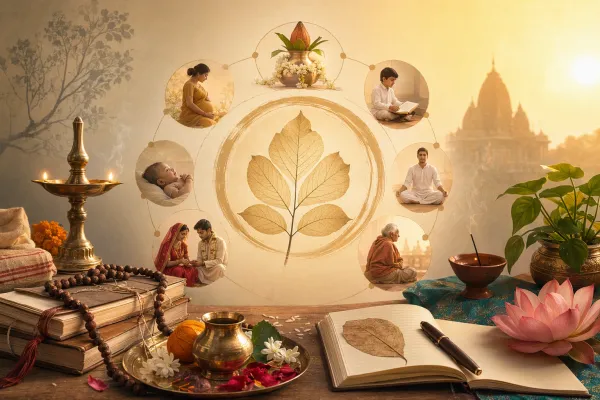
Samskara is a layered Sanskrit word for refinement, sacred life rites, and the impressions that shape habit, character, and daily values.
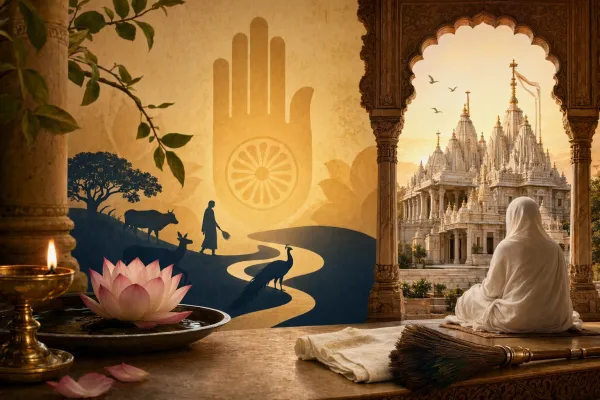
Jainism has a small population, but its influence on Indian non-violence, vegetarian ethics, temple culture, learning, and philanthropy is far larger than numbers suggest.
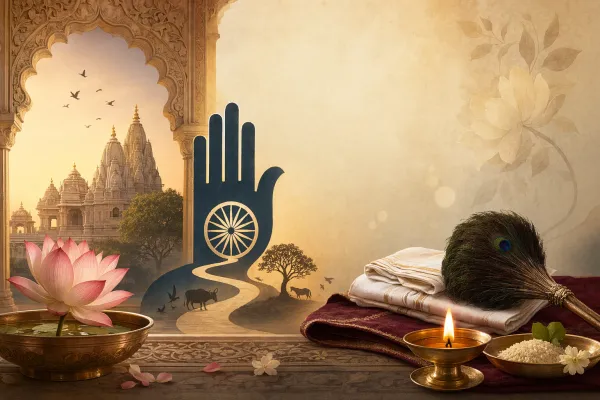
Jain festivals often turn celebration inward: toward liberation, restraint, forgiveness, gratitude to the Tirthankaras, and compassion for all living beings.
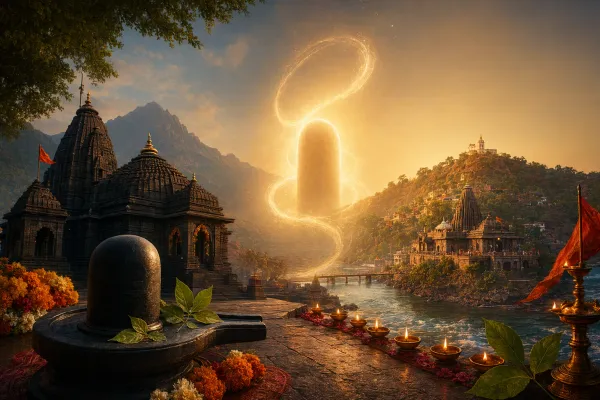
Trimbakeshwar, Mahakaleshwar, and Omkareshwar each stand out through location, symbolism, story, ritual life, and regional devotion.