
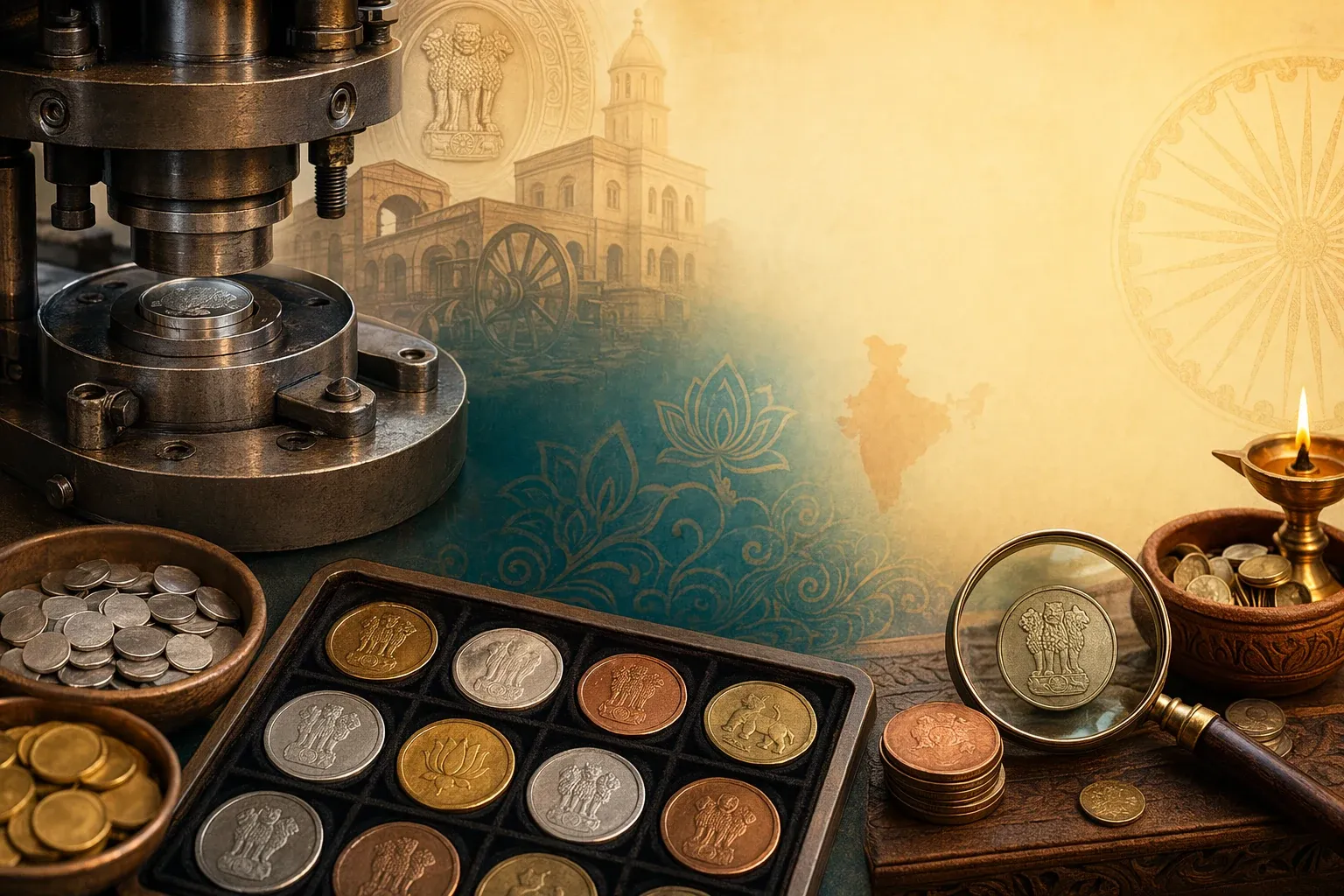
Minting is the process by which an authorised mint turns metal into official coins. A coin is not simply a round metal piece. It becomes money because an authority approves its design, denomination, material, weight and circulation. In modern India this process is highly controlled. In older periods, minting methods varied, but authority still mattered.
When beginners look at a coin, they usually notice the picture first. A mint looks at much more: metal composition, thickness, diameter, edge, relief, security, durability, machine performance and public recognisability. A coin must be easy to identify and hard enough to survive millions of hands.
From design to blank
The process begins with a design decision. The coin needs a denomination, official symbols, language, date and sometimes a commemorative theme. Designs must fit a small circular surface without becoming confusing. A good coin design is simple enough for daily use but meaningful enough to represent public authority.
Metal is then prepared according to specification. Sheets or strips may be rolled to correct thickness, and round blanks are punched out. These blanks are sometimes called planchets. They are checked, cleaned and prepared so the design can be struck clearly. Even before the image appears, the coin already has a planned size, weight and metal identity.
Dies, striking and checks
A die carries the negative form of the coin design. When great pressure is applied, the design is impressed onto the blank. Modern machines can strike large numbers of coins with consistency. Older coins might be punch-marked, cast, hammered or die-struck by different methods, which is why historical coins can look less uniform than modern coins.
After striking, coins are checked for quality. Weak strikes, wrong blanks, off-centre designs, cracks or other mistakes may be rejected. Some minting errors escape and become collector interest, but most unusual-looking coins are not automatically valuable. Damage after circulation can look like an error to beginners.
What mint marks mean
A mint mark is a small sign that helps identify where a coin was made. On Indian coins, mint marks can be especially useful for collectors because the same denomination and year may have been produced at different mints. The mark is usually small, so beginners should use a magnifier and compare with reliable references.
Mint marks should not be confused with scratches, dirt or random shapes. Lighting can create false impressions. If the mark is unclear, record it as unclear instead of forcing an answer. Careful uncertainty is better than confident misidentification.
Why minting history matters
Minting teaches us about technology and authority. A hand-struck coin speaks of one kind of production world; a machine-struck coin speaks of another. The design on a coin can show a ruler, state emblem, script, religious symbol, animal, building or public message. Each choice belongs to its time.
So when you hold a coin, you are not only holding money. You are holding a designed, authorised, manufactured object. Reading it carefully can connect everyday currency with statecraft, art, metallurgy and history.
Learning Indian coins responsibly
The responsible way to learn Indian coins is to treat each coin as evidence before treating it as treasure. A coin may be financially valuable, but its first value is informational: it can show language, authority, exchange, technology, belief, design taste and public memory. This habit keeps the subject interesting without turning it into hype.
Beginners should also remember that India’s coin history is regional and layered. A coin from one region, dynasty or century may follow a very different standard from another. Do not force every coin into one national timeline. Ask where it may have circulated, who issued it, what language or symbol it carries, and what other evidence supports that reading.
Good coin study is slow. Make a small record for every coin you examine: photographs of both sides, weight, diameter, visible date, script, symbol, metal colour, mint mark, edge and condition. If the coin belongs to your family, add the family memory separately and label it as memory, not proof. This protects both emotion and evidence.
It is also important to avoid harmful habits. Do not clean old coins, do not scratch them for metal testing, do not believe dramatic price claims without verification, and do not buy objects with suspicious origins. Coins connected to archaeological sites or protected contexts may involve legal and ethical responsibilities. Respect for heritage matters more than quick ownership.
Finally, connect coins with the wider world around them. Coins become easier to understand when compared with inscriptions, ports, trade routes, scripts, monuments, literature and material culture. That wider view helps a beginner see coins not as isolated collectibles, but as small, durable witnesses to Indian history.
A useful first collection can be very simple. Choose a theme such as one denomination across different years, coins from one family box, commemorative issues, or coins that show different scripts and symbols. Arrange them with notes instead of chasing only expensive examples. This makes learning steady and keeps the focus on observation, not speculation.
If you later ask an expert for help, your notes will save time. Clear photographs, measurements and provenance allow a numismatist to compare the coin more responsibly. They also make it easier to separate a genuine uncertainty from a dramatic but unsupported claim. In a subject full of viral rumours, careful documentation is a quiet superpower.
For Bhaktilipi readers, the goal is simple: learn enough to ask better questions. A coin can be enjoyed as design, handled as family memory, studied as evidence, or preserved for future research. When those uses are kept separate, the article topic becomes practical instead of confusing, and the reader leaves with a safer next step.
Where to go next
To connect coins with wider Indian history, you can also read our Lion Capital of Ashoka, Indian inscriptions beginner guide, and how historians decipher inscriptions. These links are broader background, not required steps, and they help place coins beside other public historical evidence.