
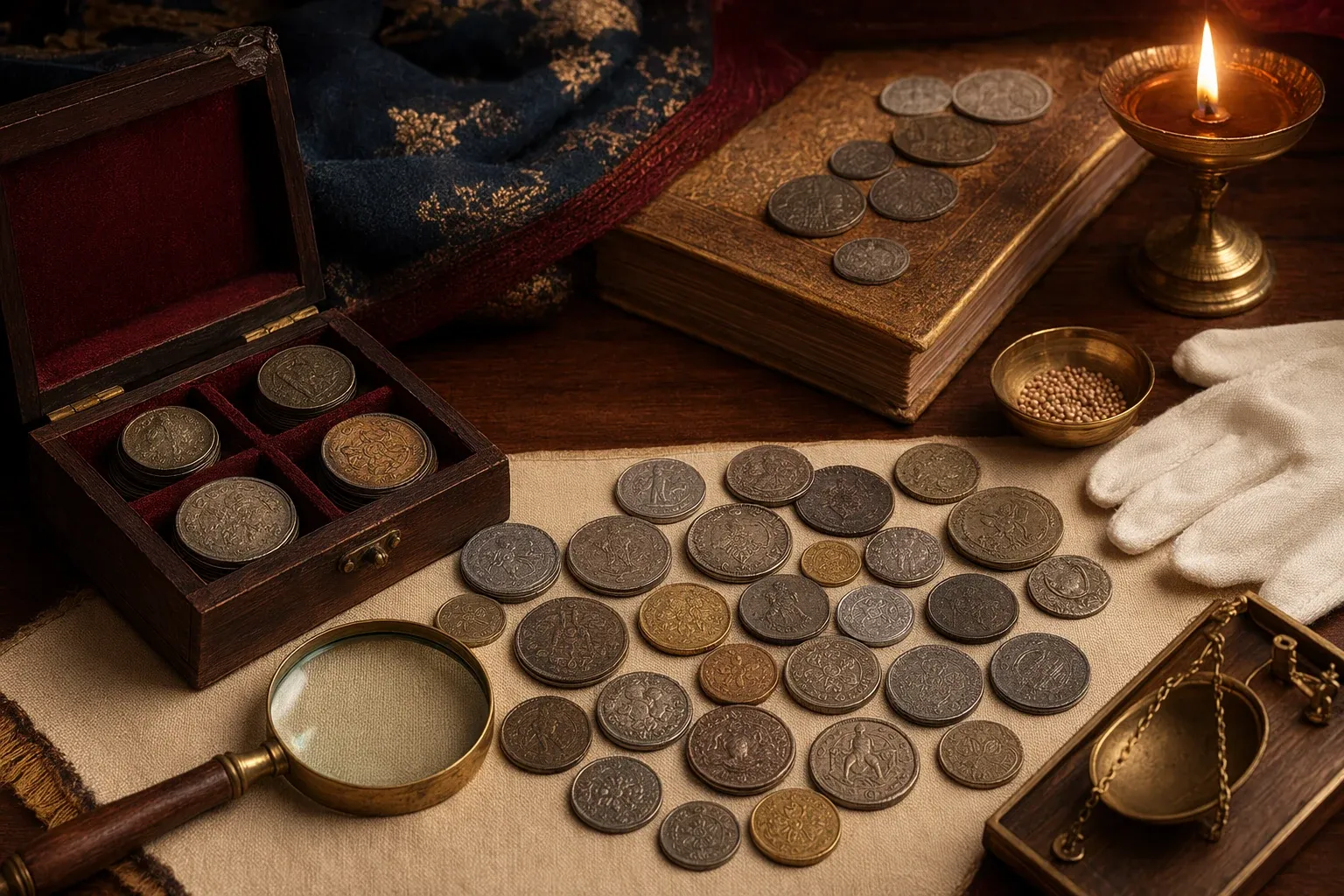
Some old Indian coins are valuable, but many are common. A coin does not become expensive simply because it is old, dirty or inherited. Value depends on a mix of rarity, condition, metal, authenticity, historical importance, provenance and demand. A common coin in poor condition may be worth little, while a rarer coin with clear evidence may be important.
This is why viral claims like “old coin worth lakhs” are dangerous. They usually leave out the hard questions: which exact coin, which year, which mint, what condition, what proof, what market, and who verified it? A safe value guide begins with identification, not excitement.
The main value factors
Rarity matters, but rarity must be real. A coin may look unusual only because it is damaged, polished, corroded or misread. Condition matters because collectors often prefer clear details, original surfaces and minimal damage. Metal matters, especially for silver and gold, but metal value is not the same as collector value.
Authenticity is crucial. Replicas, temple tokens, tourist souvenirs, fantasy coins and altered coins can fool beginners. Provenance also helps. If a coin has a documented family history, old collection note, purchase receipt or museum-style record, it may be easier to understand. Without proof, claims should stay cautious.
Why condition changes price
Condition is not just whether a coin looks shiny. In fact, shine can be a warning if the coin has been harshly cleaned. Collectors look for clear design, readable legends, original surface, proper weight, minimal scratches and honest wear. A coin that was polished with chemicals may lose value even if it looks brighter to the eye.
For historical interest, even worn coins can matter. A worn coin may show circulation and everyday life. But for market price, condition often changes demand. This is why two coins of the same type can sell very differently.
Safe steps before selling
Before selling any old coin, identify it carefully. Photograph both sides, record measurements, keep any old notes, and avoid cleaning. Get more than one opinion if the coin seems important. Use reputable numismatic dealers, auction houses or recognised experts, not random messages promising instant high prices.
Also be careful about legal and ethical issues. Coins found at archaeological sites, protected monuments or through digging may be subject to law and reporting responsibilities. Family-inherited coins are different from objects removed from heritage contexts. When in doubt, ask a credible expert before acting.
A calmer way to think about value
The best question is not “How much money can I get?” but “What exactly do I have?” Once the identification is strong, value can be discussed more honestly. A coin may be financially valuable, historically meaningful, emotionally important, or simply a nice beginner collectible.
Indian coins deserve curiosity without greed. Treat them as evidence first and assets second. That mindset protects you from scams and protects the object from careless damage.
Learning Indian coins responsibly
The responsible way to learn Indian coins is to treat each coin as evidence before treating it as treasure. A coin may be financially valuable, but its first value is informational: it can show language, authority, exchange, technology, belief, design taste and public memory. This habit keeps the subject interesting without turning it into hype.
Beginners should also remember that India’s coin history is regional and layered. A coin from one region, dynasty or century may follow a very different standard from another. Do not force every coin into one national timeline. Ask where it may have circulated, who issued it, what language or symbol it carries, and what other evidence supports that reading.
Good coin study is slow. Make a small record for every coin you examine: photographs of both sides, weight, diameter, visible date, script, symbol, metal colour, mint mark, edge and condition. If the coin belongs to your family, add the family memory separately and label it as memory, not proof. This protects both emotion and evidence.
It is also important to avoid harmful habits. Do not clean old coins, do not scratch them for metal testing, do not believe dramatic price claims without verification, and do not buy objects with suspicious origins. Coins connected to archaeological sites or protected contexts may involve legal and ethical responsibilities. Respect for heritage matters more than quick ownership.
Finally, connect coins with the wider world around them. Coins become easier to understand when compared with inscriptions, ports, trade routes, scripts, monuments, literature and material culture. That wider view helps a beginner see coins not as isolated collectibles, but as small, durable witnesses to Indian history.
A useful first collection can be very simple. Choose a theme such as one denomination across different years, coins from one family box, commemorative issues, or coins that show different scripts and symbols. Arrange them with notes instead of chasing only expensive examples. This makes learning steady and keeps the focus on observation, not speculation.
If you later ask an expert for help, your notes will save time. Clear photographs, measurements and provenance allow a numismatist to compare the coin more responsibly. They also make it easier to separate a genuine uncertainty from a dramatic but unsupported claim. In a subject full of viral rumours, careful documentation is a quiet superpower.
For Bhaktilipi readers, the goal is simple: learn enough to ask better questions. A coin can be enjoyed as design, handled as family memory, studied as evidence, or preserved for future research. When those uses are kept separate, the article topic becomes practical instead of confusing, and the reader leaves with a safer next step.
Where to go next
To connect coins with wider Indian history, you can also read our how historians decipher inscriptions, copper plate inscriptions, and Indian inscriptions beginner guide. These links are broader background, not required steps, and they help place coins beside other public historical evidence.